






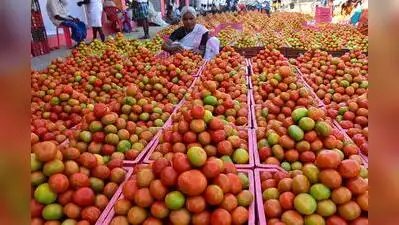
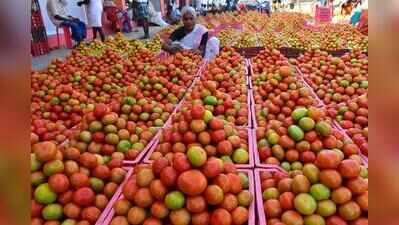
Pune: Tomato farmers in Maharashtra are a worried lot, with wholesale prices at major markets across the state, including the one in Narayangaon, falling to just Rs 4 per kilogram.Tomato is a labour-intensive crop, from cultivation and harvest to transport, and farmers say a crate, which typically weighs 20-22 kg, currently fetches between Rs 80 and Rs 250, or Rs 4-5 a kg — a sharp fall from the normal range of Rs 300-600/crate.This has become financially unsustainable. “We are practically selling below cost,” said Ishwar Gaykar, a farmer from Junnar tehsil.Sanjay Kale, chairperson of the Junnar agricultural produce market committee, said around 25,000 to 30,000 tomato crates arrive daily in markets across different parts of the state. Just in Narayangaon, supply far outstrips demand with nearly 31,000 crates coming in per day.Tomato is a labour-intensive crop that requires repeated spraying, staking, harvesting, sorting and packing, and regular harvesting to prevent overripening and losses. “Tomatoes require continuous care — we spend heavily on seedlings, fertilisers, pesticides, irrigation and labour,” Gaykar said.The current oversupply is a catch-22 for farmers who had invested heavily in the highly perishable crop and toiled through the season. Tomatoes cannot be stored for long and therefore they have little choice but to sell at whatever price is offered.“If we refuse to sell, the tomatoes will spoil in the fields. If we sell, we do not recover our expenses,” Akshay Shinde, a grower from Khed tehsil, said.Deepak Urkide, a grower, said one must spare a thought for farmers who toiled in the hopes of earning a livelihood and making enough money to invest in the next crop cycle. “People see only the price in the market and not how much hard work goes into producing every crate. We have to spend on labour several times during the season, and the cost of transport has also increased. In the end, we have barely anything left,” he said.Traders and market officials said low-quality or smaller tomatoes are bearing the brunt of low prices, while better-quality produce goes for higher rates.The farmers affected have demanded interventionist policies from govt to to prevent extreme price fluctuations, as well as facilities to manufacture tomato-based products and climate-controlled storage facilities that use precise temperature, humidity, and atmospheric regulation to prevent spoilage, microbial growth, and premature ripening.