




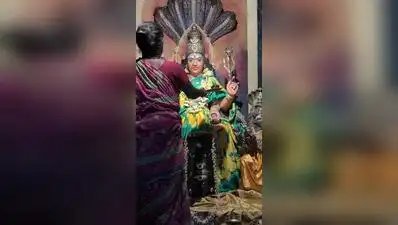
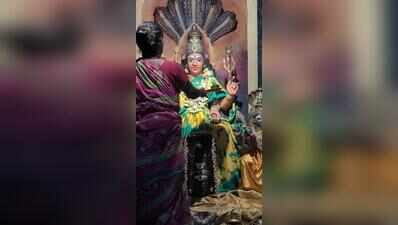
Chennai: Did you know that there was an area called Bhomma Kottaai in Pulianthope that was once a centre for making bronze statues? “They used to be displayed at Decaster Street when M G Ramachandran and Karunanidhi were in power,” says Nivedita Louis, author and history enthusiast, who will conduct a heritage walk through a few streets of Pulianthope on Aug 22. It will be held in association with the Information and Resource Centre for the Deprived Urban Communities (IRCDUC), a group that works with homeless people and communities in slums and resettlement colonies. The walk aims to bust the misconception of Pulianthope being a drug and crime haven.“It’s not poverty porn. Behind Pulianthope’s troubled image is a fascinating social history, which we hope to highlight,” says Nivedita. For instance, a sculptor of bronze statues from here went by the name S P Pillai. Karunanidhi had persuaded him to drop his real name, Pakkiri Sami. “You are a master sculptor. Why would you call yourself ‘Pakkiri’,” he had reportedly asked.A hundred years ago, the entire area consisted largely of huts, many belonging to Kulalas, or potters. As they gradually moved away, labourers from different communities settled there. The neighbourhood became an important supply point for the nearby harbour, and small mills, making it a centre of labour activity and trade unionism, she says. “The neighbourhood was also home to another Pakkirisami Pillai, a two-time MLA of Socialist Party, who was active in the labour movement.”There are also folks such as ‘Anjuruba (five rupee) doctor’, a registered Siddha practitioner, who treated people for a minimal fee, while on Veerachetty Street are three small temples run entirely by women, with women priests — something rarely seen elsewhere in the city. The area continues to reflect Chennai’s diverse working-class character, says Nivedita.There are quaint old houses here whose owners have left, partly because of Pulianthope’s image problem. “It is not a place to be ‘rescued’. It is a community with its own histories, knowledge, institutions, cultures and forms of resilience,” says Nivedita.