









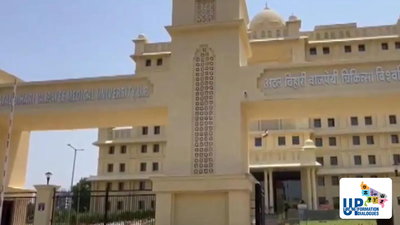
Uttar Pradesh’s healthcare transformation over the past nine years ranks among the most ambitious public health and medical infrastructure expansion efforts in India. Through sustained investments in medical education, decentralized delivery, financial protection, digital integration, and targeted disease-control programmes, the state has markedly strengthened its healthcare ecosystem. Despite an enormous population, vast geography, and historically large gaps in rural medical infrastructure, Uttar Pradesh has shifted toward a targeted, infrastructure-driven, and technology-enabled model of care.A central pillar of this change has been the deliberate move away from highly centralized tertiary services concentrated in a few major cities toward a distributed network of district-level facilities. This effort has been guided by the vision of “one district, one medical college.”The expansion of medical education infrastructure has been unprecedented. From just 40 functional medical colleges nine years ago, the state now operates 83 fully functional medical colleges. These comprise 45 government medical colleges, two ESI-run colleges, and 36 private medical colleges. Two apex All India Institutes of Medical Sciences (AIIMS) are functional in Gorakhpur and Rae Bareli. The Atal Bihari Vajpayee Medical University is operational in Lucknow. Currently, over 5,700 MBBS seats are available in the government sector and more than 7,900 in the private sector. An additional 350 seats have been created across three new medical colleges established through the public-private partnership (PPP) mode, along with 305 super-specialty seats.Postgraduate capacity has also expanded sharply during the regime of Yogi Adityanath. MD/MS/Diploma seats in the government sector have risen from 900 to 1,871, while the private sector offers a total of 4,995 PG seats. Fifty-nine districts are now covered by medical colleges, and a PPP policy is in place to establish colleges in the remaining 16 unserved districts. Construction of hostels in 27 medical colleges is under way, and Level-2 trauma centres are already operational in the medical colleges of Ayodhya, Firozabad, Hardoi, Chandauli, and Deoria, with plans to extend them further.The public healthcare system continues to operate through its three-tier structure of Sub-Health Centres, Primary Health Centres (PHCs), and Community Health Centres (CHCs). Complementing this network, more than 22,681 Ayushman Bharat Health and Wellness Centres—now known as Ayushman Arogya Mandirs—deliver decentralized primary care across rural and urban communities. Access to advanced diagnostics and essential treatment has also been decentralized. Free dialysis facilities are available across all 75 districts, and CT scan services are fully operational in 74 districts. These measures have substantially reduced travel burdens and out-of-pocket expenses, particularly for rural populations. Teleradiology services are provided at 227 Community Health Centres, benefiting over 4.145 million patients to date.Financial protection against catastrophic health expenditure forms another cornerstone. More than 5.5 crore families have been issued Ayushman Cards, enabling cashless treatment coverage of up to Rs 5 lakh annually under the central scheme. Families excluded from the central programme are being brought under the state-sponsored Mukhyamantri Jan Arogya Yojana, moving the state closer to universal health coverage. Parallel efforts to reduce the cost of medicines have expanded the network of Jan Aushadhi Kendras to over 873 outlets. These centres supply essential drugs at prices 50–90 per cent below prevailing market rates, easing the burden of both long-term and routine care.Specialized tertiary and quaternary care capacity has grown significantly in Uttar Pradesh during this period.·A Diabetes Centre and a 500-bed Advanced Pediatric Centre have been established at the Sanjay Gandhi Postgraduate Institute of Medical Sciences (SGPGI), Lucknow.·Facilities for kidney, liver, and bone marrow transplants, as well as an Advanced Neurosciences Centre, have been completed at the Dr. Ram Manohar Lohia Institute of Medical Sciences, Lucknow.·The Emergency Medicine and Renal Transplant Centre (558-bed capacity) was launched at SGPGI in 2022, followed by the Advanced Diabetic Centre in 2024, enabling integrated treatment for diabetes and renal diseases under one roof.·The process of establishing a Quaternary Health Care Centre at SGPGI is under way.·The Centre for Advanced Molecular Diagnostics and Research for Cancer at the Kalyan Singh Super Specialty Cancer Institute, Lucknow, currently operates 220 beds.· In the 2025 NIRF rankings, King George’s Medical University (KGMU), Lucknow, secured 8th rank in the Medical University category and 7th in Dental, while achieving the highest ‘A++’ grade in NAAC accreditation.·SGPGI ranked 5th in NIRF and also received the ‘A++’ NAAC grade. SGPGI provides tele-consulting and teleradiology support to institutions in Uttarakhand, Rohtak (Haryana), and Odisha, as well as to Christian Medical College, Vellore, and is connected to six medical colleges via Tele-ICU facilities.Digital health integration has placed Uttar Pradesh at the national forefront. The state ranks first in India for digital health integration. More than 13.18 crore ABHA (Ayushman Bharat Health Account) IDs have been created, and over 5.76 crore electronic health records have been migrated to cloud-based systems, laying the foundation for a connected, patient-centric ecosystem. Through platforms such as eSanjeevani, and in partnership with premier institutions including SGPGI and KGMU, rural patients can access specialist consultations without long-distance travel. Village-level health and wellness centres serve as critical access points for telemedicine-enabled care.Public health indicators in the state have shown measurable improvement. Supported by the Janani Suraksha Yojana and automated e-vouchers for prenatal care, institutional deliveries have risen to 96.12 per cent, significantly narrowing the gap with national benchmarks. Both the Maternal Mortality Ratio (MMR) and Infant Mortality Rate (IMR) have registered a sustained downward trend.One of the most striking achievements in Yogi’s UP has been the near-elimination of Japanese Encephalitis (JE) and Acute Encephalitis Syndrome (AES). Through the multi-sectoral “Dastak” campaign, implemented in partnership with UNICEF, encephalitis-related deaths that once claimed thousands of young lives annually have been reduced to near-zero levels. Compared with 2017, AES cases in 2025 fell by 94 per cent and deaths by 99.1 per cent; JE cases declined by 96 per cent and deaths by 99 per cent. Sixteen Pediatric Intensive Care Units and 177 Encephalitis Treatment Centres have been established for the treatment of affected children.The National Tuberculosis Elimination Programme has also recorded strong progress. An integrated ‘Nikshay Diwas’ is observed on the 15th of every month for TB, Kala-azar, Filariasis, and Leprosy. Laboratory capacity expanded markedly between 2017 and 2025: NAT facilities rose from 141 to 930, and culture facilities from 5 to 14. Eight new TB culture labs were established, bringing the total to 14. Financial assistance to patients increased by Rs 500 per month from November 1, 2024. The TB mortality rate has declined by 90 per cent compared with 2015. Between 2018 and 2025, Rs 1,022 crore was transferred to patients’ accounts for nutritional support. From 2022 to 2025, 95,000 ‘Nikshay Mitras’ provided nutritional and social support, and approximately 9.69 lakh nutrition kits were distributed.Dengue control efforts have similarly strengthened diagnostic reach. In 2017 there were 36 laboratories across 29 districts; by 2025 advanced dengue diagnostic facilities operated through 89 laboratories covering all 75 districts, including 86 sentinel laboratories and three apex laboratories.Beyond conventional allopathic care, the state is expanding traditional systems of medicine and positioning itself as a future hub for pharmaceutical manufacturing and AYUSH. It currently operates 2,111 Ayurvedic, 254 Unani, and over 1,585 Homeopathic hospitals, alongside eight Ayurvedic colleges (with attached hospitals), two Unani colleges, and nine Homeopathic colleges. State-run medicine manufacturing units in Lucknow and Pilibhit supply certified medicines to Ayurvedic and Unani hospitals. Fifty-bed Integrated AYUSH hospitals are operational across 16 districts, serving approximately 670,000 patients in 2024–25. Five Integrated AYUSH Hospitals and Colleges are under development in Gonda, Mirzapur, Meerut, Agra, and Basti.The Government Ayurvedic College in Ayodhya and the Government Homeopathic Medical College in Varanasi have been established. The Mahayogi Guru Gorakhnath AYUSH University has been set up in Gorakhpur, and a decision has been taken to constitute an AYUSH Board in the state. A State One Health Mission is being established in alignment with the National One Health Mission.Human resources for health have received parallel attention in UP . Construction is under way for more than 31 nursing colleges. Under ‘Mission Niramaya’, programmes aim to improve the quality of nursing and paramedical institutions through a mentor-mentee model. Seats have increased by 7,000 in nursing and 2,000 in paramedical courses, and 35 previously closed ANM training centres have been restarted. Government incentives for investment and infrastructure are being extended to boost the MedTech sector.Taken together, these initiatives illustrate a comprehensive, multi-layered strategy: expanding the physical infrastructure of medical education and tertiary care, decentralizing diagnostics and primary services, protecting households financially, integrating digital tools, and driving measurable gains against high-burden infectious diseases and maternal-child health challenges. While significant work remains—particularly in fully covering the remaining districts without medical colleges and further strengthening human resources—the trajectory of the past nine years demonstrates that sustained policy focus and investment can produce tangible improvements in access, quality, and health outcomes across one of India’s largest and most complex states.Uttar Pradesh’s experience offers a valuable case study in scaling public health systems under conditions of high population pressure and historical under-investment.