









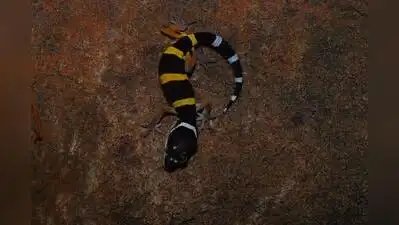
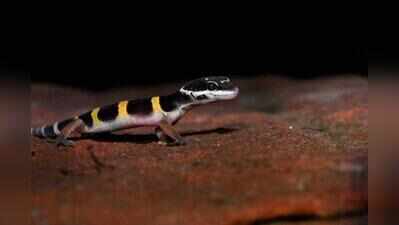
Gurgaon: A nocturnal survey has yielded the “first recorded sighting” of the leopard gecko (Eublepharis macularius) at a city forest, according to a Delhi University herpetologist.On the night of Aug 1, a team — led by assistant professor at DU’s Sri Venkateswara College Dr Robin Suyesh, along with two field biologists — was carrying out surveys for amphibians when it accidentally encountered the leopard gecko in a rocky section of Aravali Biodiversity Park in the city.Barely the length of an adult’s palm, the leopard gecko is among India’s most striking reptiles. A herpetologist is a scientist who studies reptiles and amphibians.“This is a significant observation for the Delhi-NCR region,” Suyesh told TOI, adding, “The individual was found in a rocky microhabitat with abundant leaf litter that provides shelter, humidity and suitable foraging conditions.”It has a jet-black head, large expressive eyes with vertical pupils adapted for night vision and a slender body ringed with bright yellow bands separated by broad black markings, giving it a bold, almost tiger-like appearance.Its pale underbelly and delicate limbs contrast sharply with the dark rocky terrain it inhabits. Unlike the common house geckos seen on walls and ceilings, the leopard gecko is a ground-dwelling reptile that spends much of the day concealed beneath rocks and leaf litter, emerging only after dusk to hunt insects and other small invertebrates.“The discovery underscores the growing ecological importance of restored landscapes such as Aravali Biodiversity Park. The presence of a habitat specialist reptile like the leopard gecko indicates that habitat restoration efforts have created conditions capable of supporting native wildlife, including species that are rarely observed in urban environments,” he said.The leopard gecko is among India’s most distinctive reptiles and is known from the arid and rocky landscapes of north-western India. Unlike several gecko species that climb vertical surfaces using adhesive toe pads, leopard geckos are terrestrial reptiles that inhabit rocky terrain. However, sightings are relatively uncommon because the species is nocturnal and secretive.Suyesh said the sighting highlights the importance of conserving urban biodiversity parks that serve as refuges for wildlife despite being surrounded by rapidly expanding cities.
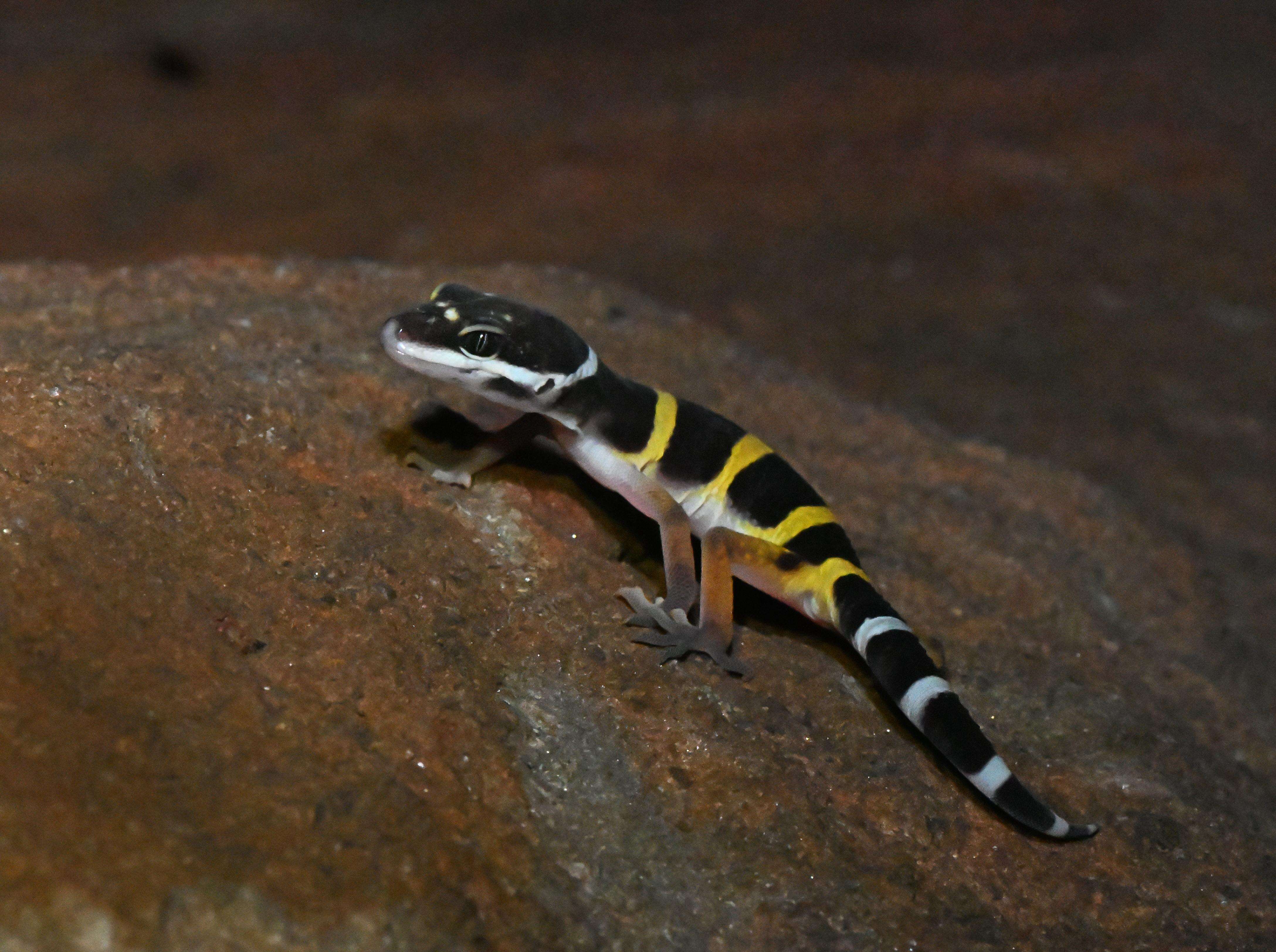
First recorded sighting of a leopard gecko (Eublepharis macularius) from a city forest in Gurgaon
“Such findings reinforce the role of urban biodiversity parks as vital refuges for wildlife and highlight the need for their continued protection and scientific monitoring. This remarkable observation serves as another reminder that even landscapes surrounded by rapidly expanding urban areas continue to harbour extraordinary biodiversity, much of which remains undocumented,” Suyesh said.The observation also points to the importance of continued scientific surveys, particularly nocturnal monitoring, to better understand the diversity of reptiles and other lesser-studied wildlife inhabiting Aravali ecosystem.