









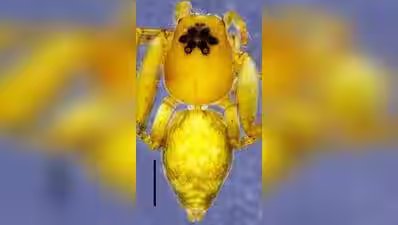
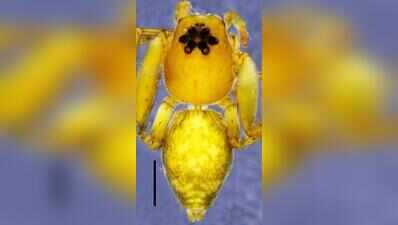
Kolkata: Scientists from the Zoological Survey of India (ZSI) have documented two new spider species from vastly different ecosystems in India, shedding fresh light on the country’s hidden biodiversity.The discoveries, published in peer-reviewed journals ‘Zootaxa’ and ‘Records of the Zoological Survey of India’, highlight the rich yet largely unexplored microfauna inhabiting subterranean caves and forest canopies.The newly identified species are Simonia lawbah, a cave-dwelling ray spider from Meghalaya, and Hamataliwa papikonda, a lynx spider discovered in the forest canopy of Andhra Pradesh’s Papikonda National Park. Both findings represent the first-ever records of their respective genera in these regions, marking an important advancement in Indian arachnological research.Among the two discoveries, Simonia lawbah stands out for its remarkable adaptation to cave life. Found inside Krem Lawbah Cave in Meghalaya, the spider measures less than 2 mm in length and belongs to the family Theridiosomatidae, commonly known as ray spiders. Researchers described it as a troglophilic species that thrives in cave environments and constructs specialised cone-shaped webs. These “ray webs” function like miniature slingshots, allowing the spider to launch its web at high speed to trap flying insects.The study documenting the species was carried out by Supradipta Dutta, Puthoor Pattammal Sudhin, Souvik Sen and Dhriti Banerjee of ZSI Headquarters in Kolkata, together with Rajib Goswami of the ZSI Northeastern Regional Centre in Shillong. The discovery also marks the first record of the genus Simonia in India, significantly expanding the known distribution of the family.In contrast, Hamataliwa papikonda inhabits the mixed deciduous forest canopy of Papikonda National Park in Andhra Pradesh. Measuring just under 5 mm, the yellow-bodied spider belongs to the lynx spider family Oxyopidae and is an active predator that does not build webs. Instead, it relies on speed, agility and its spiny legs to capture prey. Researchers noted its distinctive hexagonal arrangement of eight eyes, which helps it track and hunt insects with precision.The species was described by a ZSI team led by arachnologists Upasana Bhattacharya, Puthoor Pattammal Sudhin and Souvik Sen. Its discovery represents the first record of the genus Hamataliwa in Andhra Pradesh and underscores the biological significance of the Eastern Ghats as a centre of evolutionary diversity.Commenting on the findings, Souvik Sen, senior scientist and officer in charge of the Arachnida Section at ZSI Kolkata, said systematic biodiversity surveys continue to reveal species that have remained unknown to science for centuries. He noted that such tiny, highly localised organisms can easily escape detection without targeted field investigations.ZSI director Dhriti Banerjee said every new species discovery contributes to a more complete understanding of India’s biodiversity and highlights the urgent need to conserve fragile habitats, from cave systems to forest canopies, amid growing human pressures.