









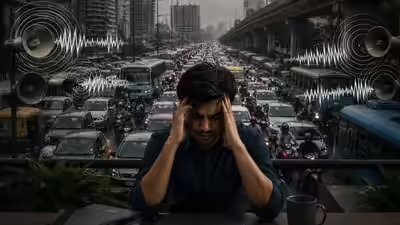
For millions of people living in Bengaluru, traffic is no longer just an inconvenience—it’s a daily health challenge. Hours spent commuting, prolonged exposure to noise and pollution, irregular meals, dehydration, and disrupted sleep are becoming part of everyday life. Doctors across the city warn that these lifestyle changes are contributing to an increase in migraines, hearing disorders, stress, fatigue, and respiratory illnesses. What was once viewed as a transportation issue is now emerging as a significant public health concern.
How traffic affects health every day
According to medical experts, Bengaluru’s traffic exposes commuters to multiple health risks simultaneously. Long commutes lead to chronic stress and fatigue, while constant traffic noise affects hearing. Air pollution and vehicle emissions aggravate neurological and respiratory conditions. Extended travel often results in irregular meals and dehydration, and long working hours combined with commuting contribute to poor sleep. Excessive screen time before and after work further adds to the health burden. These factors rarely occur in isolation. Together, they create a cumulative burden on both physical and mental health.
The hidden cost of losing hours every day
Traffic congestion affects far more than travel time. Long daily commutes leave little opportunity for exercise, family time, hobbies, proper meals, adequate sleep, or relaxation. Many commuters begin work already mentally exhausted after spending hours navigating congested roads. Parents spend less time with their families, while students often struggle to balance academics with lengthy travel.Health experts say these daily inconveniences gradually accumulate, increasing the risk of chronic health problems.Traffic today affects not only transportation but also how people rest, socialize, and care for themselves.
Traffic and migraine: A growing concern
Bengaluru’s demanding lifestyle has made migraine one of the city’s most common neurological concerns. Migraine affects approximately 12–15% of adults worldwide, while estimates suggest 14–25% of adults in Karnataka experience migraines. Unlike ordinary headaches, migraine attacks may last 4 hours to 3 days and are often accompanied by:
- Nausea
- Vomiting
- Sensitivity to light
- Sensitivity to sound
These symptoms can significantly disrupt daily life.
Traffic doesn’t cause migraine—but it triggers attacks
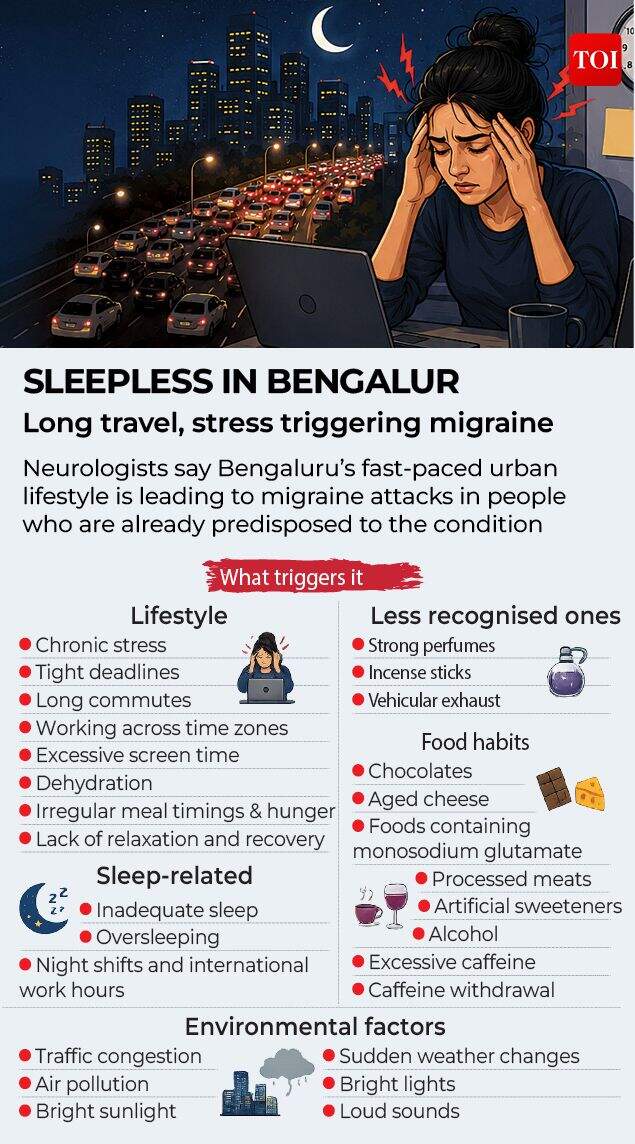
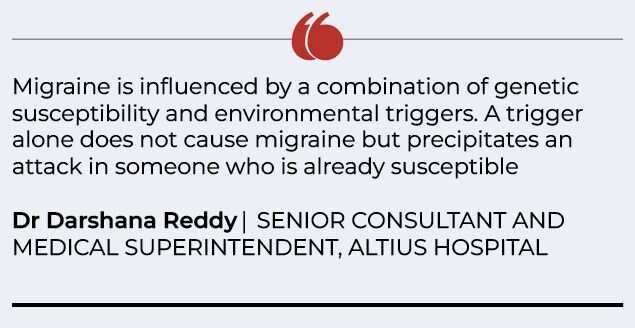
Neurologists explain that migraine develops through a combination of genetic susceptibility and environmental triggers. Traffic itself is not the direct cause. However, it combines many known migraine triggers into a single day.
Common migraine triggers among commuters
- Chronic stress
- Long daily commutes
- Irregular meals
- Dehydration
- Sleep deprivation
- Night shifts
- Prolonged screen exposure
- Traffic noise
- Vehicle fumes
- Strong odors
- Bright sunlight
- Sudden weather changes
- Alcohol consumption
Experts note that migraine attacks usually result from multiple triggers acting together rather than a single factor.
Doctors speak
Dr. Satishchandra P. Neurologist, Apollo Speciality Hospitals, Jayanagar
Dr.
According to Dr. Gupta, migraine attacks rarely begin because of a single trigger. Instead, they are often the result of several lifestyle and environmental factors acting together. For many Bengaluru professionals, a typical day involves skipping or delaying breakfast, enduring long traffic commutes, spending extended hours in front of screens, missing meals, staying poorly hydrated, working long hours, and then facing another lengthy commute home. Neurologists say that for individuals genetically prone to migraines, this cycle greatly increases the frequency of attacks.
Noise pollution: An overlooked health threat
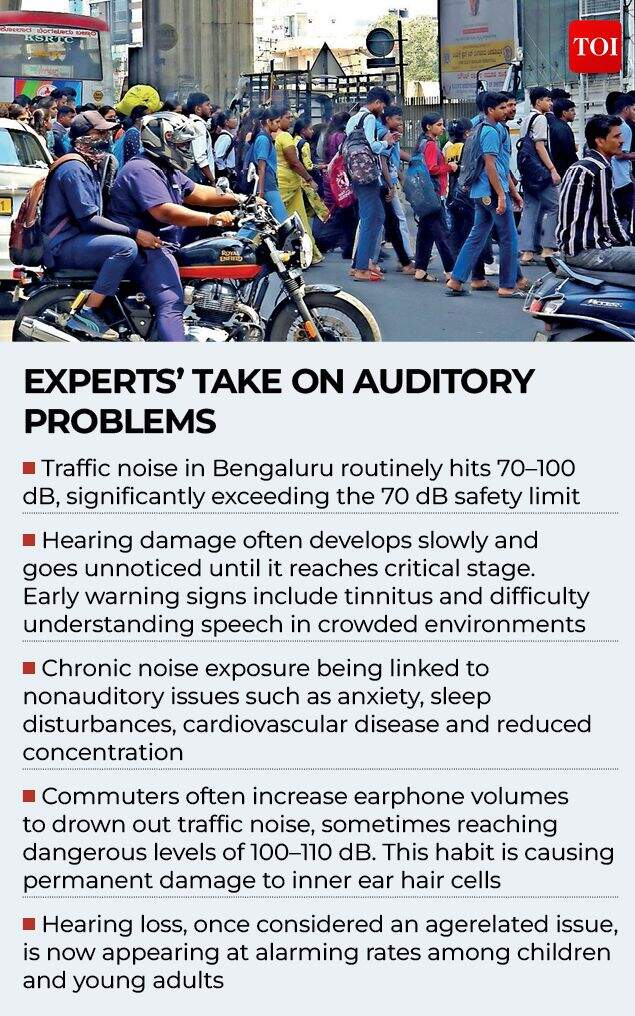
Beyond stress, doctors are increasingly concerned about Bengaluru’s growing noise pollution. During peak traffic hours, commuters are routinely exposed to sound levels ranging between 70 and 100 decibels. Prolonged exposure at these levels may gradually damage hearing.
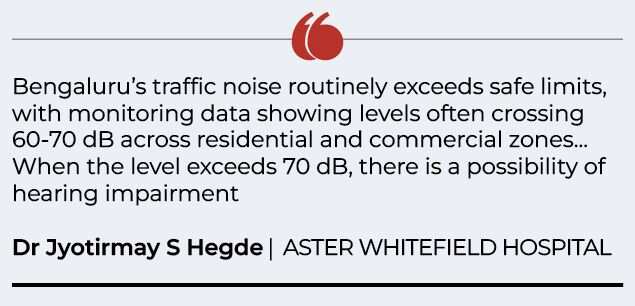
Symptoms people often ignore
Noise-induced hearing loss develops gradually. Common warning signs include:
- Persistent ringing in the ears (tinnitus)
- Difficulty hearing conversations
- Muffled hearing
- Ear fullness
- Ear pain
- Poor concentration
- Irritability
- Sleep disturbances
- Frequent headaches
- Increased sensitivity to sound
Without treatment, these symptoms may eventually lead to permanent sensorineural hearing loss.
Why headphones make it worse
ENT specialists warn that many commuters increase headphone volume to overcome traffic noise. Over time, this habit damages the delicate hair cells inside the inner ear. Unlike other body tissues, these cells do not regenerate. This may result in:
- Permanent hearing loss
- Tinnitus
- Reduced hearing quality
Young professionals and students are especially vulnerable because of prolonged commuting and frequent headphone use.
Pollution adds another layer of risk
Traffic-related air pollution is another major concern. Doctors say commuters are regularly exposed to vehicle exhaust, fine particulate matter, dust, and other airborne pollutants during long hours on the road. These pollutants worsen symptoms among people with asthma, allergies, and respiratory illnesses. Neurologists also believe pollution may intensify migraine attacks when combined with stress, dehydration, irregular meals, and poor sleep. Unlike traffic delays, these health effects often develop slowly and may go unnoticed for years.
Health effects beyond headaches
Doctors emphasize that Bengaluru’s traffic affects far more than migraines and hearing. Long-term exposure has also been associated with poor sleep, chronic fatigue, anxiety, irritability, difficulty concentrating, mental exhaustion, and reduced productivity. Many commuters arrive at work already tired and return home with little energy left for exercise, family, or recreation. Irregular eating patterns and dehydration further worsen these problems. Experts stress that it is the cumulative effect—not an individual traffic jam—that gradually impacts health.
Young people are increasingly at risk
Teja Deepak Desai
Associate Professor, Dr. SR Chandrasekhar Institute of Speech and Hearing
An internal study conducted between 2020 and 2025 found that:
- Continuous exposure above 85 dB can damage hearing over time.
- Personal listening devices may reach 100–110 dB, making unsafe listening habits particularly dangerous.
According to Desai, prolonged exposure to loud sound is also associated with:
- Anxiety
- Stress
- Fatigue
- Sleep disorders
- Increased cardiovascular risk
How commuters can reduce health risks
Doctors recommend maintaining a regular sleep schedule, eating meals on time, staying hydrated, exercising regularly, limiting unnecessary screen time, practicing meditation or stress management, keeping a migraine diary, and seeking medical advice if attacks become more frequent. Experts advise avoiding prolonged exposure to loud environments, wearing earplugs when appropriate, spending less time in heavy traffic whenever possible, following the 60/60 rule (listening below 60% volume for less than 60 minutes), treating ear infections promptly, and getting regular hearing tests if frequently exposed to traffic noise.
Traffic is now a public health issue
For years, Bengaluru’s traffic problem has been viewed primarily through the lens of transportation—road infrastructure, flyovers, metro expansion, and travel times. Health experts argue that this perspective is no longer sufficient. Every day, lakhs of commuters experience prolonged exposure to stress, pollution, noise, unhealthy eating patterns, dehydration, and sleep disruption. Although the consequences may not appear immediately, sustained exposure significantly increases the risk of migraines, hearing loss, anxiety, insomnia, and other lifestyle-related disorders. As Bengaluru continues to grow, addressing traffic congestion must go beyond improving mobility. Strengthening public transport, enforcing noise regulations, reducing pollution, and encouraging healthier commuting habits are essential not only for smoother travel but also for protecting the long-term health and well-being of the city’s residents. The true cost of Bengaluru’s traffic cannot be measured only in hours lost behind the wheel—it must also be measured by the silent toll it takes on the health of the people who live and work in the city every day.