

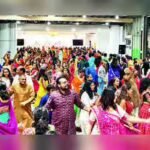





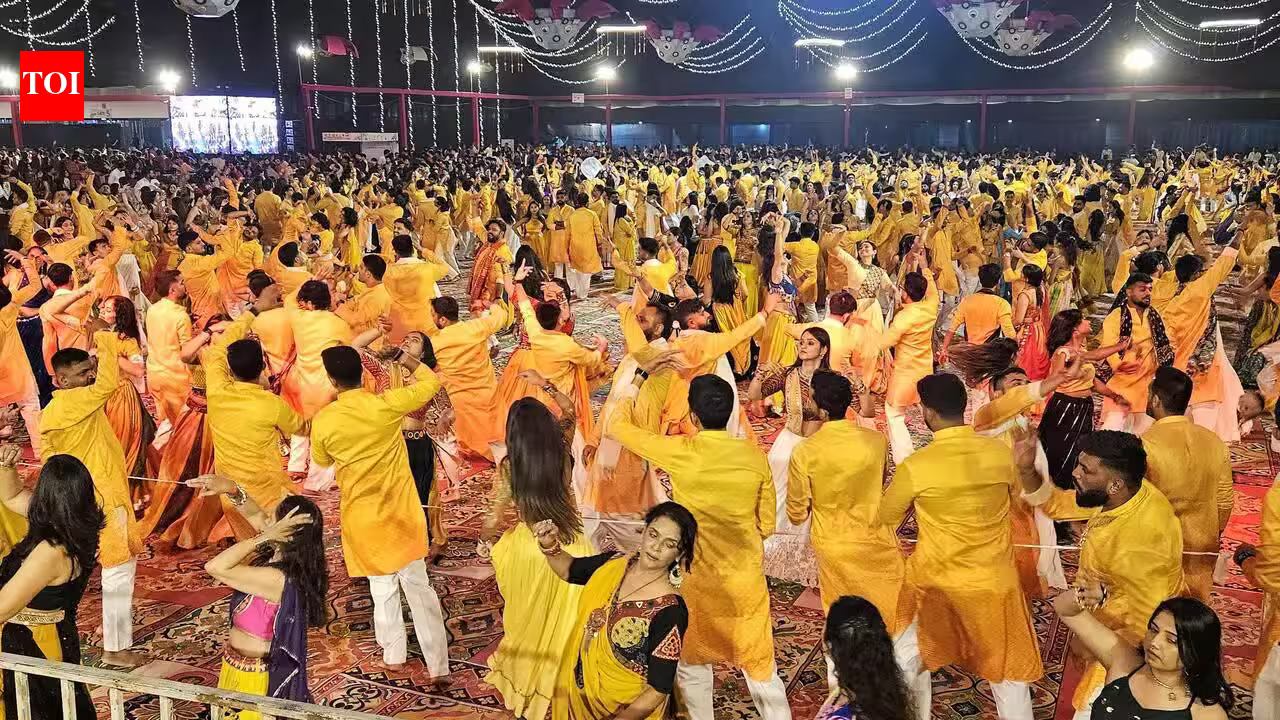
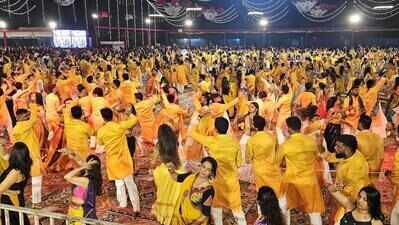
Surat: Imagine 850 people dressed in coordinated traditional attire, moving in perfect synchronisation to the rhythm of garba at the same venue for 10 consecutive nights. What begins as a gathering of a few dozen enthusiasts transforms into a spectacular display of culture, discipline and teamwork. In Surat, the BMGG group has turned this vision into a Navratri tradition, bringing hundreds of revellers together to celebrate Gujarat’s vibrant folk dance.This year, the group has introduced a 98-step ‘dodhiyu’ sequence, adding another layer of complexity and grandeur to its performances. The sight of 850 participants executing intricate steps in unison is a visual treat, reflecting months of preparation and practice.These garba groups bring together people from diverse walks of life, including industrialists, businessmen, doctors, builders, chartered accountants, lawyers, politicians and students. Participants aged between 10 and 70 years share the same dance floor, united by their love for garba. Interestingly, the groups begin preparations nearly four months before Navratri and disband after the festival, only to reunite the following year.Bhavin Kadhiwala, who has been playing garba for the past 31 years, has enrolled around 1,500 enthusiasts in his classes this year at Althan-Bhatar community hall and Signature banquet hall. Of these, approximately 1,100 participants attend the two garba venues daily.“We have two groups, one with 850 participants and another with 250, performing at different venues. The larger group plays at OG Navratri at the Sarsana AC dome, while the smaller group participates in Yashvi Navratri. We finalise a colour theme that both men and women must follow. We also guide participants on where to buy fabric and get their traditional attire stitched to ensure everyone is comfortable with the arrangements,” Kadhiwala said.Recalling the evolution of the concept, Kadhiwala said that the group format has been popular in Surat for nearly three decades. What started with groups of 25 to 50 people has steadily grown as more enthusiasts have embraced the idea of themed, synchronised garba.“I remember dealing with an organiser for a group of 350 revellers in 1997. The numbers kept growing over the years as people increasingly enjoyed participating in coordinated group garba,” Kadhiwala said.In Surat, preparations begin four months before Navratri, with groups renting large air-conditioned halls across the city for daily training sessions, generally held from 7pm to 11pm. The classes follow strict rules to maintain discipline and ensure smooth coordination. Stag entry is rarely permitted, with participants generally expected to enrol alongside at least one female family member, such as a wife, sister or mother.Another prominent name in Surat’s group-garba culture is businessman Diptesh Shah, who has been running the Njoy Group since 2012. This year, the group began its training sessions at Maheshwari Bhawan in City Light nearly four months before Navratri.“We started with just 30 participants. The group has grown to around 700 this year. Around 600 revellers are participating at OG Navratri at the Sarsana AC dome for 10 nights,” Shah said.The group follows a coordinated dress code, providing men with fabric in a designated colour so they can have traditional outfits stitched according to their preferences. Women are given colour themes for most days and are expected to dress accordingly. A special ‘your choice’ day allows participants to wear outfits of their own choosing.The group has also incorporated an important safety initiative into its preparations. With several doctors among its members, participants have been trained in administering cardiopulmonary resuscitation (CPR) in case of an emergency at the venue.“Our members range from 11 to 65 years of age. This year, we have introduced a 46-step ‘dodhiyu’ sequence,” Shah said.Beyond the dance floor, these groups place considerable emphasis on camaraderie. Musical evenings, one-day picnics, movie outings, DJ parties and bhajiya gatherings are organised during the training period to strengthen bonds among participants.The growing popularity of group-garba has made it a distinctive feature of Surat’s Navratri celebrations. Organisers coordinate with event management teams to secure designated spaces at garba venues, allowing large groups to perform together without disrupting the flow of other revellers.The preparations become increasingly intensive as the festival approaches. About a month before Navratri, participants begin perfecting the sequences they will perform at the venue. Special attention is given to footwork, timing and, above all, hand movements, which are essential to creating a visually striking performance.“The hand movements must be perfectly synchronised because they add to the beauty of group garba. When people watch us from a distance, the coordinated movements create a truly pleasing sight. We generally play garba during the first seven days and switch to dandiya for the final three,” a member of one of the groups said.For Kadhiwala and other organisers, however, the effort goes far beyond putting on an impressive show. It is about preserving a cultural tradition and building a community around it.“We give our precious time simply to keep the tradition alive. There is no commercial motive behind this. God has given us a lot. We try to spend the money collected through fees on hall rentals and other activities,” Kadhiwala said.As Surat’s garba groups continue to grow in size and popularity, their performances stand as a testament to the enduring appeal of Gujarat’s cultural heritage. Behind every synchronised step lies months of dedication, countless hours of practice and a shared passion that brings hundreds of people together—one rhythm, one tradition and one Navratri night at a time.