









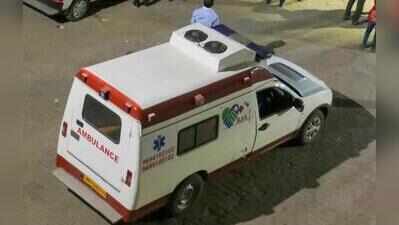
Gurgaon: Haryana on Wednesday flagged off 70 new advanced life support (ALS) ambulances from Ambala, expanding the state’s critical emergency care network across all 22 districts. Gurgaon and Faridabad have been allotted five ambulances each.The ambulances, procured under National Health Mission, will be deployed across the state and integrated with the Dial 112 emergency response system, enabling emergency calls to be linked directly with advanced life support services.According to the district-wise allocation, Karnal, Panipat, Mewat, Narnaul and Bhiwani have been allotted four ALS ambulances each. Sonipat, Jhajjar, Jind, Ambala, Hisar, Sirsa, Yamunanagar, Palwal, Rewari and Rohtak have received three each, while Fatehabad, Kaithal, Kurukshetra, Panchkula and Charkhi Dadri have been allotted two each.The rollout marks the first deployment of ALS ambulances in Ambala, Hisar, Sirsa, Yamunanagar, Fatehabad, Kaithal, Kurukshetra and Panchkula, expanding access to advanced pre-hospital emergency care in districts that previously lacked such facilities.The state’s additional chief secretary (health) Dr Sumita Misra said the integration of the new ambulances with the Dial 112 system would enable quicker dispatch of advanced life support vehicles during medical emergencies.Misra said, “Chief minister Nayab Singh Saini has inaugurated seven major healthcare projects on Wednesday. Besides flagging off the ambulances, the bed capacity at Naraingarh Civil Hospital has been increased to 100, and medical equipment worth around Rs 20 crore has been procured through CSR funding and dedicated to the state. Counsellors will now provide rotational mental health counselling services in educational institutions.”TOI had earlier reported that the state plans to replace nearly 300 ambulances, procure additional basic life support (BLS) ambulances, deploy more ALS units and reduce ambulance response time to under 10 minutes.ALS ambulances are equipped with ventilators, cardiac monitors, defibrillators, oxygen support systems and emergency medicines, and are staffed by trained personnel capable of providing advanced life-saving care before critically ill patients reach hospital.