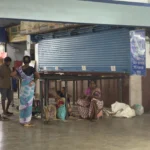
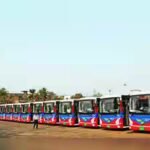






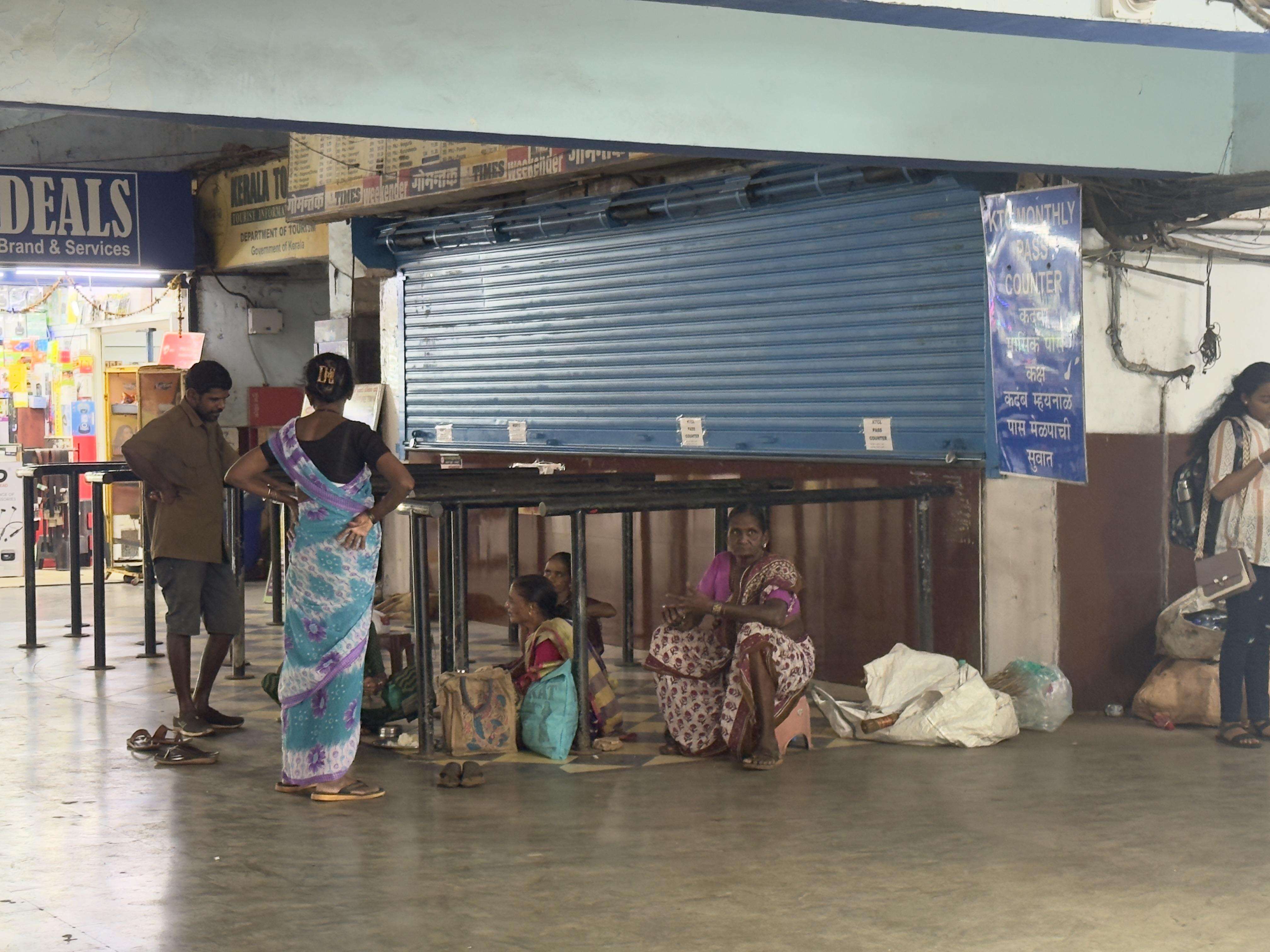
Panaji: By the time the first wave of commuters spills into the state capital’s 46-year-old bus terminus, the day’s problems are already visible. People hover near pillars, scanning for a place to sit that doesn’t exist. Others step around litter that returns almost as quickly as it is swept away. For many, the bus terminus is more a daily test of patience than a transit point.Siya Naik (23) who passes through often, watches the crowd thicken and the waiting area fray at the edges. “During rush hours, there is no place even to sit,” she says, pointing out that several pillars without seating could easily be adapted. What troubles her as much as the crowding is the condition of the space itself — the trash, the poorly maintained waiting area, the feeling that small fixes are ignored until they become big ones.Smell of neglect For Laxmi Gaonkar (50), the bus terminus carries a memory that hasn’t changed in decades. She has been using it for nearly 30 years and says one thing, in particular, has been consistently overlooked: The gutter on the south side. “It is very smelly and is never cleaned,” she says. Even with multiple washrooms nearby, she sometimes notices people urinating in public, a sign — she believes — of poor enforcement and an atmosphere where rules don’t feel real.Maria D’Silva (60), a regular commuter, describes a routine that feels almost futile. “Even after the area is swept, it takes barely five minutes for garbage to accumulate again,” she says. Commuters and locals say the solution needs clear signage, public messaging, and strict enforcement to stop the depot from sliding back into disorder.Monsoon messWhen the rains arrive, the discomfort becomes harder to avoid. Shopkeepers near the depot say waterlogging spills onto the main road and affects the adjoining Patto area. “The flooding during the monsoons makes the bus stand area waterlogged and difficult to move through,” one local shopkeeper says, describing days when walking becomes an exercise in navigating puddles and overflow.Former mayor Yatin Parekh argues that the basics must come first. “The priority should be to clean the surrounding area and repair the necessary structures,” he says. In his view, the bus stand needs more than patchwork — it needs re-planning. “The sanitation services and hygiene should be maintained, and even the trash management should be done properly,” he adds.Bays and bottlenecksIf the commuter’s experience is defined by waiting, the driver’s is defined by squeezing in. Parking space inside the depot is limited, and the shortage pushes vehicles onto roads and outside shops, especially near the exit towards Patto.Drivers describe a system built around tight time slots. A driver of the Kadamba Transport Corporation Ltd (KTC) explains that buses are allowed only brief windows to occupy a bay. “We have limited slots to park our buses. After that, we have to remove the bus from the bay, creating a problem for us,” he says. One delay can trigger a chain reaction — late arrivals, early arrivals, and nowhere to go but the roadside.Assistant traffic inspector at the KTC, Jayesh Tivrenkar, puts numbers to what drivers live with daily. “Space shortage and bus parking are the main issues we need to tackle,” he says. “There are more than 500 buses overall and space to accommodate only about 300 buses.” With scarcity driving the schedule, he adds, buses get “only 10–15 minute time slots”. Arrive too early, and they wait outside. Arrive too late, and the bay is already claimed.No help nearbyBeyond crowding and congestion, commuters and local businesses say the bus terminus lacks basics that matter when something goes wrong — especially emergency medical help.Mayank Naik (40), a shopkeeper at the terminus for years, recounts a scene he still finds unsettling. “Last month, someone was lying in front of my shop for two days straight, and no one came to check on him,” he says. “On the third day he wasn’t there, so I assumed an ambulance came and took him. There is no medical facility in the area to look after such people.” KTC officials later said they had not received any complaints about the incident.Travellers also point to inadequate signage and lighting, which makes navigating the depot harder, particularly at night. While ramps exist, commuters say accessibility remains incomplete because wheelchair-accessible bus services are limited — especially during the rains, when moving through the depot becomes more difficult.Not so uniformOver the years, Panaji’s bus terminus has seen upgrades, and not everyone has benefited equally. Rupesh Bhandari, a coconut vendor who has worked there for 15 years, says some improvements did solve real problems. He remembers when gutter water used to overflow towards his shop — an issue that no longer troubles him.But the changes brought a new setback. “My shop is outside the newly covered area, so customers prefer going to the shops under the shade,” he says, adding that his sales have declined. The bus stand, he suggests, is being improved in parts — yet the people who depend on it feel the impact unevenly.Plans on paperFor many commuters, the biggest question is why redevelopment still feels so far away. A KTC official says the proposal has been under consideration for two years but has not reached the tendering stage. Mapusa and Margao have approved plans, the official notes, but Panaji does not.The reason, according to officials, is the scale of what would need to be moved to shift operations temporarily: Intra-state, intra-city, and inter-state buses, along with around 160 shops and businesses. “Several logistical hurdles need to be addressed before approvals and funding for redevelopment can follow,” said a KTC official on condition of anonymity.KTC maintains it is doing what it can. One official says the bus terminus is in better shape than it used to be — when garbage was thrown everywhere and commuters had little shade. Still, he concedes that cleanliness standards need to be raised and consistently maintained.