








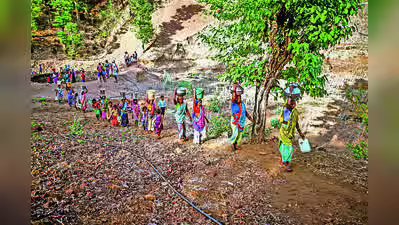
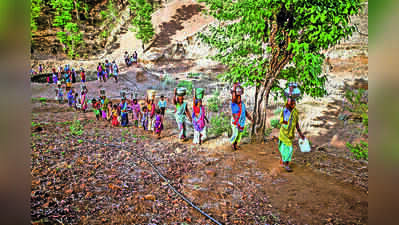
Pune: Groundwater depletion has spread to 80 more tehsils in Maharashtra in just a month, taking the total number of tehsils recording below-normal groundwater levels to 303 from 223, indicating a rapid deterioration in the state’s water situation amid the ongoing drought. Officials from the Groundwater Surveys and Development Agency (GSDA) said the count also meant nearly 86% of Maharashtra’s 353 tehsils were now reporting below-normal groundwater levels.The sharp spike in the number of tehsils has raised concerns among groundwater experts and government officials, especially as several districts received little or no rainfall since the withdrawal of the southwest monsoon.“In some of these tehsils, we recorded groundwater levels below three metres. In other places, the water table has gone even deeper. This is an extremely worrisome situation for the state, and it could get worse,” said a senior official from GSDA. The agency’s geologists physically inspect wells, natural springs and other water sources in the area to determine groundwater availability.Marathwada region has recorded the worst decline in groundwater levels, the readings showed. But the number of tehsils in western Maharashtra reporting below-normal groundwater levels has also increased. Solapur, Satara and Sangli districts have all reported deterioration, raising concerns over availability of irrigation water during the ongoing rabi season in western Maharashtra, which is known for producing top quality fruits and sugarcane.State govt has now directed GSDA to start large-scale groundwater recharge measures. Agency officials said they were in the process of hiring contractors to construct thousands of recharge shafts across drought-affected regions.“These recharge channels will help conserve water if we receive unseasonal rainfall in the coming months. They will provide long-term benefits too. The plan is to have thousands of these shafts in the affected tehsils,” GSDA commissioner, Ravindra Khebudkar, told TOI on Sunday.He said the recharge shafts will be approximately 20 feet deep and are designed to facilitate percolation of rainwater into underground aquifers. Pits surrounding the shafts will be filled with pebbles and sand to filter water before it enters the ground. Work to set up these shafts is expected to start next month.The GSDA this year has also expanded its groundwater monitoring network to gather more localised data, adding 1,200 observation wells to take the total number of wells to over 5,000 from the earlier 3,817.The impact of declining groundwater is already being felt in farms across the state. “Farmers will now have limited water available for irrigation. We expect rabi sowing to decline significantly. It could fall below 50% in some of these affected regions,” a senior agriculture department official said.Experts TOI spoke to warned a groundwater crisis of this scale can have serious consequences. “In several drought-prone regions, wells and borewells act as an important buffer for irrigation and drinking water requirements. A continued decline of the water table could force farmers to deepen borewells, pay more for water extraction and intensify competition between agricultural and domestic users,” said one irrigation expert who has been working with the state govt to fix the problem.Hydrogeologists said groundwater recharge in Maharashtra’s predominantly basaltic geological formations depended entirely on rainfall percolating through weathered rock layers, fractures and joints. “Consequently, even isolated rain may not automatically translate into substantial groundwater recovery, unless suitable recharge structures and catchment-level conservation measures are in place. Govt should have built these structures when there were warnings of El Nino conditions this year. They failed to heed those alerts, which is why we’re in this situation,” said a senior hydrologist who is on state govt’s advisory board.Agrometeorologists said declining soil moisture, combined with inadequate groundwater availability, could affect crop establishment and yields. In several parts of the state, the rabi season is particularly dependent on residual moisture and supplementary irrigation.“We have been advising farmers to opt for jowar cultivation as it requires a minimum moisture level. They may eventually get fodder, if not crops,” said a senior official from the state agriculture department.