









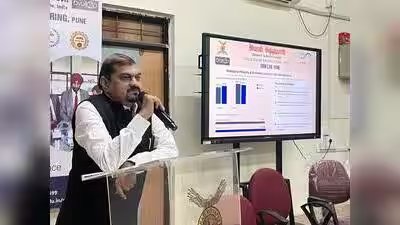
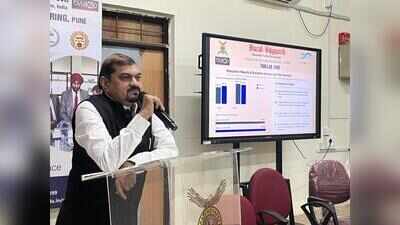
Pune: A 2 MW off-grid solar microgrid integrated with hydrogen fuel cells and lithium-ion energy storage has been studied using artificial intelligence (AI) to improve energy resilience at defence installations. The feasibility study was undertaken by Bharati Vidyapeeth (Deemed to be University), College of Engineering, Pune (BV(DU)COE), in collaboration with Military Engineering Services (MES), Government of India.The project explored AI-based energy-management strategies and hybrid energy-storage systems for defence infrastructure, where reliable power supply is critical. The consultancy project was developed through the Flow AI Innovation and Research Laboratory (FAIR Lab), a Centre of Excellence at BV(DU)COE.The project brought together faculty and students from the departments of information technology, electrical engineering, and computer science and business systems. A consultancy project completion review was held at the college to present the findings and future scope of the work.Umesh Kumar, chief engineer and joint director general (personnel & training), assistant director general (design & consultancy), Pune, said AI should be used only after understanding the problem thoroughly. He emphasised the need for critical and logical thinking among students and said multidisciplinary expertise would be important for addressing complex engineering challenges. He also highlighted opportunities for students and faculty to contribute to future MES projects.Brajendra Kumar, IDSE, director (design), and Mitesh Barkale, IDSE, director (design), were also present.Dr Rajesh Prasad, principal, BV(DU)COE, said the FAIR Lab had created a structured platform for connecting academic expertise with challenges faced by government and industry. He said the MES problem was taken up as an interdisciplinary consultancy project through the laboratory.Dr Sonali Mali, head, department of information technology, said the project demonstrated how AI and interdisciplinary engineering could be applied to complex real-world problems. Dr Milind Gayakwad explained the implementation of the project and the contributions of the three departments.BTech IT student Rushikesh Girpunje presented the comparative study linked to the research paper and outlined the future scope of the project. He also highlighted the practical experience gained by students while working on an actual engineering problem posed by MES.The initiative is aimed at strengthening collaboration between academia, government and industry while giving students exposure to technology applications in defence infrastructure.