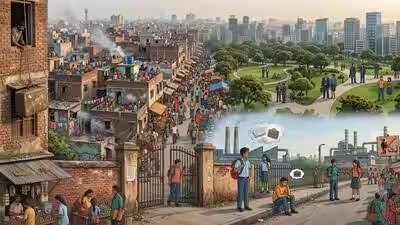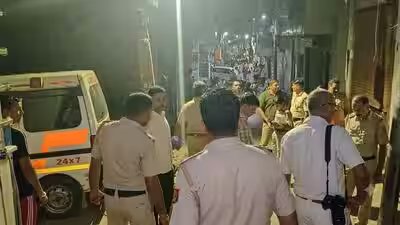










New Delhi: Before dawn breaks over Delhi’s Lal Bagh slum, Reshma quietly leaves her small shack made of plastic sheets and sackcloth. The lanes are still dark when she begins rummaging through garbage piles for scrap and firewood. By the time the city wakes up, she has already spent hours working on an empty stomach.At home, four children wait for her return. On some days, they get to eat only once. On others, there is nothing at all. “I keep thinking about food the whole day,” says the 30-year-old mother. “Not for myself, but for my children. When they sleep hungry, I feel helpless.”Reshma came to Delhi after marriage, hoping life would improve. Instead, poverty enveloped her family. Her husband, who occasionally plays drums during festive seasons, spends much of what he earns on alcohol and gambling. “He beats me up and sometimes throws me out of the shack,” Reshma says. “Once, he badly injured my eye. I wanted to complain, but I was threatened. I had nowhere to go with my children.”Over the years, hunger and stress began eating into her health. She often feels faint while working and struggles with constant weakness and low blood pressure. Yet stopping is not an option. Every morning at 4, she heads out, earning barely Rs 200 collecting scraps throughout a backbreaking day.Women like Reshma are at the centre of a growing crisis in Delhi’s slums, where poverty, malnutrition and poor healthcare combine to create silent emergencies inside thousands of shacks. Many women survive on inadequate food, ignore illnesses for years and continue physically demanding work even when their bodies are close to collapse.Healthcare remains out of reach for most. Govt hospitals are overcrowded and many are far from slum settlements. Private treatment is unaffordable. Missing a day’s work to visit a doctor can mean losing the only income a family has for food.Asha Community Health and Development Society, a Delhi-based organisation working among slum communities, says women are often the last to receive care despite bearing the greatest burden within such households. Asha is trying to bridge this gap with mobile clinics, nutritious meals, health check-ups, supplements, counselling and community outreach.The programme particularly focuses on women facing extreme poverty, domestic violence, abandonment, chronic illness and maternal health complications. Community health volunteers conduct home visits to identify women at risk and connect them to medical support.“In Delhi’s slum communities, many women live on the edge of survival — raising children alone, caring for sick family members, or coping with abandonment and poverty. In most homes, women eat last and the least. Over time, hunger, anaemia and exhaustion weaken their bodies, yet they continue working and caring for their families until they can no longer carry the burden alone,” said Dr Kiran Martin, founder and director of Asha.She added, “By the time many of these women reach us, they are already exhausted and unwell. Through this programme, each one of them will receive a freshly prepared, nutritious meal, along with healthcare and essential supplements.”In Lal Bagh, 20-year-old Lalita fights a similar battle. Married off at just 15 because her family could no longer afford to feed everyone at home, she says hunger has shaped most of her life. “I have never seen a full plate of food,” she says. “Even now, I make sure my child eats first. If something is left, then I eat.”Lalita lives with her husband and three-year-old child in a fragile shanty covered by a thin tarpaulin sheet. During monsoons, rainwater seeps inside, soaking the floor where the family sleeps. To survive, she spends hours collecting scrap from garbage dumps while her husband tries to earn money by selling lemons door to door or playing drums during festivals. However, on many days, they return home with almost nothing to show for their toil.The lack of nutrition has severely affected Lalita’s health. She has lost significant weight and often feels too weak to work. Yet she continues because stopping means no food for her child. “When I feel dizzy, I just sit for some time and then continue,” she says. “What else can I do?”