




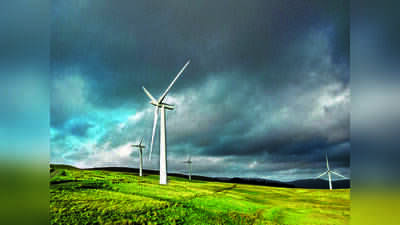
Ahmedabad: Gujarat witnessed a sharp decline in wind power generation in Oct even as electricity demand climbed to an all-time high, putting additional pressure on the state’s power sector. The drop came during a period marked by weak monsoon conditions and the continuing impact of El Niño.Official data shows that peak wind power generation in Oct 2026 was 2,030MW, compared with 4,639MW in Oct 2025, a decline of 56%. In energy terms, wind generation fell from 939 million units (MU) a year ago to 451 MU this Oct, down 52%. Sector officials attributed the decline to irregular wind patterns across coastal regions, where a majority of the state’s wind power capacity is located.A senior state govt official said Gujarat’s electricity demand had reached a record level of nearly 30,000MW while wind power generation had fallen sharply during the same period. He said the reduction in output had affected the overall power sector, but govt had taken measures to ensure adequate electricity supply.Electricity demand rose significantly during Oct. Data shows Gujarat’s maximum power demand touched 29,822MW in Oct 2026, up from 21,822MW in Oct 2025, an increase of 37%. Total energy supplied up to Oct 26 rose to 12,034MU from 8,994MU during the corresponding period last year, reflecting a 34% increase.Industry representatives said the decline in wind generation was unusually steep for the post-monsoon season. Jigar Shah, treasurer of the Gujarat chapter of the Indian Wind Power Association, said uncertain and irregular wind conditions had led to a substantial fall in generation. He noted that such a situation is generally seen only once every five years. While wind generation typically peaks between April and July before tapering off, the decline this year has been much sharper than usual.Power consumption growth was driven largely by agriculture and industry. Agricultural power use rose 72% to 2,521MU in Oct 2026 from 1,464MU in Oct 2025 as farmers relied more heavily on irrigation due to weaker rainfall. Industrial consumption increased 27% to 6,019MU from 4,743MU, indicating sustained economic activity and higher operational demand.Officials and industry stakeholders said the combination of record electricity demand and lower wind generation has increased pressure on grid managers to balance supply, especially during peak hours. They added that maintaining adequate conventional and renewable backup capacity has become increasingly important to meet seasonal demand.