








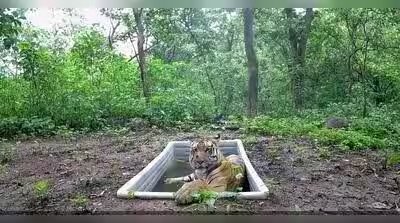
Ahmedabad: Gujarat’s lone tiger may soon have a pair of potential mates, but before the tigresses can venture into his territory in Ratanmahal, the forest department is preparing adaptation enclosures for them. The two enclosures, likely to span five hectares each, will serve as temporary homes where the striped queens can settle into their new surroundings while the resident male gets a chance to pick up their scent and hear their calls before any encounter in the wild.The department has floated tenders for two enclosures — one in Dang and the other in Narmada district — which are expected to be ready within 45 days. While options ranging from two to five hectares are under consideration, officials favour the larger model. Two to three proposals have been submitted to the National Tiger Conservation Authority (NTCA), which will decide the approach to be adopted.The idea is to give each tigress time to acclimatise to her new surroundings before she is released into the wild. The enclosures could also help the resident male become familiar with the presence of a potential mate through scent and vocalisations. Officials believe such an introduction could help them understand how the male responds to the arrival of females in the landscape, without immediately bringing the animals face to face.Forest officials cited an interesting example from Sakkarbaug Zoo, where a male lion would often approach an enclosure after hearing a lioness’s call. They hope to study whether the presence or calls of a tigress could evoke a similar response from the male tiger.Principal chief conservator of forests Jaipal Singh confirmed the department was considering five-hectare enclosures for the tigresses. “The facilities could subsequently be used for herbivore breeding once the tigresses are released,” Singh said. A senior forest officer in Gandhinagar said strengthening the ungulate population would help build a sustainable prey base, a critical requirement if the landscape is to support a breeding tiger population in the long run.The exercise is also about preparing Gujarat’s forest personnel for an animal whose behaviour is markedly different from that of the Asiatic lion. Unlike lions, which live in prides, tigers are largely solitary and fiercely territorial. Officials, whose field experience has centred on lions, want to understand the tigresses’ movement patterns, aggression levels and responses to unfamiliar surroundings before releasing them. Camera traps will monitor their behaviour, movement and readiness for release.