







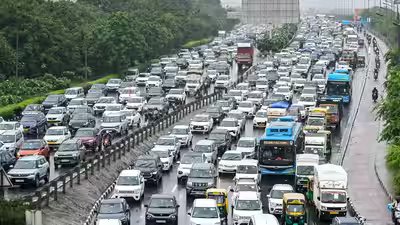
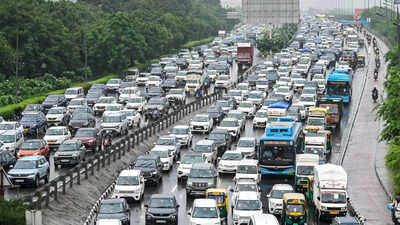
NEW DELHI: Imagine the exit gates of a packed stadium. If everyone rushes out at once, chaos is inevitable. But if the crowd is staggered and slowed down before reaching the gate, people get through faster. That is the idea behind a pilot study for tackling congestion on the Delhi-Meerut Expressway (DME).Anyone who has driven on DME during the evening rush knows the frustration. A highway built for speeds of 100 kmph suddenly slows to a crawl near Akshardham as thousands of cars, buses and trucks converge, leading to a bottleneck. Instead of widening roads, the solution may lie in slowing vehicles down before the congestion sets in, according to researchers.To test the idea, Prof Satish Chandra of IIT Roorkee and Dr Chalumuri Ravi Sekhar, director, CSIR-Central Road Research Institute, with funding from the ministry of road transport and highways, have undertaken a pilot study, titled ‘A Pilot Study on Effect of Variable Speed Limit on Driver’s Behaviour’.
DME Pilot To Check If It Reduces Abrupt Braking, Prevents Congestion
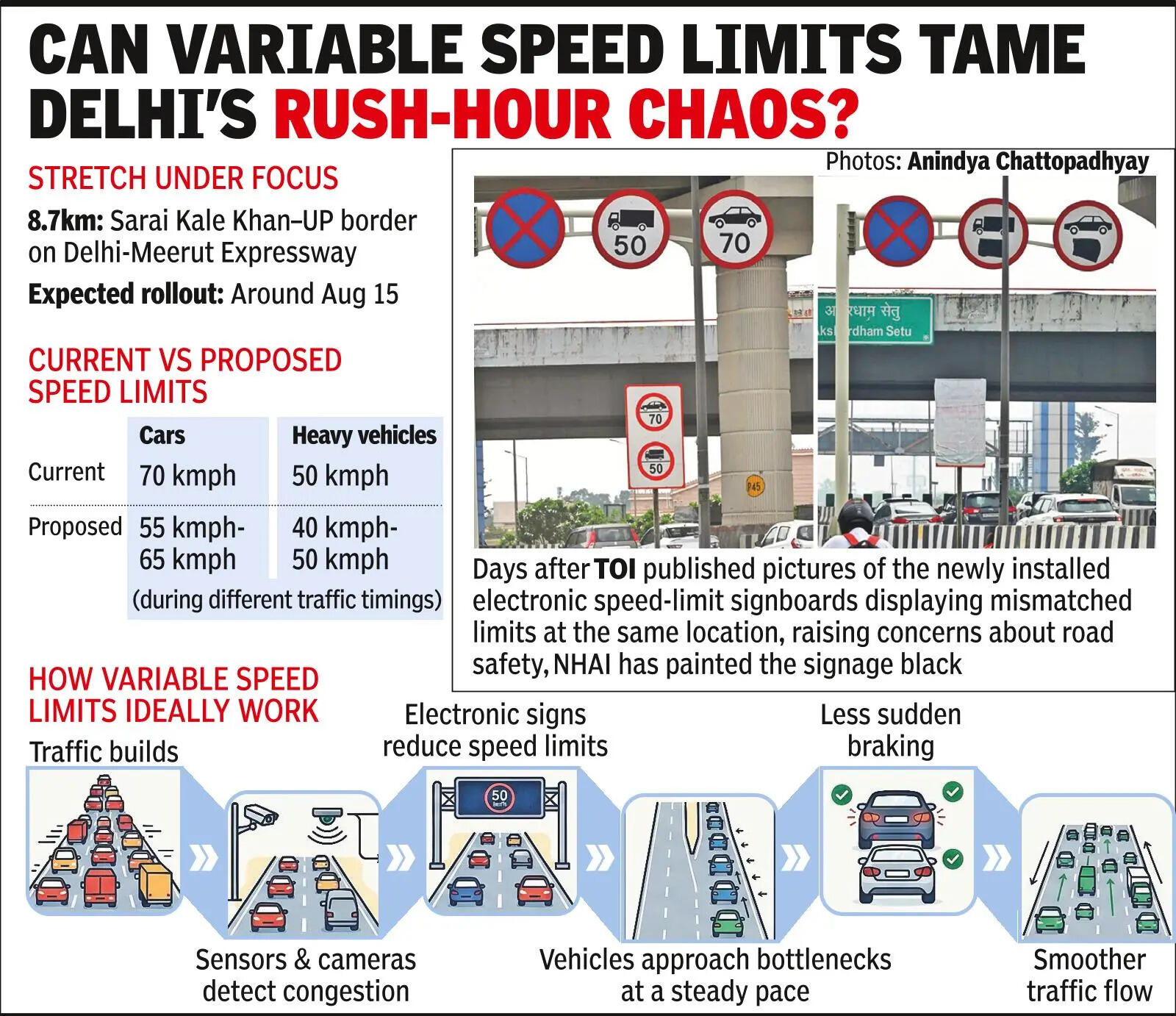
“Sometime around Aug 15, an 8.7km stretch of DME between Sarai Kale Khan and the UP border is set to become the country’s first test bed for variable speed limits (VSL). Instead of displaying a fixed speed limit throughout the day, electronic signs will change the permissible speed in real time, depending on traffic conditions,” Prof Chandra told TOI.At present, vehicles on this section follow a fixed speed limit of 70 kmph for cars and 50 kmph for heavy vehicles, irrespective of traffic conditions. Under the pilot, the electronic signs will display different speed limits through the day depending on traffic volumes.Unlike conventional speed limit boards, VSL signs are linked to traffic sensors and cameras. They automatically lower speed limits when congestion or poor weather is detected and raise them as conditions improve, helping smooth traffic flow and reduce crashes. The technology is already used in countries like the US, UK and Germany.Before proposing the system, the researchers analysed 72 hours of traffic data collected through cameras near Akshardham Plaza in July 2024. The footage, covering two weekdays and one weekend, captured traffic at the point where the speed limit currently drops from 100 kmph to 70 kmph.The analysis showed that cars account for more than 80% of the traffic on the corridor while heavy vehicles contribute between 4% and 12%. Traffic builds steadily through the day, eases slightly in the afternoon and then surges during the evening office rush. It is during this period that the highway slips into stop-and-go conditions, making it an ideal setting to test whether dynamic speed management can prevent bottlenecks.Using an internationally accepted benchmark, researchers also determined realistic speed limits based on how most motorists naturally drive. During peak congestion, this ranged between 75 kmph and 88 kmph for cars, providing the basis for designing the dynamic speed limits.Based on the findings, the study has proposed replacing the existing fixed limit with time-based variable limits. Between midnight and 7am, when traffic is light, the optimum speed is estimated at 65 kmph for cars and 50 kmph for heavy vehicles. From 7am to 5pm, the recommended limits are 55 kmph and 45 kmph, respectively. During the evening peak hours, from 5pm to midnight, when congestion is at its highest, the suggested limits are 60 kmph for cars and 40 kmph for heavy vehicles.The aim, researchers said, is not to slow traffic overall, but to reduce abrupt braking, maintain a steady flow and prevent traffic jams from developing.Electronic VSL signs will be installed near the Akshardham interchange in both directions. “We’ve asked Delhi Traffic Police to enforce the dynamic speed limits through challans during the trial, as compliance is critical to assessing the pilot,” said Ravi Sekhar.After installation, researchers will conduct before-and-after assessments after 30, 90 and 120 days, comparing traffic speeds, congestion levels, speed variations and driver compliance to evaluate the effectiveness of the system.If successful, the pilot could pave the way for variable speed limits on other expressways. Researchers said dynamic speed management could offer a relatively inexpensive way to improve traffic flow and road safety without relying solely on costly road widening projects, while also providing the scientific basis for national guidelines on deploying the technology across the country’s expressway network.