








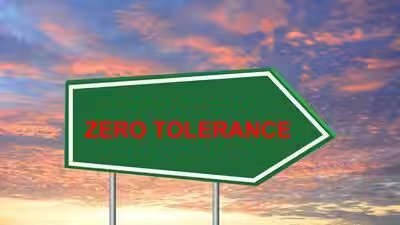
Most speed-limit signs across the United States are simple and straightforward. They display the maximum legal speed and little else. But drivers travelling through Oklahoma may notice something unusual. Beneath the posted speed limit, many signs carry an additional message: “No Tolerance.” For first-time visitors, the phrase can be confusing. Does it mean you’ll be fined for driving just 1 mph over the limit? Is Oklahoma stricter than every other state? Or is it simply a warning meant to make motorists think twice before pressing the accelerator? The answer lies somewhere in between. While the signs don’t introduce a new law, they reinforce Oklahoma’s approach to speeding enforcement and remind drivers that the posted speed limit is exactly that – the legal limit. What does “No Tolerance” actually mean?Unlike some drivers’ belief that there’s an unofficial “buffer” of five or so miles per hour above the speed limit, Oklahoma law treats the posted speed limit as an absolute limit. Legally speaking, travelling even slightly above that speed is considered speeding. The “No Tolerance” message is meant to eliminate any assumption that officers will automatically overlook minor violations. In other words, motorists should not expect a grace margin simply because many drivers commonly travel a few miles per hour over the limit. However, this does not mean every driver going 1 mph over the limit will automatically receive a ticket. Law enforcement officers still exercise discretion based on traffic conditions, road safety, weather, driver behaviour and other circumstances.

Image Credit: Canva
Oklahoma has two speeding lawsPart of the confusion comes from the fact that Oklahoma enforces two different speeding standards.The first is the Absolute Speed Limit Law, which states that driving faster than the posted speed limit is a violation. Whether it’s 1 mph or 15 mph over the limit, exceeding the posted speed is technically illegal. The second is the Basic Speed Law, which requires drivers to travel at a speed that is reasonable and safe for existing road conditions. That means even driving at the posted limit could be considered unsafe if visibility is poor, traffic is heavy or weather conditions make higher speeds dangerous. Together these laws encourage drivers not only to obey the posted speed but also to adjust their driving according to road conditions.Why did Oklahoma introduce these signs?The “No Tolerance” wording didn’t appear by accident.The Oklahoma Turnpike Authority first introduced the signs in 1998 as part of a public safety campaign aimed at reducing speeding-related crashes on turnpikes. The initiative was designed to remind drivers that the speed limit should be strictly observed, rather than treated as a suggestion. Several years later, in 2012, Oklahoma expanded its road safety efforts through the Highway Safety Corridor Project. The programme targeted roads in Pottawatomie County that had experienced particularly high crash rates. During the campaign, the Oklahoma Highway Patrol was instructed to enforce speed limits aggressively including issuing citations for even minor speeding violations in designated safety corridors.Although not every Oklahoma road falls under these initiatives, the signs continue to serve as a visible reminder that strict enforcement may occur.Can you really get a ticket for just 1 mph over?
Image Credit: Canva
Technically, yes. Because Oklahoma follows an absolute speed limit system, law enforcement officers have the authority to issue a speeding citation for exceeding the posted limit by even 1 mph. Many officers focus on more significant speeding violations but the “No Tolerance” signs signal that drivers shouldn’t assume they’ll receive a warning instead of a ticket.According to the Oklahoma Department of Transportation, drivers are ultimately responsible for following posted speed limits. Contesting a speeding ticket can be challenging, as motorists typically need to demonstrate that their speedometer was inaccurate or that the speed-detection equipment used by law enforcement was faulty. However, first-time offenders, or those with a clean driving record for several years, may be eligible for options such as a deferred sentence, reduced penalties, or a defensive driving course. These alternatives depend on the policies of the county or municipal court handling the case, so drivers should refer to the court listed on their citation for specific information.What happens if you’re caught speeding?Oklahoma’s speeding penalties increase based on how far a driver exceeds the posted limit.According to the state’s statutes, even minor speeding offences can result in fines, while substantially exceeding the speed limit can lead to much steeper penalties and in serious cases, possible jail time. Drivers who believe a citation was issued in error can challenge it in court, although proving that a speed-reading device was inaccurate or improperly used may be difficult.A reminder rather than a new ruleThough intimidating, the “No Tolerance” signs do not constitute another crime or reduce the speed limit; they simply emphasise that the number shown on the sign is the absolute legal limit rather than a suggestion that can be exceeded. For visitors driving through Oklahoma, the safest approach is straightforward – treat the posted speed limit as the actual limit, especially in areas marked with “No Tolerance.” Besides helping drivers avoid fines, maintaining the correct speed reduces stopping distances, improves reaction times and contributes to safer roads for everyone.Ultimately, the main aim of these signs is more about emphasising the existence of speed limits rather than creating new strict laws.