









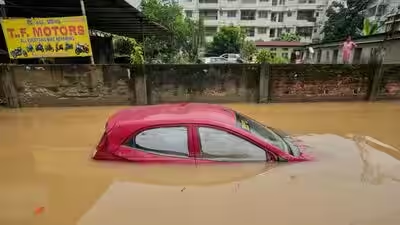
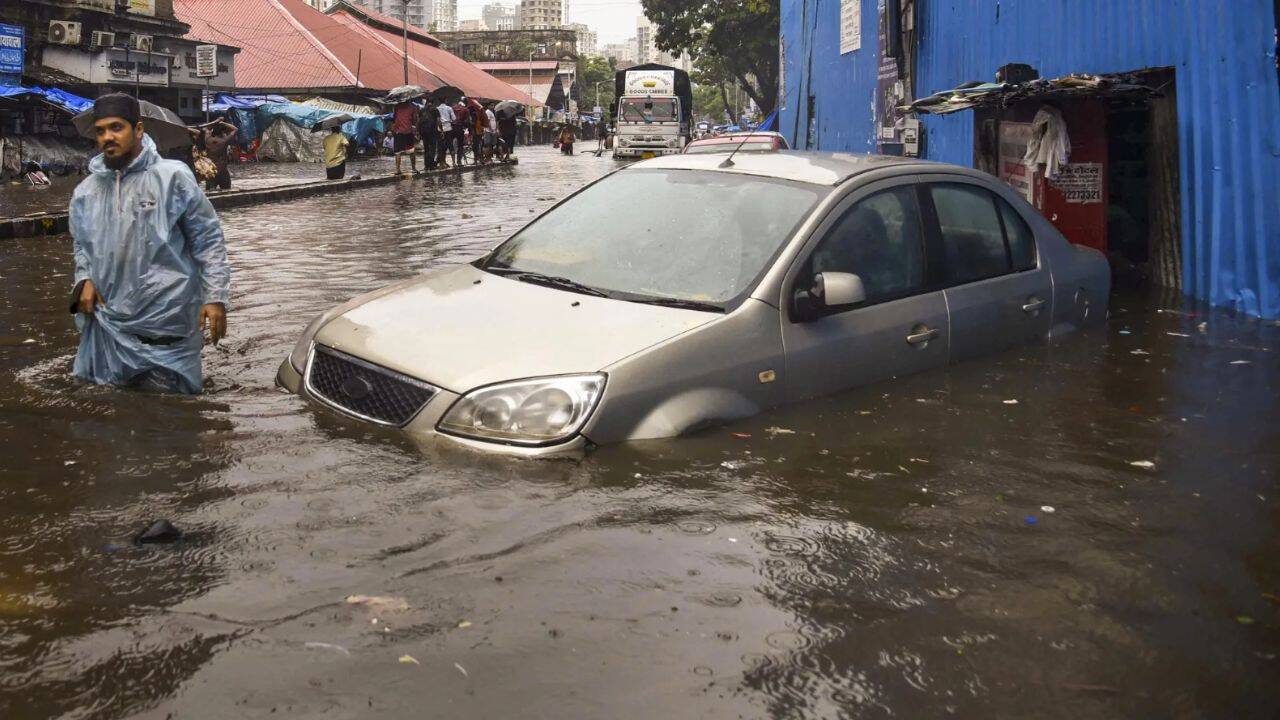
NEW DELHI: Urban flooding is becoming a fixture in India’s monsoon reality and many drivers assume that electric vehicles are the first to fail because of their batteries. But automotive engineers say it’s the reverse.Every monsoon, the story is the same. Sheets of water swallow up roads, underpasses become lakes and motorists nervously pick their way through flooded streets, hoping their vehicles will make it home.
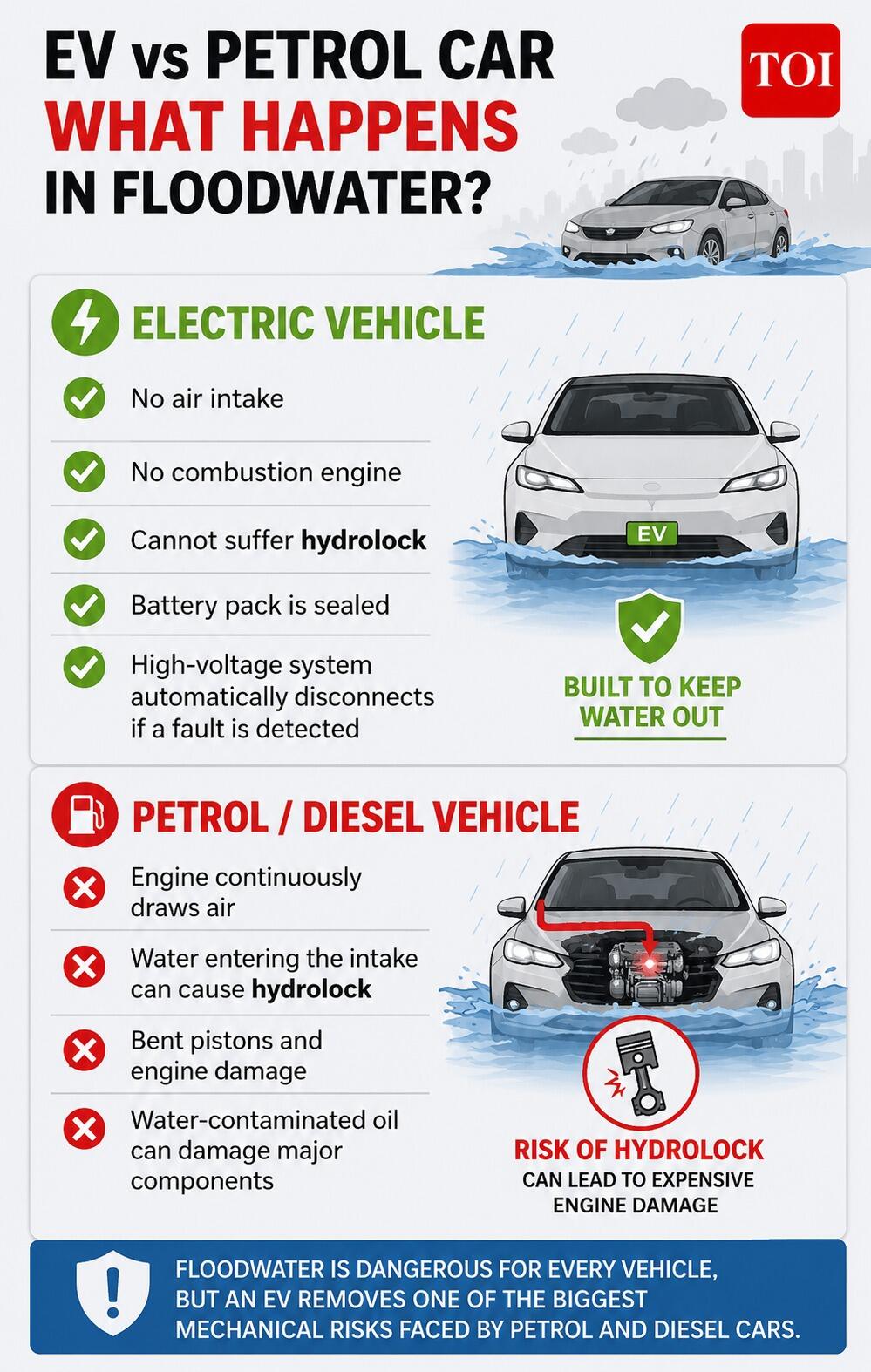
With the rain comes another yearly debate: are electric cars safe in water? Videos of EVs under water often stoke fears of electrocution or battery explosions, perpetuating the notion that battery-powered cars and floodwaters don’t mix.But that’s one of the biggest myths surrounding electric mobility, say auto experts. In fact, a properly constructed electric car may be better suited to the common urban flood than a petrol or diesel-powered one. The difference is not due to marketing hype, but how the two technologies are fundamentally built.
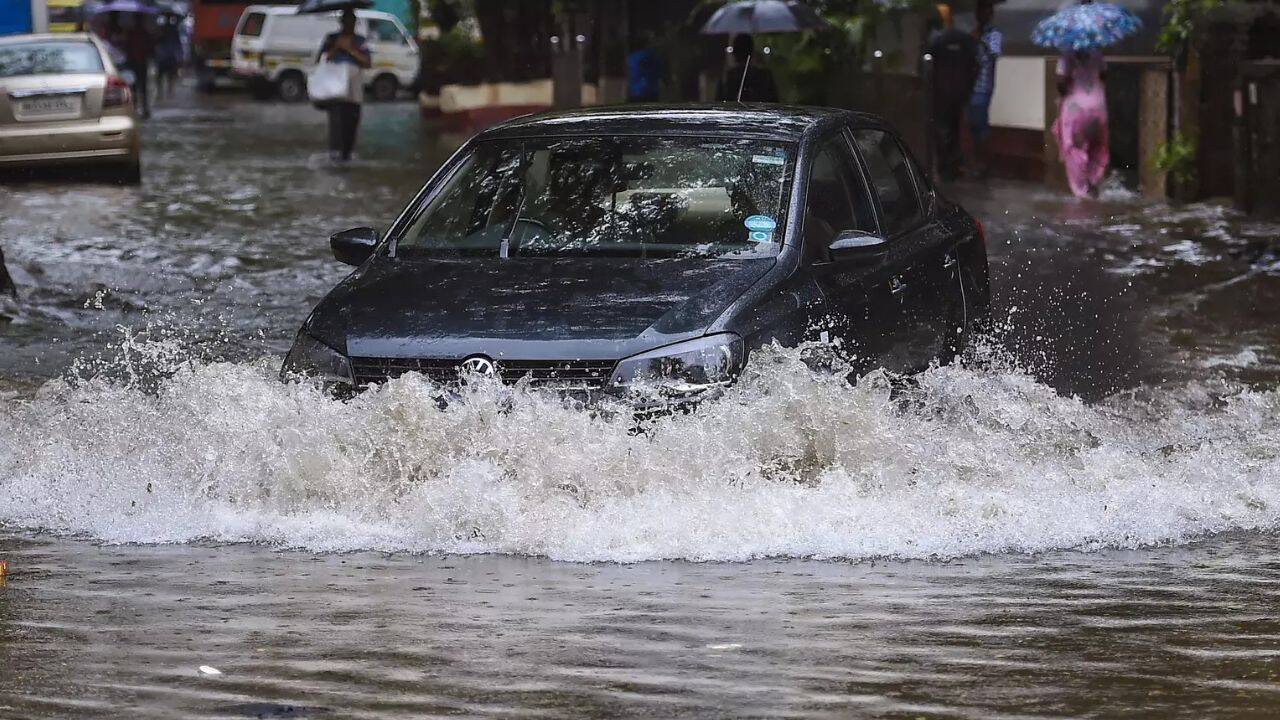
Petrol and diesel cars have a weakness and that is the engineThe petrol or diesel car has one main thing it relies on and that is air. The engine is always taking in air through an intake system to keep the burning going. If floodwater enters that intake, the engine can suffer what mechanics call hydrolock, which is one of the most serious forms of engine damage.
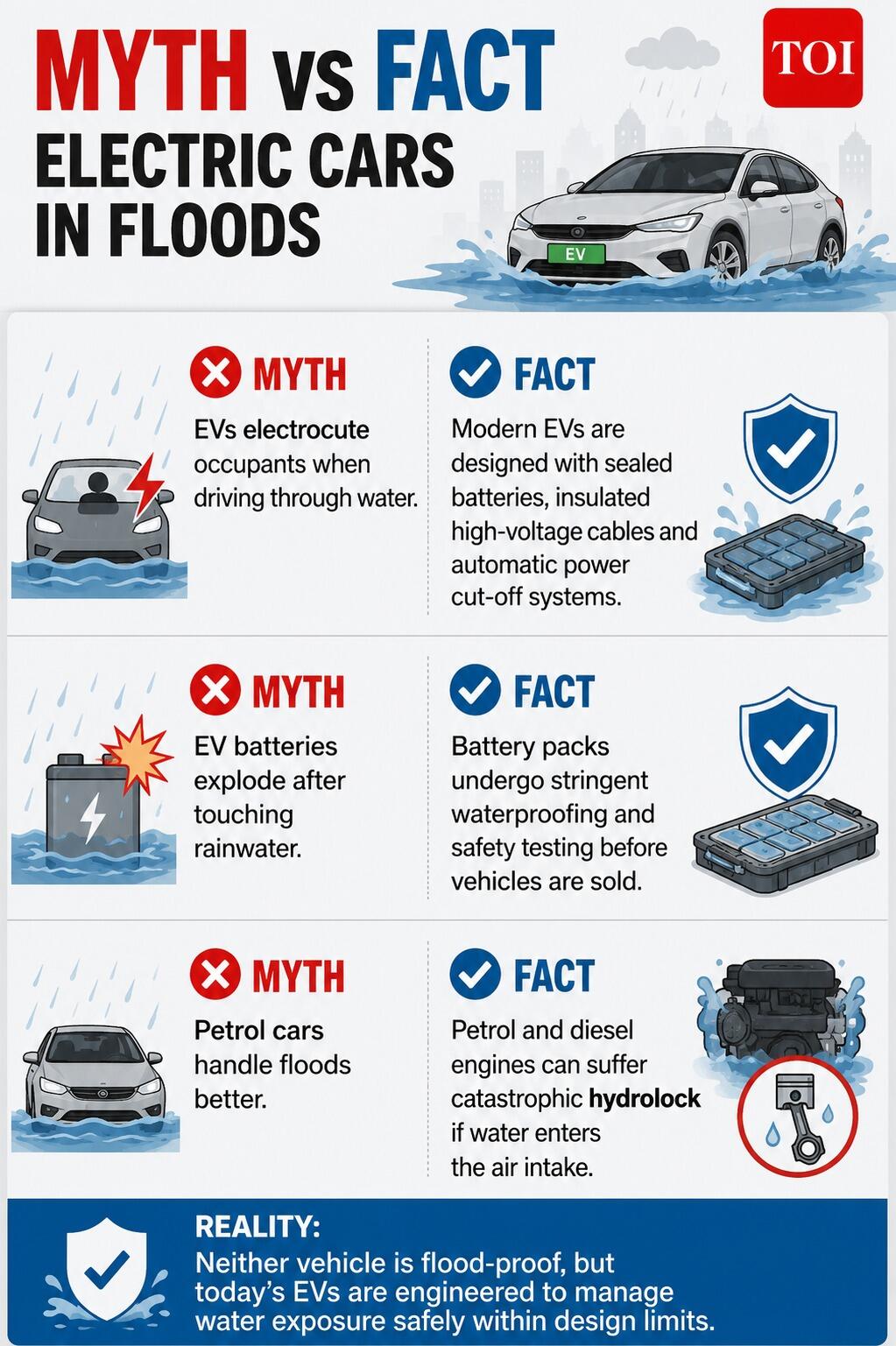
Water isn’t compressible like air is, so pistons trying to compress it can bend connecting rods, crack engine blocks and destroy internal components. Even without complete engine failure, water contamination of engine oil can lead to damage to the exhaust, alternator, starter motor and electronic control units leading to repair bills of several lakh rupees. That’s one of the reasons flood damage is regularly ranked by insurers as one of the most expensive claims for internal combustion engine vehicles.
This is not a problem with electric carsElectric vehicles are built very differently from petrol and diesel cars. They have no engine with pistons, cylinders or air intakes that continuously draw in outside air. Instead, a sealed electric motor is powered by electricity stored in a lithium-ion battery pack.
Since there is no combustion engine, an EV cannot suffer hydrolock—the catastrophic failure that occurs when floodwater enters a petrol or diesel engine’s air intake and reaches the combustion chamber. While an EV can still sustain damage if submerged in deep water, it is immune to one of the biggest mechanical risks that conventional vehicles face during floods.
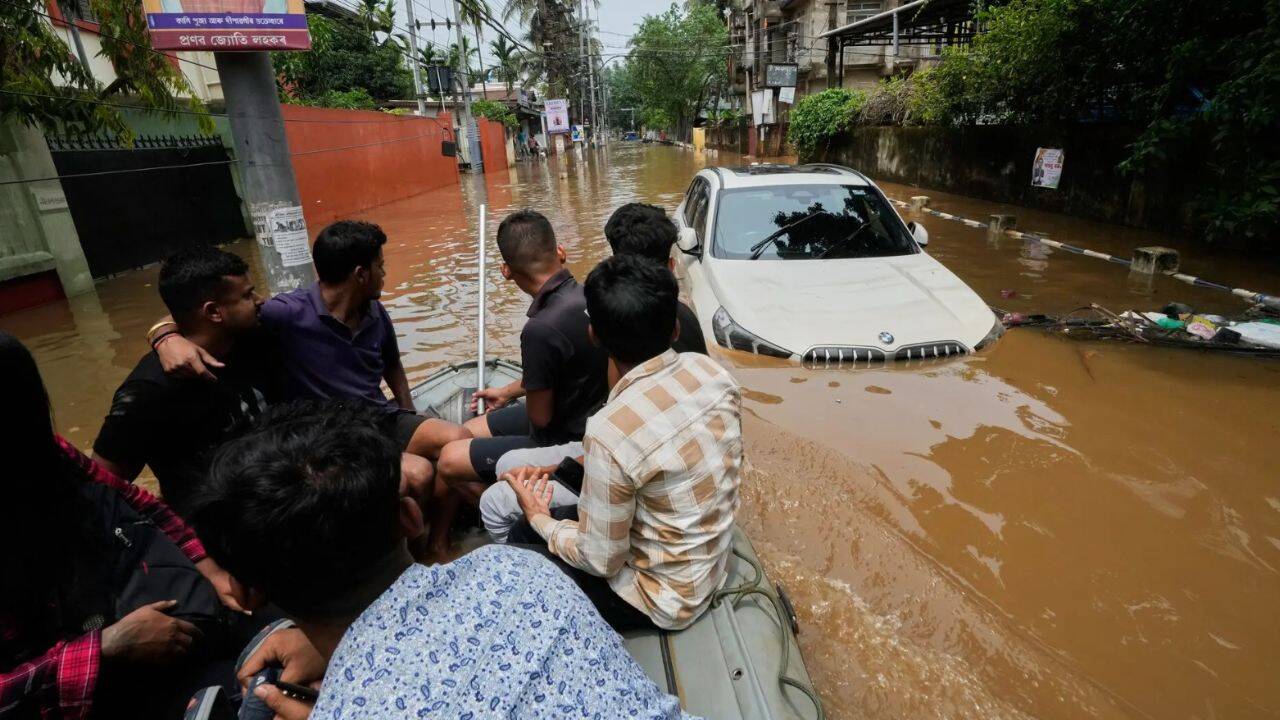
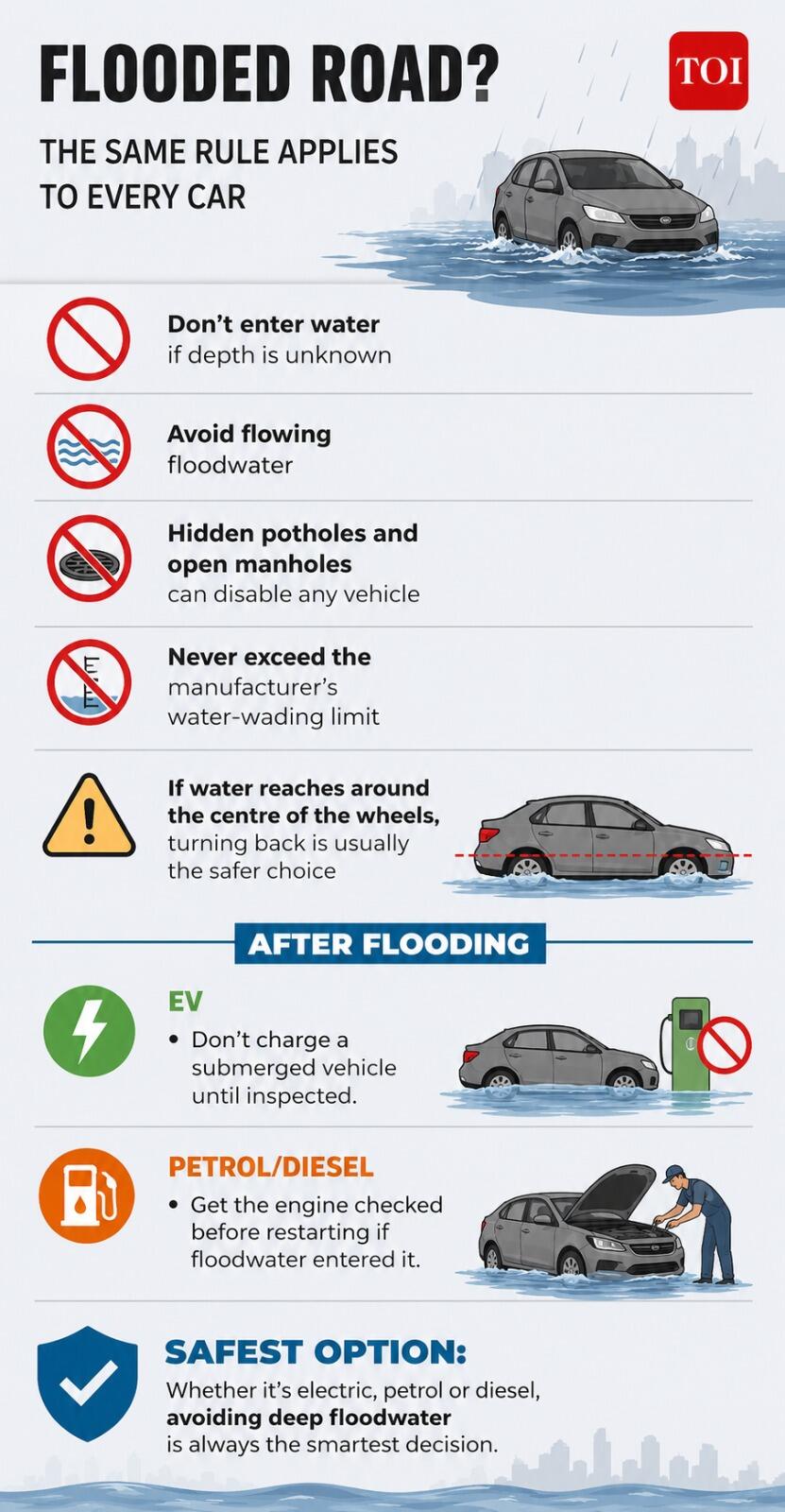
Built to keep water out, not electricity in A lot of the fear around EVs is the idea that if water gets into the battery it will turn into an electrical hazard immediately. But today’s electric cars are designed to avoid that very situation. They have sturdy aluminium or steel casings for their battery packs and high-voltage cables are well insulated and moisture-sealed.Most manufacturers design battery systems to meet internationally recognised waterproofing standards such as IP67 or IP68 and can withstand temporary immersion under controlled conditions. More importantly, sophisticated battery management systems monitor voltage, insulation and electrical resistance at all times. In the event of an abnormality, the vehicle will quickly cut the high voltage battery from the rest of the system in milliseconds, greatly minimizing the chances of receiving an electric shock.Why experts say biggest fear is out of placeMultiple international safety agencies have made it abundantly clear on multiple occasions that occupants inside a modern electric car are not generally at risk of electrocution simply because the car is sitting in rainwater or shallow floodwater. Certification means a lot of crash testing, water-ingress testing and electrical safety validation before an EV gets to market. That’s why countries with high EV adoption, like Norway, China, Germany and the United States, continue to drive millions of electric cars through heavy rain, snow and seasonal flooding without evidence of widespread electrical accidents tied to floodwater.Flood proof? No wayThe engineering benefits of EVs are not to be confused with invincibility. Deep floodwater is dangerous for any type of vehicle. Water intrusion into the passenger cabin can damage electronics, airbags, seats and infotainment systems. Extended periods underwater can also damage wheel bearings, brakes, suspension components and charging ports.Manufacturers urge owners of both electric and conventional vehicles to have flood-damaged cars checked before returning them to regular use. With EVs, experts also advise against charging a vehicle that has been totally submerged until qualified technicians say it’s safe for the battery and charging system.Changing weather in India is changing debateThe discourse has become all the more relevant as India’s weather is changing and so is India’s automobile market. Short duration, high intensity rainfall events are increasing and overwhelming the drainage infrastructure in cities such as Mumbai, Delhi, Bengaluru, Hyderabad and Chennai, the India Meteorological Department said. It’s almost an annual event now rather than an occasional one for the cities to be flooded.At the same time, electric mobility has now gone mainstream. India now has more than eight electric vehicles in the Ministry of Road Transport and Highways’ VAHAN database, with passenger car sales rising steadily as manufacturers broaden their product portfolios. For millions of shoppers considering an EV, flood performance is a real-world issue, not a theoretical one.Reality shows a different storySome important clues lie in the world’s largest EV markets. Even in Norway, where more than 90% of new passenger cars sold in 2025 were fully electric, EVs endure harsh winters, torrential downpours and flooding. China, which has the world’s largest EV fleet, frequently experiences savage monsoon conditions in many of its provinces, and there are no reports to suggest that EVs are particularly vulnerable to waterlogged roads.Isolated lithium-ion battery fires have been seen after vehicles were submerged for extended periods of time in severe hurricanes or coastal flooding, especially in salt water. But investigators have separated these rare cases from the regular urban waterlogging that happens during daily commute. The same goes for petrol and diesel vehicles, which can also be subject to hidden corrosion and electrical failures after flooding.The safest rule still appliesWhether the car is petrol, diesel or electric, the safest option during flooding is often not to drive through it at all. A hidden pothole, an open manhole or a fast moving current can disable any vehicle in seconds. Whatever the powertrain, manufacturers will specify a maximum water-wading limit and breaching that can mean pricey repairs. Almost always it is safer to turn back if water gets to the centre of the wheels, if it is flowing fast, or if its depth is not known accurately.Perception vs engineeringInstinct, not evidence, has long guided the debate over electric vehicles and flooding. For decades drivers have been used to the familiar sound of a combustion engine, while looking at a large battery pack with suspicion. But the engineering says the opposite. The Achilles heel of petrol and diesel vehicles is that their engines cannot tolerate the ingestion of water.That risk is completely removed in modern electric vehicles with sealed battery packs, waterproof electrical systems and multiple layers of electronic protection. India’s cities are experiencing stronger monsoons and the uptake of EVs is accelerating, but perhaps the biggest surprise is that the vehicle many people fear most in floods is actually the one best designed to cope more intelligently with wet conditions.