









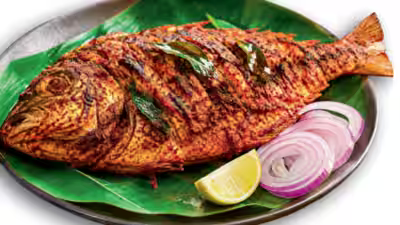
Four coastal locations in the state recorded elevated concentrations of lead, zinc, copper and iron in commercially important finfish. Kasimedu in Chennai had the highest zinc and lead levels in fish, a study published in Discover Environment revealed.All four locations had Hazard Index (HI) values above 1, the benchmark used to screen for potential health risks from long-term fish consumption. Mallipattinam recorded the highest HI (3.48), followed by Uppanar (2.50), Velankanni (2.21) and Kasimedu (1.91). Possible sources include industrial effluents, harbour activities, boat repair and urban waste.Led by Annamalai University’s Centre of Advanced Study in Marine Biology, the study analysed 20 fish and four sediment samples collected from the four locations. Popular varieties included Indian mackerel, Indian oil sardine, silver pomfret, threadfin bream, barracuda and anchovy.The HI was calculated using US Environmental Protection Agency models, assuming daily fish consumption of 57.5g and an average body weight of 55.9kg. An HI above 1 indicates potential health risks from long-term exposure, not proof of illness. Iron and lead contributed most to the estimated risk.
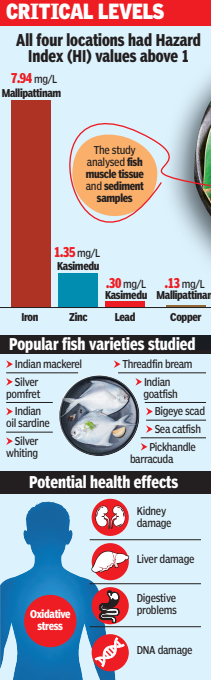
The authors discussed lead’s possible cancer risk, citing its classification as a probable human carcinogen by the International Agency for Research on Cancer. “Chronic ingestion of Pb-contaminated fish may elevate the risk of cancers affecting the kidneys, liver, and digestive tract, primarily due to its ability to induce oxidative stress, disrupt DNA repair mechanisms, and promote genetic instability,” said Naveenkumar Mahida, first author. The study did not calculate cancer risk.Kasimedu’s high zinc levels were linked to boat paints, anti-fouling materials and harbour runoff. Uppanar had the highest lead levels in sediments, possibly associated with SIPCOT industries, shipbuilding yards and urban waste. Mallipattinam recorded the highest iron and copper levels in fish, possibly linked to industrial discharges, boatyards, sewage and organic waste.Bottom-dwelling fish showed higher metal accumulation, possibly due to their contact with sediments and bottom-dwelling prey. Corresponding author Yuvrajav Dinakaran said sediments “serve as key sources and sinks of heavy metals in these coastal ecosystems”.FSSAI regulations set a lead limit of 0.3 mg/kg for fish; no fish-specific limits for zinc, copper or iron are listed. However, the study’s results were reported in mg/L, so they cannot be directly compared with the FSSAI limit. The authors called for “regular monitoring, effective waste management, and coastal remediation programmes” to protect aquatic life and public health.Expert comment“Lead is the most dangerous of these metals because it should not enter the body at all. Exposure can affect brain development in children and cause severe abdominal pain in adults. I have treated a patient who drank porridge daily from a lead-coated utensil. Lead poisoning can be difficult to diagnose because, unless it is suspected, doctors may not test for it. Iron, copper and zinc are essential in small amounts, but excessive levels can damage internal organs.”Dr Pandurangan (Basumani Interventional gastroenterologist)Where could the metals be coming from?Lead: Industrial effluents, shipbuilding yards, boat repair operations and urban wasteZinc: Boat paints, antifouling coatings, corrosion of galvanised materials and harbour runoffCopper: Industrial effluents, organic waste decomposition, pesticides, paints and anti-fouling agentsIron: Industrial effluents, boat yards, small-scale industries and domestic sewage