








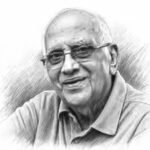
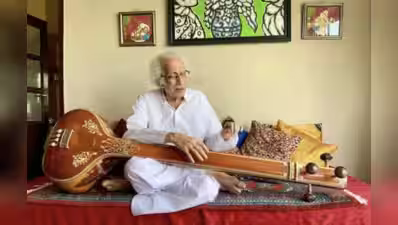
Kolkata: Bengal lost a definitive pillar of its classical music heritage with the passing of Sangeetacharya Amiya Ranjan Bandyopadhyay on Guru Purnima. The city is left mourning the centenarian maestro whose life was measured not just in years, but in unyielding devotion to the Bishnupur gharana.The khayalist was admitted to SSKM Hospital on July 8 after a fall at home. Although he was discharged after a surgery, his condition deteriorated a few days later, leading to his readmission. On Wednesday, he succumbed to a massive heart attack after being on ventilation support. Bandyopadhyay is survived by his wife, son, and daughter-in-law.Born in Kolkata on Feb 21, 1925, his monumental journey spanned a doctorate in aesthetics of music from Rabindra Bharati University in 1968, his groundbreaking international performances starting in Germany in 1981, and the Sangeet Natak Akademi award. Yet, his artistry extended far beyond accolades. His discipline remained legendary. His son and disciple, Pandit Shantanu Bandyopadhyay, often noted his exacting daily schedule—rising at 7 am, maintaining precise hours for meals, rest, and writing, and dedicating himself to teaching roughly 50 students globally, both in person and over speakerphone. At 85, he began learning Hindi to ensure flawless pronunciation in every bandish, and at 90, he embraced computers to expand his horizons.Connoisseurs described his music as emotive, mellifluous and peaceful. His centenary year had been a celebration of his towering legacy, highlighted by a landmark concert on Feb 21 when he performed at the Ramakrishna Mission Institute of Culture in Golpark. Twelve hundred listeners sat spellbound while 200 more were turned away for lack of space. With luminaries like Pandit Ajoy Chakraborty, Pandit Anindo Chatterjee, Pandit Kushal Das, and Pandit Subhen Chatterjee in the audience, the veteran vocalist offered a masterclass in music, enchanting connoisseurs with emotive phrasing, intricate meends, and quicksilver taans. Plans were actively underway for a special centenary tribute in Bangladesh this Aug. “Both my mother and I were his disciples. He was my mother’s PhD guide. She also learnt from him when she was doing her Masters in Rabindra Bharati University. Later they were colleagues there. A few months back, I had interviewed him too. I am still processing the news of his demise,” said educator and anchor Madhumanti Maitra.In his final days, he often spoke with quiet sorrow about the state honours that eluded him, watching as many of his own students received the Padma awards or Bangabibhushan while the government left his lifelong contributions unrecognized. “Baba had deep regrets about that. During rare moments, he would also talk about how he felt let down by those he had nurtured with his wisdom and musical guardianship. From his bed in the CCU, his thoughts turned toward his roots. Out of a deep sense of ‘abhimaan’, he expressed a strong desire to leave Kolkata and settle in Bishnupur to teach students in the heartland of his musical heritage. It remains my heartbreaking regret that this final dream could not be fulfilled,” said his son.Now, the tanpura rests, leaving behind an indelible silence in the cultural heart of Bengal.