










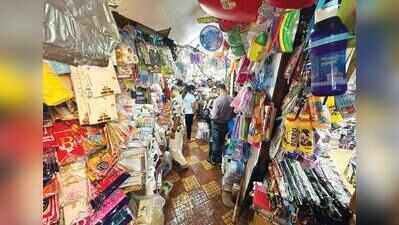
Margao: If a fire broke out in Margao’s municipal markets tomorrow, where would the crowds run, and how would fire tenders get in? The blaze at Vasco market has made these questions urgent again and revived the demand for an immediate fire safety audit of New Municipal Market and Gandhi Market.The twin markets pack more than a thousand traders into every available inch, with cosmetics, chemicals, foam, tarpaulin, sweets, garments and jute ropes stacked side by side. The entry, exit and escape routes are thin, and shops have spilled into the passages meant to carry people out.A February audit of New Municipal Market, reported earlier in TOI’s fire safety series, flagged unauthorised electrical load, the lack of a dedicated firefighting water supply and blocked access routes. Fire officials say passages must be at least 1.5 to 2 metres wide to prevent a stampede. Hydrants — most of them are non-functional — draw on the public network at barely 2 bar, against the 3.5 bar needed. A 25,000-litre overhead tank meant to feed them was shelved after Margao Municipal Council reserved the old fish market site for a multi-level parking project.Disaster risk reduction consultant Nitin Bagkar says such fires are getting harder to predict. “Things that were not catching fire earlier are now catching fire,” he said. He blamed rising heat, felled trees, shrinking forests and relentless concretisation. “The earth is not cooling, and the natural water storage around us is disappearing.”The bigger failure, he said, is neglect. “We have systems, but they are not updated, and the purpose is defeated.” Establishments must be ready before a fire starts. “Buildings, schools and offices should take precautions so there is no delay once a fire breaks out. People should know how to activate the system, whom to call, whether there is water and whether the annual maintenance contract is in place. Regular training is essential.”Bagkar, who was closely associated with major solid waste management projects in Goa, said safety cannot be left to officials alone. “We must think about our own safety. When people start insisting on it, the systems will be supplied and maintained properly. In a housing society, residents will spend Rs 25 lakh on paint but not Rs 5 lakh on safety.”Preparedness, he said, remains shockingly thin. “Fire department officials must regularly check that the installed arrangements exist and that people know how to use them. Too often, we wake up only after people die.”He also warned that waste adds to the risk. “Garbage left to pile up in intense heat releases methane, and fires start. Uncleaned gutters full of garbage make it worse.”Traders have long sounded the alarm. Gopal Naik, president of the New Market Traders Association, had earlier said the delay in building the overhead tank “has left us vulnerable”.With Diwali crowds set to fill the lanes, the task is clear: audit the markets, clear the passages, fix the water supply and train the traders. Fire officials have repeatedly warned that a routine electrical fault could turn into a major disaster.Pics by Rajtilak Naik