








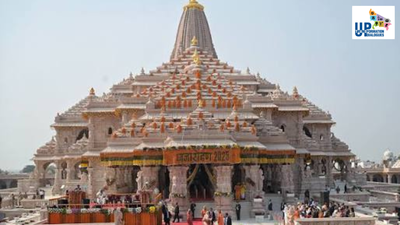
LUCKNOW: For most of the last century, Uttar Pradesh was India’s great paradox. It was the land of Ayodhya, Kashi, Mathura, Prayagraj and Sarnath, the places where the Ramayana, the Krishna legends and the Buddhist tradition took shape.Yet its sacred cities were better known for chaotic lanes, congested approaches and neglected ghats than for hospitality. Pilgrims came because faith demanded it, not because the experience was easy. Since Yogi Adityanath took office in March 2017, supporters say, that story has changed. The state is now regularly described as India’s most visited.
The numbers behind the shift
According to Union Ministry of Tourism data, more than 137 crore domestic tourists visited Uttar Pradesh in 2025, along with 3.66 lakh foreign tourists. That placed the state first in domestic visits and fourth in foreign arrivals. State figures put the total even higher, at over 156 crore visits in 2025, including 66.30 crore at Mahakumbh 2025 in Prayagraj.Officials say this growth has been steady rather than a one-time spike. In 2023, the chief minister said the state welcomed 46 crore tourists. By 2024, an official statement counted more than 649.1 million tourists. One analysis says the state’s visitor numbers have nearly tripled from 2016 levels.The gap between the central and state figures is worth noting. The two sets of numbers use different counting methods, and both count visits rather than individual people. A pilgrim who visits Varanasi, Ayodhya and Prayagraj in one trip may be counted three times. Even with that caveat, the direction is clear. The scale of travel to the state has grown sharply, and the foreign-arrival figure, though far smaller than the domestic one, shows the state is also gaining ground internationally.
Faith corridors reborn
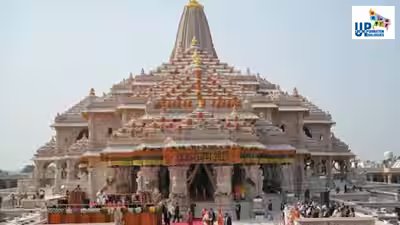
Kashi- Since the Kashi Vishwanath Corridor opened in December 2021, the temple complex has been decongested and connected directly to the Ganga ghats.Before the corridor, devotees reached the sanctum through narrow, crowded lanes. Now the approach is wide and orderly, and pilgrims find a cleaner, more organised darshan.Government data say Varanasi welcomed over 454 million visitors between 2014 and September 2025, with record numbers every year from 2022 to 2025. Officials report that more than one lakh devotees visit the Kashi Vishwanath temple every day.Ayodhya- The consecration of the Ram Temple in January 2024 turned Ayodhya from a modest pilgrim town into a global destination.Alongside the temple came a new airport, a rebuilt railway station, widened roads and the annual Deepotsav, which has set records for the number of lamps lit.Officials say about 7.20 crore devotees visited Ayodhya between January and June 2026. The town’s transformation shows how a single anchor attraction can pull in infrastructure, hotels, shops and services that change the economy of an entire locality.Mathura-Vrindavan, Vindhyachal, Chitrakoot and Naimisharanya- These sites have also been renovated. The chief minister points to extensive development at Kashi Vishwanath Dham, Ayodhya Dham, the Vindhya Corridor, Chitrakoot and Naimisharanya.Mathura and Vrindavan, tied to the life of Krishna, draw enormous crowds during festivals. Vindhyachal, with its Shakti temple, and Chitrakoot, linked to Ram’s years in exile, have long had devoted followings that now find better facilities waiting for them.Prayagraj- The confluence of the Ganga and Yamuna, with the mythical Saraswati, has always been among Hinduism’s holiest places. The Mahakumbh gave the city a chance to show what upgraded infrastructure could do, which is covered further below.
Beyond pilgrimage
The government’s vision is wider than religious tourism. The state has organised its offerings into themed circuits, including Ramayana, Krishna-Braj, Buddhist and Sufi routes.This approach, one profile explains, shifts the focus from isolated destinations to curated, multi-day journeys. A traveller who might once have made a single-day visit to one temple is now encouraged to stay longer and see a connected series of places.The Buddhist circuit connects Sarnath, Kushinagar, Shravasti, Kaushambi and Sankisa. Sarnath is where the Buddha delivered his first sermon, and Kushinagar is associated with his final passing, so the circuit follows the main chapters of his life and teaching.The chief minister says these sites draw Buddhist devotees from across the world. For a state that wants to raise its foreign arrivals, this circuit is among its strongest assets, because it speaks to followers in East and Southeast Asia who have a deep spiritual reason to visit.The government is also promoting Jain heritage sites, eco-tourism, wellness retreats, homestays and rural tourism. The aim is to spread visitors beyond the big pilgrimage towns and beyond peak festival seasons. That matters economically.A town that fills up for a few weeks each year and sits quiet the rest of the time cannot support year-round hotels, guides and restaurants. Spreading demand across the calendar and across districts is what turns visitor numbers into durable livelihoods.Cultural festivals add to the draw. These include Lathmar Holi in Barsana, Rangotsav in Braj, Kashi’s Dev Deepawali and the Ayodhya Deepotsav.Together they have helped brand the state as Utsav Pradesh, a land of festivals. Festivals are effective marketing because they are visual, shareable and tied to a specific date, which gives travellers a reason to plan a trip around them.
Policy and investment
Supporters credit the government with making tourism a serious economic policy and not an afterthought. The state tourism budget has risen steeply over six years, and the Uttar Pradesh Tourism Policy has attracted investment proposals worth Rs 37,688.58 crore.Central schemes such as Swadesh Darshan and PRASHAD have supported infrastructure development. Beautification, connectivity and visitor-facility projects worth Rs 1,283.33 crore have been launched.The 2022 Tourism Policy offers incentives to hotels, resorts, homestays and other private operators. It recognises that government spending alone cannot build the rooms, restaurants and experiences a large visitor economy needs. Private capital has to follow, and incentives are the tool for attracting it.The approach appears to be shifting from counting visitors to converting scale into long-term economic value, with skilling, marketing support and ease of doing business alongside physical infrastructure.Investment proposals are not the same as completed projects, and the real test will be how many of them become operating hotels and attractions. Still, the size of the pledged figure suggests that investors see the state’s tourism growth as durable rather than a passing wave.
The wider ecosystem
Tourism has also benefited from improvements outside the sector. Expressways, new and upgraded airports, and better rail links have shortened travel times between Lucknow, Varanasi, Ayodhya and Prayagraj.A pilgrim can now plausibly combine several of these cities in one trip, which supports the circuit model described above. Good connectivity is often the unseen driver of tourism growth, because travellers choose destinations they can reach comfortably.Supporters also argue that law and order matters. The chief minister has said that security is the most essential requirement for development and enterprise, and the government presents safer streets as part of why families now travel more freely, women pilgrims included.Perceptions of safety strongly affect where families, elderly pilgrims and international visitors choose to go, so this is a factor tourism planners watch closely.Local businesses say they have felt the effect. A tourism association president in Varanasi says rising footfall has strengthened the local economy and generated new employment.Boatmen, hoteliers, guides, florists, sweet-makers, artisans and transporters all stand to gain when a city’s visitor numbers rise. Tourism is labour-intensive and spreads income across many small operators, which is one reason governments favour it as a job creator.
Mahakumbh: the defining test
The biggest proof of capacity came in 2025. Prayagraj hosted a Mahakumbh that drew a record 66.30 crore visitors. Supporters see it as a demonstration of the state’s ability to manage crowds, transport, sanitation and security at a scale few places in the world have attempted.Temporary townships, extra trains, expanded roads and large deployments of staff were needed to handle the flow of people over the weeks of the festival.The event also showed how hard such management is. Crowd safety at mass gatherings remains a serious challenge, and the Mahakumbh saw a tragic crowd incident during one of its major bathing days.Any honest assessment of the state’s capacity has to include that lesson. Handling tens of crores of people is an achievement, but every large event also raises the bar for crowd-control planning, emergency response and clear public communication.
Looking ahead
The government now speaks of tourism as a pillar of its goal of a $1 trillion state economy by 2030. Authorities are mapping facilities at tourism destinations to ensure the visitor experience keeps pace with rising numbers. Projections suggest as many as 80 crore visitors by 2028 on one measure, with a large economic boost expected.A “Visit My State” campaign, with free museum entry and discounts at Rahi guest houses, aims to deepen domestic travel.If those plans hold, the next phase will be less about building new corridors and more about quality: cleaner cities, better-trained guides, reliable transport, well-run homestays and smooth crowd management. A decade ago, Uttar Pradesh’s sacred cities drew visitors in spite of their conditions.The state’s ambition now is that people will come because of them, and that the people who live in these places will share in the benefits.