






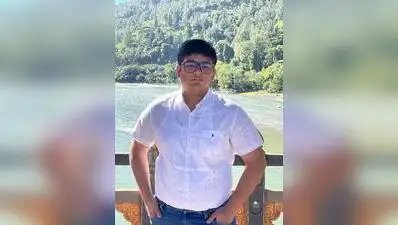
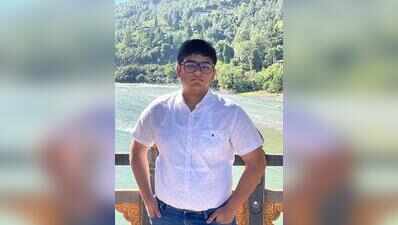
Gurgaon: On May 3, when Panchul Bansal returned to his Faridabad home after appearing for NEET-UG, his first attempt, the 18-year-old scored himself and found he hadn’t done badly at all. At 706 out of 720, he would be in the top tier come admission time to medical colleges. He could finally relax.But then came a rude shock. NEET was cancelled because of a leak. Panchul, like lakhs of other students, was left dejected. His mother’s words helped take pressure off him. “Treat the next one like a mock test. You have seen your competence, now improve it,” she told him.Improve it he did, and how. Panchul notched up an extraordinary 715, results of the NEET retest declared on Thursday showed. It gave him an all-India rank (AIR) of No. 2. He missed the top rank only on account of a tie-breaker rule that prioritises accuracy and higher marks in biology, where he had one incorrect answer.A resident of Sector 21C in the NCR city, Panchul’s mother said he had shown signs of brilliance as a toddler. “As a mother, it was overwhelming to watch. While other kids were busy with cartoons, Panchul would sit glued to the screen watching medical videos of the human circulatory system as a four-year-old. I actually tried to gently steer him away from it initially,” said Monica, a media professional.That early fascination with medicine only sharpened with time. “I knew I wanted to be a doctor by Class 7, and eventually pursue surgery,” Panchul said.He studied at DPS Faridabad till Class 10, before moving to Summer Fields School in Delhi’s Kailash Colony for classes 11 and 12, chosen for its proximity to his coaching centre, Allen Career Institute. His father, businessman Sanjeev Bansal, played a key logistical role in making the daily commute work. “He mapped out the commute perfectly from Faridabad to Delhi, coordinating that 45-minute journey every day to ensure Panchul didn’t lose energy and time,” Monica said.But MBBS plans seemed in disarray when the May 3 exam was cancelled. “There was a moment when everything felt uncertain, and it was like all the effort suddenly had no direction,” Panchul recalled, describing it as a brief but intense phase.But then came the shift in mindset. “I stopped thinking about what had happened. I had no pressure, no expectations, just clarity. That made all the difference,” he said, describing his focus on what remained in his control.Before all else came discipline and a concept-first approach to preparation. “I relied on my teachers and books. I focused more on solving questions than just reading theory because, ultimately, exams test application,” Panchul said, adding that he studied 12-13 hours a day in structured slots, with an emphasis on consistency. “I didn’t believe in studying endlessly. It was about how effectively I used my time. Quality always mattered more than quantity,” he added.That discipline was balanced with downtime. “I stayed connected with friends, went out occasionally after tests, and gave myself small breaks. That balance is important to avoid burnout,” he said. Panchul is also a trained pianist with certificates from the Rock School of London and Trinity College.He scored around 94% in classes 10 and 12 and secured a 99.5 percentile in JEE Main 2026, though Panchul’s focus remained firmly on medicine. He now wishes to pursue MBBS from AIIMS Delhi with a long-term goal of becoming a surgeon.