







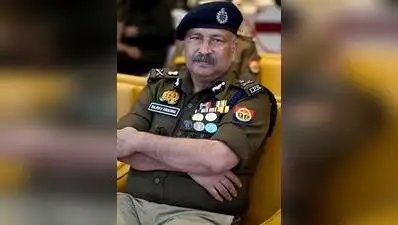

Lucknow: Uttar Pradesh Police has reported a marked drop in traffic congestion across the state’s police commissionerates after rolling out its Artificial Intelligence-powered Reducing Traffic Congestion (RTC) initiative, an indigenously developed, Google-based real-time traffic analytics system that monitors, predicts and helps manage road snarls using live data and AI.The technology-driven programme is being implemented in line with chief minister Yogi Adityanath’s focus on safer, smoother and time-bound commuting. The RTC project is being led by director general of police Rajeev Krishna under the guidance of additional director general of police (traffic) A Satish Ganesh, with the aim of introducing scientific, proactive traffic management in major urban centres.According to the Uttar Pradesh Police Headquarters, RTC is designed to identify congestion hotspots, analyse traffic conditions in near real time and trigger timely interventions to restore normal flow. Officials said the system marks a departure from conventional approaches that relied heavily on visual checks, local experience and reactive deployment after jams formed.The platform assesses congestion through quantifiable indicators by continuously comparing actual travel time on a route with baseline average travel time and the resulting delay. It automatically analyses Google-based real-time traffic data every two hours. Average travel-time baselines have been mapped for each identified route, and whenever actual travel time exceeds the set benchmark, the Gati-UP AI platform flags the stretch as a hotspot, alerting traffic authorities.Police officials said the shift in performance measurement is also significant, as outcomes are evaluated primarily through commuter travel time between two points rather than vehicle counts or enforcement statistics such as challans. The AI system processes thousands of data points daily to highlight routes needing intervention.Under RTC, continuous monitoring is underway on 74 major routes spanning about 710 kilometres across all commissionerates. In a comparative analysis from March to July 15, 2026, Prayagraj recorded the highest reduction in congestion at 44.92%, followed by Ghaziabad at 43.15%. Varanasi reported a 20.75% reduction, Lucknow 13.67%, Kanpur 13.19%, Agra 10.99% and Noida 10.10%.