









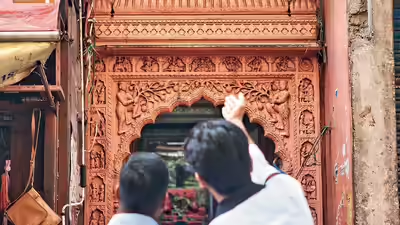
Delhi’s history is hard to miss; it announces itself in domes, lanes and heritage gardens. But drive a few hours outside the capital, and the narrative begins to shift. The landmarks are quieter, the stories less documented, often slipping between memory and neglect. On World Heritage Day, we shift our gaze to sites beyond the contours of Delhi, where joining a heritage walk becomes not just a way to experience these places but also a meaningful step towards their visibility and conservation.‘Shift away from checklist tourism to story-driven experiences beyond Delhi’Many cities and towns that surround Delhi rarely make it to guidebooks, yet hold rich, layered pasts of their own. Ramit Mitra, founder of DelhiByFoot, who carries out these day tours in Agra, Sardhana, Kurukshetra, Vrindavan, Rakhigarhi, Deeg, Rampur and Farruknagar, says, “Beyond Delhi, the region is layered with heritage that often remains overlooked. Our day trips to such destinations – each representing a distinct historical moment – offer a more immersive, on-ground engagement with the past. What defines these journeys is a shift away from checklist tourism towards immersive, story-driven experiences. These are carefully designed engagements that combine travel, storytelling, and direct interaction with spaces that are often neglected.”Adding another layer, Shah Umair aka Sikkawala, points out how much of this history sits in plain sight. “Between Delhi and Punjab lies Haryana — a region that was once central to trade routes and political movement. Gurgaon’s Bhondsi has a 500-year-old mosque. Delhi’s surrounding regions included princely states like Pataudi, Dujana, Jhajjar and Farrukhnagar. If you visit Farrukhnagar, the gateway still bears ‘Qila Faujdar Khan’ in Urdu. The Nawab of Farrukhnagar fought the British during the Indian Rebellion of 1857, tasked with stopping battalions coming from Punjab. In Hisar, Jahaj Kothi — built by Irish adventurer George Thomas — now functions as a museum.”
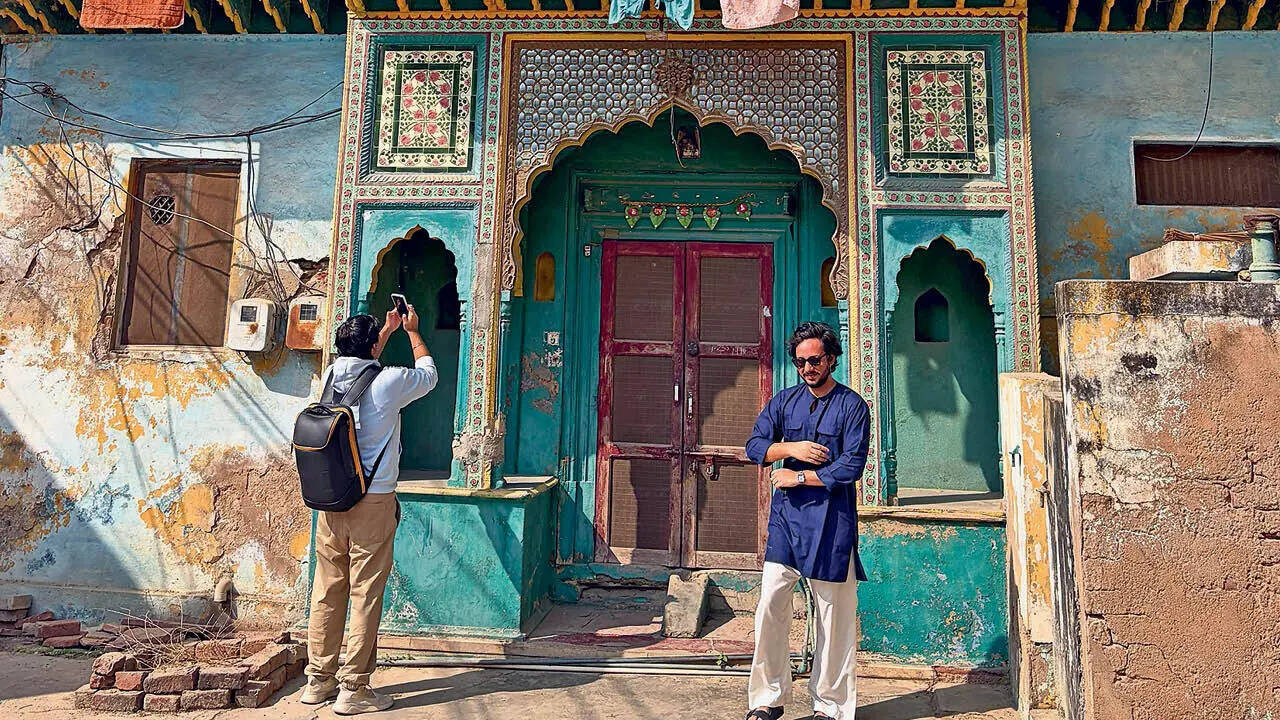
Between Delhi and Punjab lies Haryana — a region that was once central to trade routes and political movement (@sikkawala)
📍Agra (Uttar Pradesh, ~230 km from Delhi)“Agra is often seen through three monuments — the Taj Mahal, Agra Fort, and Fatehpur Sikri,” says Tahir Ahmed, founder of Agra Heritage Walks, “The city really begins where those postcards end. For travellers coming from Delhi, especially those interested in heritage, Agra offers a very different pace and texture. It’s a slower city — less performative, more lived-in. The Mehtab Bagh offers a quiet, contemplative view of the Taj across the Yamuna. The Itmad-ud-Daulah (often known as Baby Taj) is another gem, where you begin to see the evolution of Mughal design in a much more intimate setting. And then there are places like Roman Catholic Cemetery (aka Red Taj), Kinari Bazaar and Rawatpara, where the old city unfolds.” Adding how the culinary and craft heritage of Agra offers an insight into the city’s heritage, he says, “You might find yourself sitting with a family that has been making sweets for generations, or stepping into a workshop where marble inlay is still practised by hand, much like it was during the Mughal period. Artisan Encounters at Handicraft Walk offer insights into Agra’s living traditions. The Dastarkhan E Akbarabad is an experience where cuisine becomes a way of understanding migration, history, and community.”📍Farrukhnagar (Haryana, ~40 km from Delhi) offers an evocative glimpse into a fading Mughal-era town.Ramit’s walks here typically explore the Nawab’s palace haveli built by Nawab Faujdar Khan, the crumbling yet beautiful Sheesh Mahal, and the remarkable octagonal Baoli of Ghaus Ali Shah. “Once an important centre along the salt trade route, today the town stands in quiet decline, allowing visitors to experience heritage in its most fragile and uncurated form,” he says. 📍Rampur (Uttar Pradesh, ~220 km from Delhi) In Rampur, the legacy of its nawabs lives on through art, literature and cuisine. The Rampur Raza Library houses rare manuscripts, including a 300-year-old Persian Ramayana and letters linked to Mirza Ghalib.
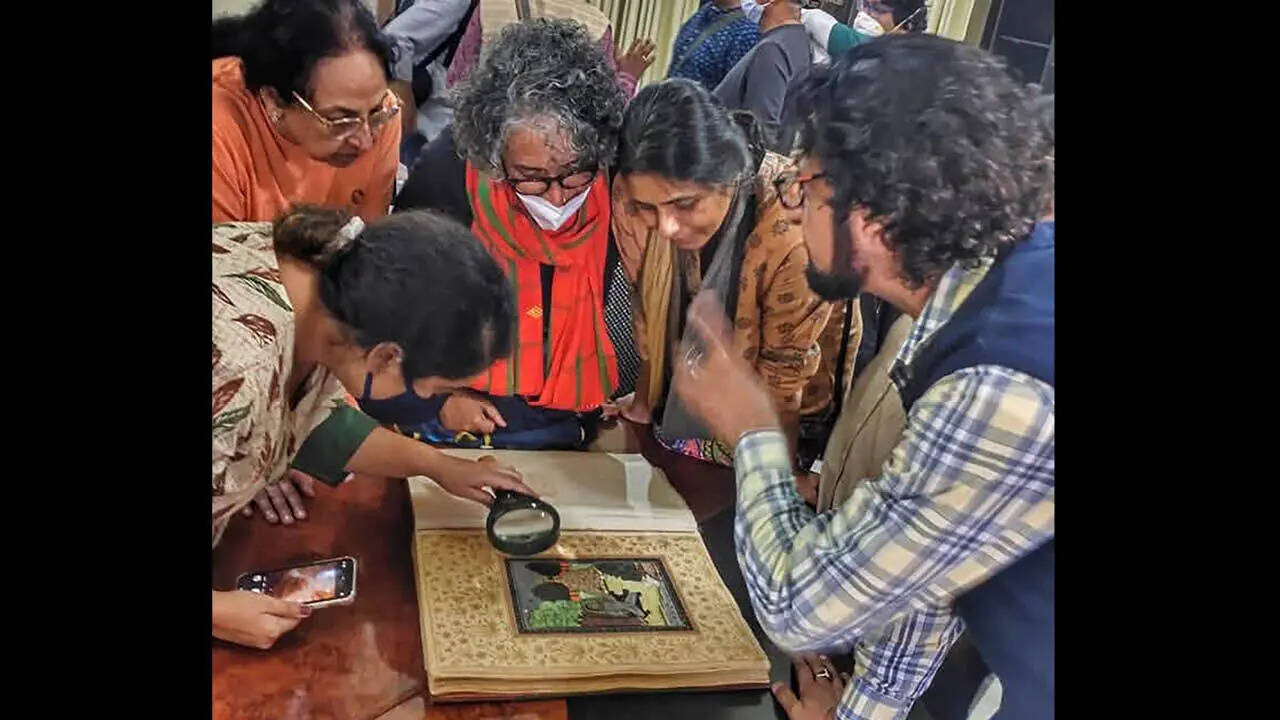
In Rampur, the legacy of its nawabs lives on through art, literature and cuisine (@delhibyfoot)
Encouraging people to visit such lesser-known heritage spaces beyond Delhi plays a crucial role in conservation. Visibility leads to value. When more people become aware of these sites, it builds public interest, local pride, and eventually, the momentum needed or preservation efforts. At the same time, responsible tourism ensures that these places are not overwhelmed, but appreciated with sensitivity
Ramit Mitra, heritage walk leader and founder of DelhiByFoot
📍Deeg (Rajasthan, ~180 km from Delhi) Deeg tours showcase the architectural and aesthetic brilliance of the Jat rulers of Bharatpur. The Deeg Bhawan stands amidst expansive ruins which are hauntingly beautiful, and is known for its intricate system of water fountains and sprinkler channels, designed in harmony with open gardens.‘Touch bricks that are 5000-year-old, debate Harappan legacy…’ reads Nakul Chhabra’s invite for Rakhigarhi Heritage Tour. Founder of History Beyond Books, he has been curating heritage tours in Narnaul, Alwar, Rakhigarhi and Farrukhnagar, and is now designing a walk in Mathura that moves beyond its temple circuits. “Most of these walks are attended by people who have seen Delhi’s heritage. It is the curiosity that leads them there, kyunki history toh har jagah hai. Har ek sheher kuch keh raha hai. It is important to uncover those layers of history, those stories, or we risk losing tangible heritage. While Narnaul (Haryana, 170km from Delhi) holds the story of Shah Quli Khan, a 16th-century Mughal governor who played a decisive role in the Second Battle of Panipat, the district of Alwar (Rajasthan, 170km from Delhi) has the Mangalsar Dam, and near it is the Chand Baori of Abhaneri. The frescoed havelis of Rajgarh in Churu district offer insights into the religious and spiritual life of people in the 18th century.”📍Rakhigarhi (Haryana, ~150 km from Delhi) takes us to the beginnings of urban civilisation in South Asia. As one of the largest sites of the Indus Valley Civilisation, it offers a rare opportunity to walk across active archaeological mounds, where excavations are still underway. Ramit explains, “Unlike museum spaces, the experience here is raw, and visitors encounter fragments of pottery, ancient settlement layouts, and a landscape that is still revealing its story”
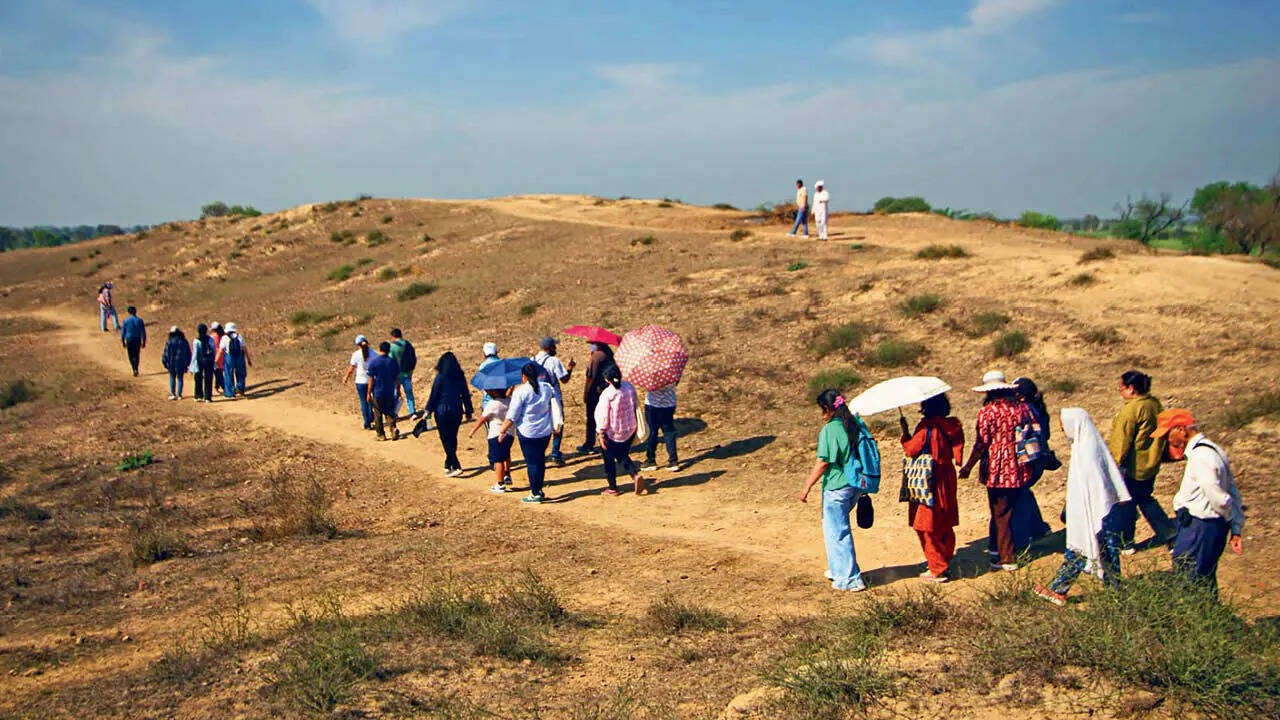
Rakhigarhi is one of the largest sites of the Indus Valley Civilisation, it offers a rare opportunity to walk across active archaeological mounds (@history_beyond_books)
📍Sardhana (Uttar Pradesh, ~80 km from Delhi) brings alive the fascinating story of Begum Samru. Speaking of layered histories, Umair notes, “In the 18th century, Begum Samru governed Sardhana near Meerut, and also controlled the Badshahpur-Jharsa region of Gurgaon. The cemetery of her European soldiers still stands, with tombs built in a Mughal style.”Ramit shares, “Our experience here centres around the magnificent Basilica of Our Lady of Graces, North India’s largest Church with its remarkable European architecture and the exploration of her palace, a European-style mansion that now houses a school. Sardhana is about tracing the journey of a woman who rose from a courtesan to a ruler, commanding armies and influencing both Mughal and British politics. The experience often extends into the surrounding countryside, where visits to mango orchards offer a sensory conclusion to a day steeped in history.”📍Kurukshetra (Haryana, ~160 km from Delhi) exists at the intersection of mythology, philosophy, and history. History enthusiasts can visit Jyotisar (Jyotisar Sarovar), where the Bhagavad Gita is believed to have been delivered, and the Sheikh Chilli Tomb, which is often called the Taj of Haryana. “The region also reflects later historical layers from Buddhist influences to the infrastructural and political legacy of Sher Shah Suri, making it a continuously evolving cultural landscape,” says Ramit