










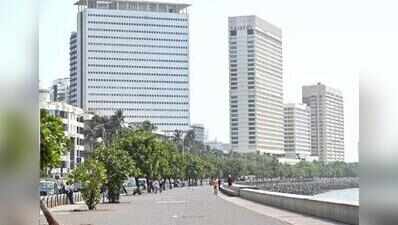
Mumbai: Mumbai has been specifically identified among major coastal cities facing significant risks from sea-level rise, with the United Nations warning that rising seas could intensify flooding, displacement and damage to critical infrastructure in low-lying coastal urban centres.The warning comes in a report of the UN Secretary-General on the “Challenges related to Sea-level Rise and ways and approaches to address them”, prepared for the 81st session of the UN General Assembly. The report places Mumbai alongside Kolkata and Dhaka as cities in the low-lying deltas of South Asia where the human consequences of rising seas could be particularly severe.The report says more than 14 million people in Mumbai, Kolkata and Dhaka are at immediate risk of losing their homes to permanent inundation, highlighting the need to assess coastal vulnerability not only in terms of the value of infrastructure and assets at risk, but also in terms of potential displacement and loss of homes.For Mumbai, the warning assumes significance given the city’s extensive coastline, dense development and concentration of homes, transport infrastructure, economic activity and critical utilities in low-lying areas. The report also mentions that sea-level rise is already damaging or threatening urban infrastructure, water systems, transport networks, energy grids, buildings and groundwater resources in coastal regions.The UN report says sea-level rise is no longer a distant threat. Global sea level rose at an average rate of 4.7 mm annually between 2014 and 2023, while the rise in 2024 alone reached 5.9 mm, a record high driven largely by exceptional ocean warming. The current global rate is estimated at around 4.75 mm a year for 2012-2025.Even under a very low greenhouse-gas emissions scenario, the Intergovernmental Panel on Climate Change (IPCC) projects global mean sea level to rise by about 0.23 metres by 2050. By 2100, the projected rise ranges from 0.28-0.55 metres under very low emissions to 0.63-1.01 metres under very high emissions, relative to 1995-2014 levels. A low-probability, high-impact scenario could see the rise approach two metres.The report also flags the compounding impact of land subsidence, which can make relative sea-level rise substantially worse at the local level. Such combined effects can intensify flooding, coastal erosion, ecosystem degradation and the loss of lives and livelihoods.For Mumbai, this could have implications extending beyond coastal flooding. The UN says rising seas can cause saltwater intrusion into freshwater systems, affecting drinking-water security, agriculture and groundwater-dependent ecosystems. Damage to transport and other critical infrastructure can also trigger wider economic disruptions.The report warns that nearly 770 million people globally live in coastal areas less than five metres above the high-tide line, putting them at acute risk. Nearly 500 million people live in low-lying zones where rivers meet the ocean, many of which are home to major cities.The economic exposure is also substantial. The UN estimates that at least $1.8 trillion worth of infrastructure globally is exposed to sea-level-rise-related risks. Coastal flooding, erosion and disruption to ports, transport networks and supply chains could have knock-on effects well beyond the areas directly affected.The report calls for cities and countries to move from short-term responses to anticipatory and long-term coastal planning, including resilient infrastructure, improved early-warning systems, land-use reforms, nature-based solutions and, where necessary, managed retreat.It also stresses the need for better local data. Global models alone are insufficient for city-level planning, with the UN calling for stronger tide-gauge networks, high-resolution elevation and bathymetric data, satellite observations and local assessments of erosion, waves, sediment movement and saltwater intrusion.