










Pradeep Gupta
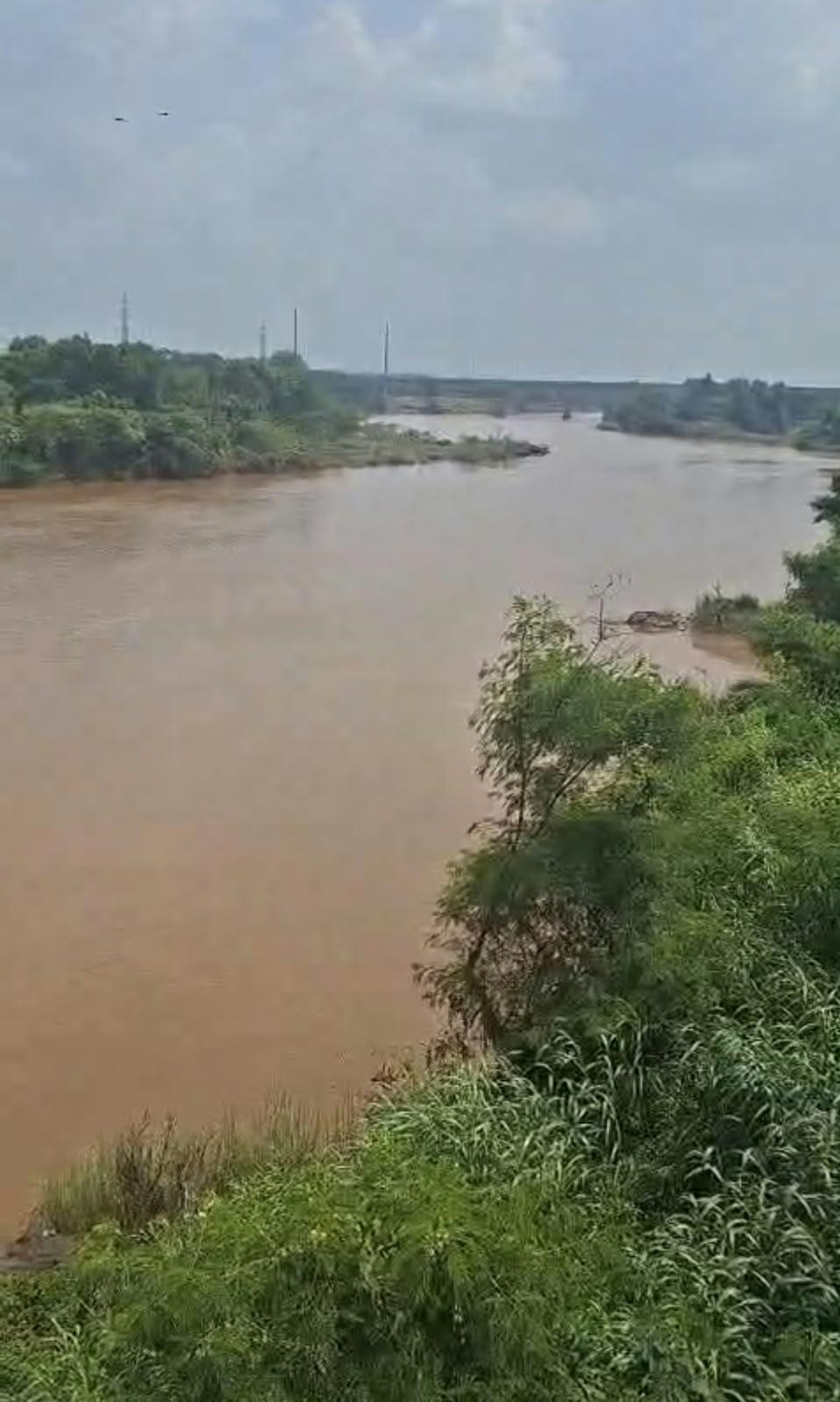
Activists have sought comparative testing of river water, riverbank soil and excavated soil
Thane: The Ulhas river, a major source of drinking water for nearly 50 lakh residents across Thane district, has turned unusually red and highly turbid in recent days, prompting environmental activists to investigate possible source of change along its upper reaches in Karjat.Members of the Ulhas Bachao Kriti Samiti (Ulhas River Rescue Action Committee) conducted a two-day inspection at 28 locations between Kalyan and Karjat. They documented hill cutting, tree felling, soil filling, construction activity and silt entering the river and its tributaries.The activists identified Pimploli near Karjat as a key area of concern, where they observed extensive hill cutting and tree felling along the Chillar river near a large plotted development project. They suspect exposed red soil and loose earth may have been washed into the Chillar during recent heavy rainfall and subsequently entered the Ulhas.The team also inspected areas around the Kondana caves and along the Page river, where construction activity was observed. Activists have sought an assessment of whether soil or construction material from these sites entered water channels during rainfall.However, the committee stressed that its observations are preliminary and require scientific testing and an official investigation.Shashikant Dayama of the committee said excavation and removal of vegetation had altered natural slopes at several locations, with signs of soil erosion and landslide-like conditions. Activists also reported reddish deposits on rocks along parts of the Chillar and sought comparative testing of river water, riverbank soil and excavated soil.The increased turbidity has also affected water-supply operations in Badlapur. Maharashtra Jeevan Pradhikaran (MJP) officials recorded turbidity of around 300 NTU and found highly turbid water up to Badlapur. The turbidity reduced further downstream after freshwater flows from Barave river and joins the river around Ambernath and subsequently towards Kalyan.The committee has sought a joint probe by the Maharashtra Pollution Control Board, district administration, forest and water resources departments, local bodies and concerned project authorities.“We are not against development projects. Our demand is that development should not damage the environment and rivers. The source of the red water should be established scientifically,” Dayama said.Rani Kapote, also part of the committee, said, “We will soon submit our findings, photographs, videos and samples to the MPCB and irrigation authorities and other concerned departments and seek a detailed investigation into the activities along the upper reaches of the Ulhas and its tributaries.”