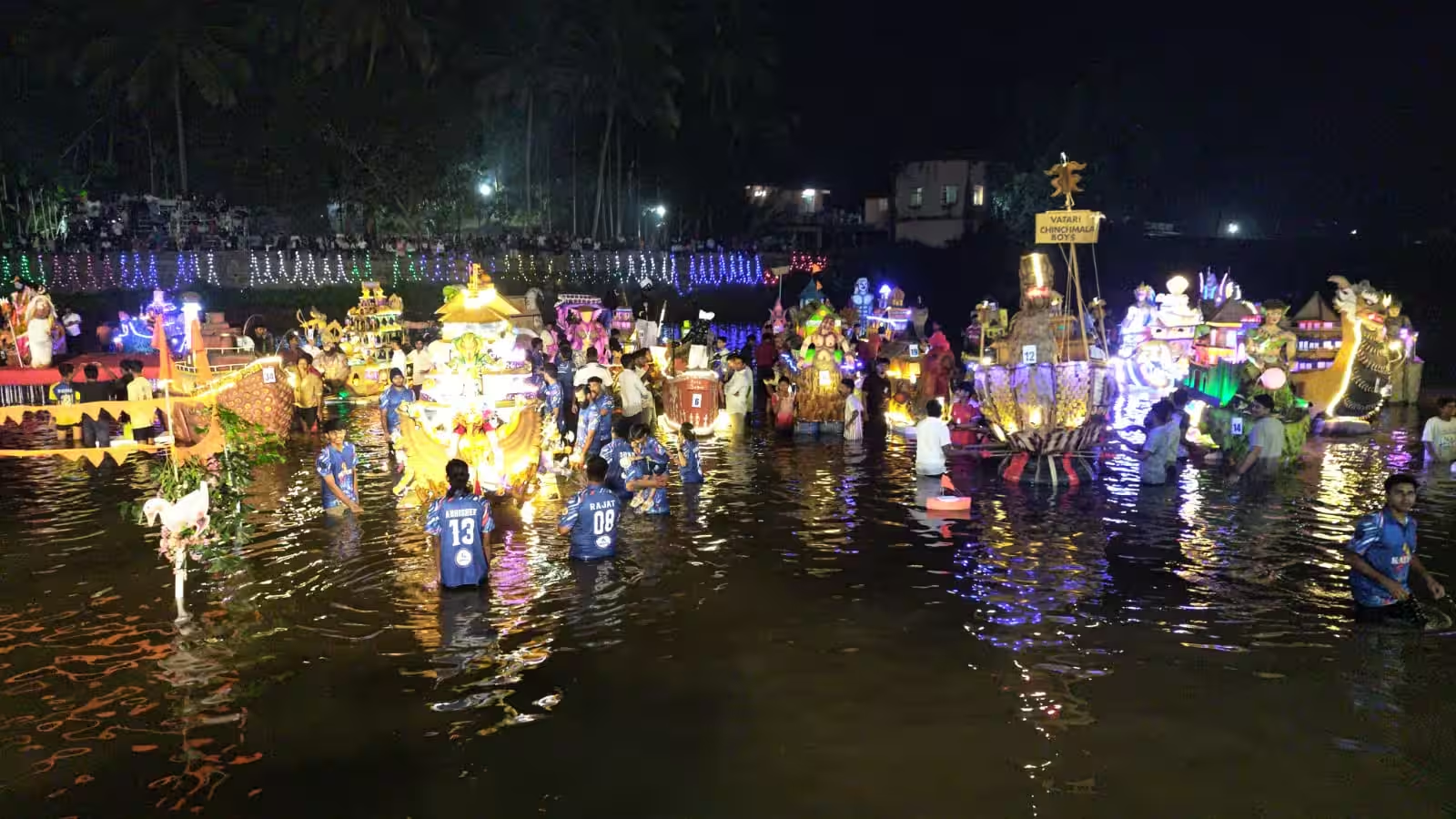







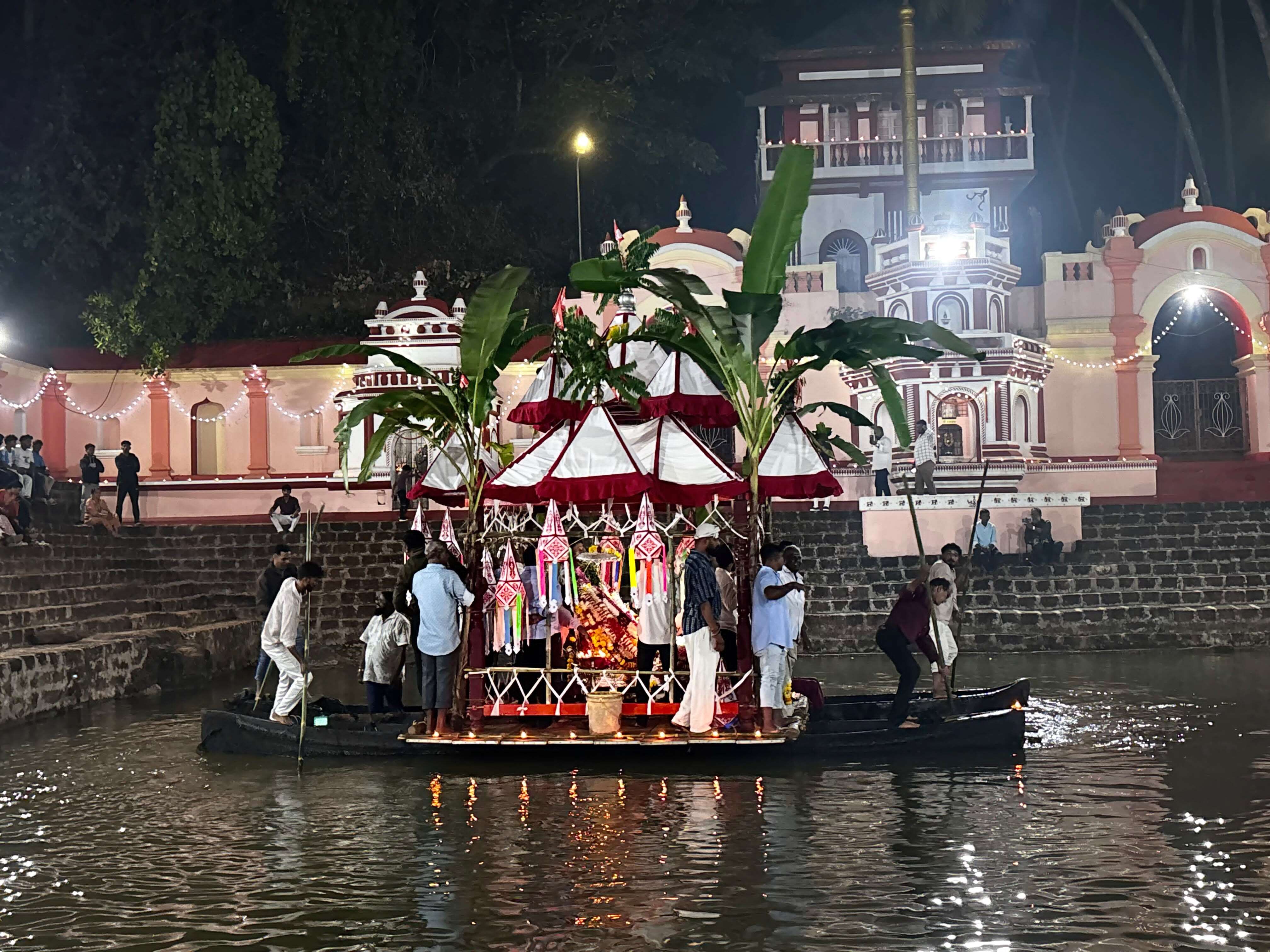
Keri: The full moon day of Kartik, celebrated as Tripurari Pournima, is marked by the Sangodotsav in the sacred tank at Veling in Ponda, set against a backdrop of lush horticultural plantations.In 1567, Captain Diago Fernandes of Rachol fortress destroyed and burnt the temples in Sancoale of Mormugao taluka, forcing devotees to shift the idol of Laxmi-Narasimha by crossing Zuari to Veling.“Over the centuries, the practice of moving the Gods by crossing the river is celebrated as a ritual and perhaps as a reminder of unpleasant chapters of Goa’s history,” said Kanta Gaude, a local folk artist.“Narasimha is the fifth incarnation of Lord Vishnu. Along with goddess Laxmi, he was worshipped in Sancoale before being shifted to Veling. Watching Sangodosatsav is soothing. People come in big numbers for every Tripurari,” said Gaude.Tripurari Pournima is celebrated throughout Goa as Dev Diwali by lighting innumerable lamps. At Veling, where nature has bestowed lush greenery of horticultural crops, Laxmi-Narasimha temple observes Sangodotsav, where the sculpture of Lord Narasimha seated on two decorated canoes tied together, called Sangod, is ferried in the sacred tank, a local said.A stepped, spacious water tank in front of the temple is constantly fed by a natural spring that emerges from the nearby hillock, beautifully enclosed by constructed walls on four sides and a ceremonial gateway.On the full moon day, Gaude said, the palanquin carrying the deity is decorated with seasonal flowers and garlands and is taken out in procession, after which the deity is seated in the Sangod, and Lord Narasimha is ferried to the tune of the folk musical instruments.“Experiencing the Sangodotsav was indeed enchanting and an unforgettable sight for me,” said Amey Kinjawadekar, a student of archaeology who visited Veling.On the full moon night of Kartik, Goa enters the season of annual fairs and festivals known locally as Kalo or Jatra, when devotees worship their village deity with deep devotion and reverence.