







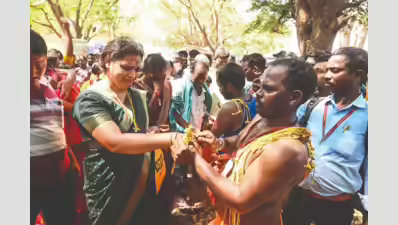
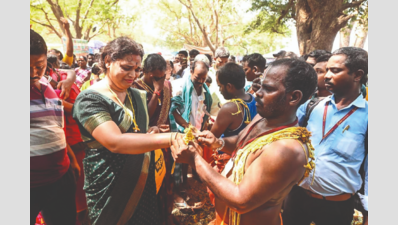
Thousands of transgender women transitioned from ‘brides’ to ‘widows’ in a ritual reenactment of the Mahabharata legend during the Koothandavar festival at the temple dedicated to Lord Aravan at Koovagam near Ulundurpet in Kallakurichi district on Wednesday. The transition follows the symbolic sacrifice of Lord Aravan, son of one of the Pancha Pandavas, Arjuna, who, according to epic lore, gave his life to ensure the Pandavas’ victory in the Kurukshetra war. Aravan, goes the legend, wished to be married before his death. Krishna took the form of the enchantress Mohini to fulfil it. At the festival, transgender women step into the role of Mohini and marry Aravan to reenact this divine sacrifice.Beyond the religious context, the Koovagam festival remains a space for the transgender community to assert their identity and foster solidarity. “For these few days, we are not outcasts; we are the protagonists of a divine story,” says C Swetha from Chennai, who has been participating in the festival since 2002.The day began with the temple car procession with the presiding deity, Lord Aravan, placed atop a massive wooden chariot and pulled through the dusty streets of the village. For the thousands of participants who “married” the deity just 24 hours prior, the movement of the chariot towards the outskirts of the village signifies Aravan’s final journey to the battlefield.As the chariot reached the ‘battlefield’ site, the festive atmosphere shifted into a collective display of grief as participants began the rites of widowhood. Transgender women cut their mangalsutra tied by priests, broke their glass bangles, wiped the sindoor off their foreheads, marking that their marriage with Lord Aravan was shattered. They wrapped white sarees and wailed in grief in unison, beating their chests to express their pain of losing their husband. Following the intense period of mourning, they proceeded to the local lake for a ceremonial bath to symbolise purification and the washing away of grief, marking the end of their temporary “widowhood” and the beginning of a return to their daily lives.The 18-day festival, symbolising the 18-day Mahabharata war, draws participants from across India as well as Singapore, Malaysia and the UK. The festival will conclude on May 1 with the Dharma Pattabhishekham (coronation) ceremony, marking the end of another year’s pilgrimage for a community that finds both identity and sanctuary in the sands of Koovagam.