









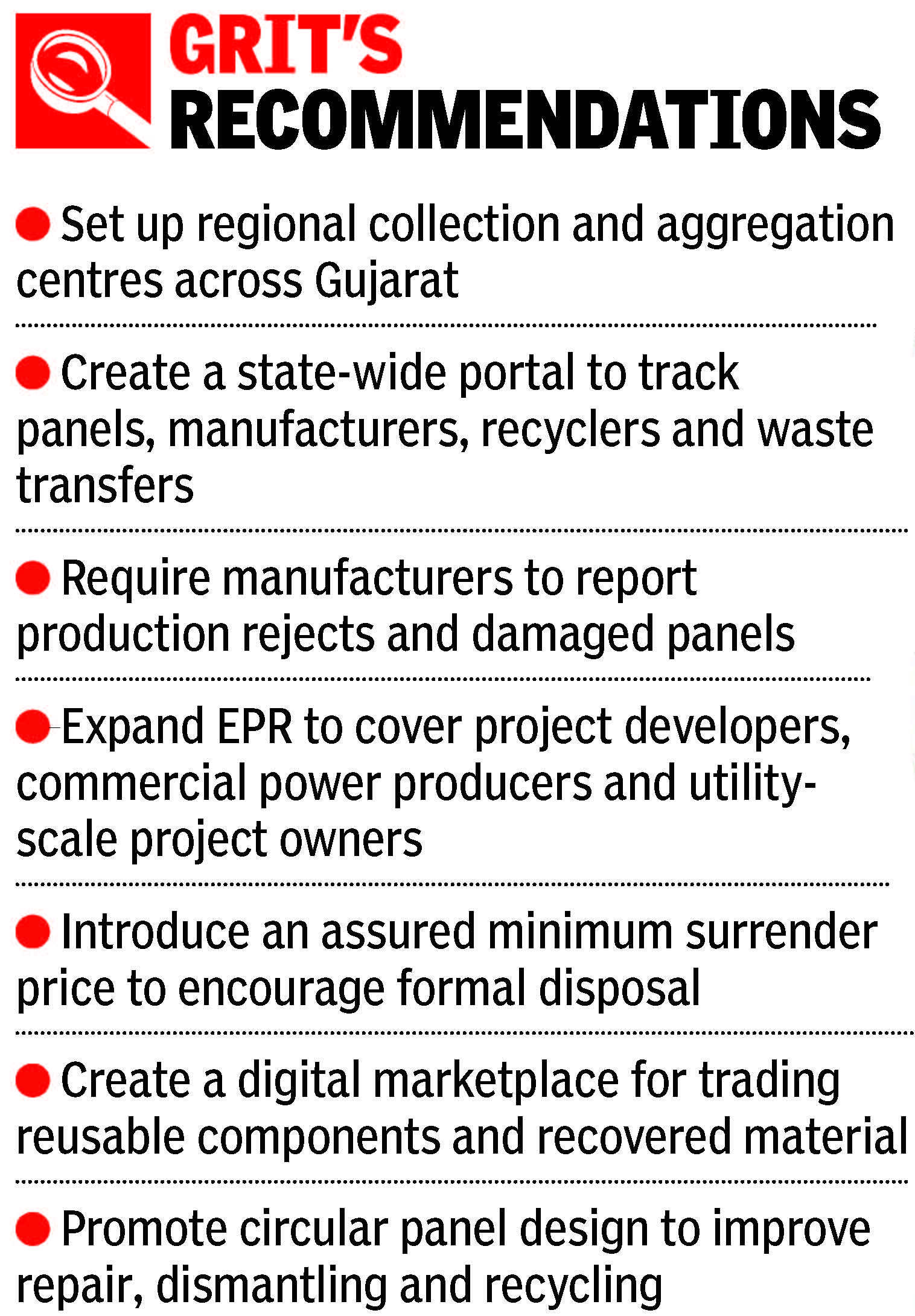
Gujarat’s rapid solar power expansion is bringing a new industrial challenge into focus: Managing the mounting waste from discarded solar panels. The state is projected to generate 11,528 tonnes of solar photovoltaic (PV) waste by 2030, creating both a business opportunity in recycling and material recovery and an urgent need to build systems for collecting and processing panels from ageing installations.With 25.5 GW of installed solar capacity as of Dec 2025, Gujarat is among India’s largest solar markets. Its expanding rooftop and utility-scale installations will eventually generate substantial volumes of end-of-life panels. While solar modules typically have an operational life of 25 to 30 years, waste is also generated much earlier through manufacturing defects, transportation damage, faulty installation and extreme weather events.“The emerging waste stream presents both an environmental challenge and a potential business opportunity. Discarded panels contain recoverable materials such as silicon, silver, copper, aluminium and glass. Their recovery could create a secondary raw material market, support domestic manufacturing and reduce dependence on virgin resources,” said Jaideep Malaviya, a solar energy consultant.However, Gujarat’s recycling ecosystem is not yet equipped to handle the anticipated volumes. A July 2026 report by the Gujarat Rajya Institution for Transformation (GRIT) identifies gaps in collection infrastructure, commercial-scale recycling technology, digital traceability and financial incentives. Stakeholder consultations conducted for the report also point to an absence of dedicated collection centres and reliance on informal scrap dealers for waste from dispersed rooftop installations.A new waste stream taking shapeThe scale of the challenge extends beyond Gujarat. India’s cumulative solar waste, estimated at around 100 kilotonnes in FY2023, could rise to 340 kilotonnes by 2030 and approximately 19,000 kilotonnes by 2050, according to projections cited in the GRIT report. Around 67% of the projected waste by 2030 is expected to be concentrated in five states, including Gujarat, Rajasthan, Karnataka, Tamil Nadu and Andhra Pradesh.“Waste generation is not restricted to panels reaching the end of their useful life. Manufacturing scrap, broken cells, defective modules and damage during transportation and installation contribute to the waste stream. Cyclones, floods and hailstorms can also cause premature failures,” according to the report.This makes collection and recycling infrastructure necessary well before the first large generation of solar installations is retired.
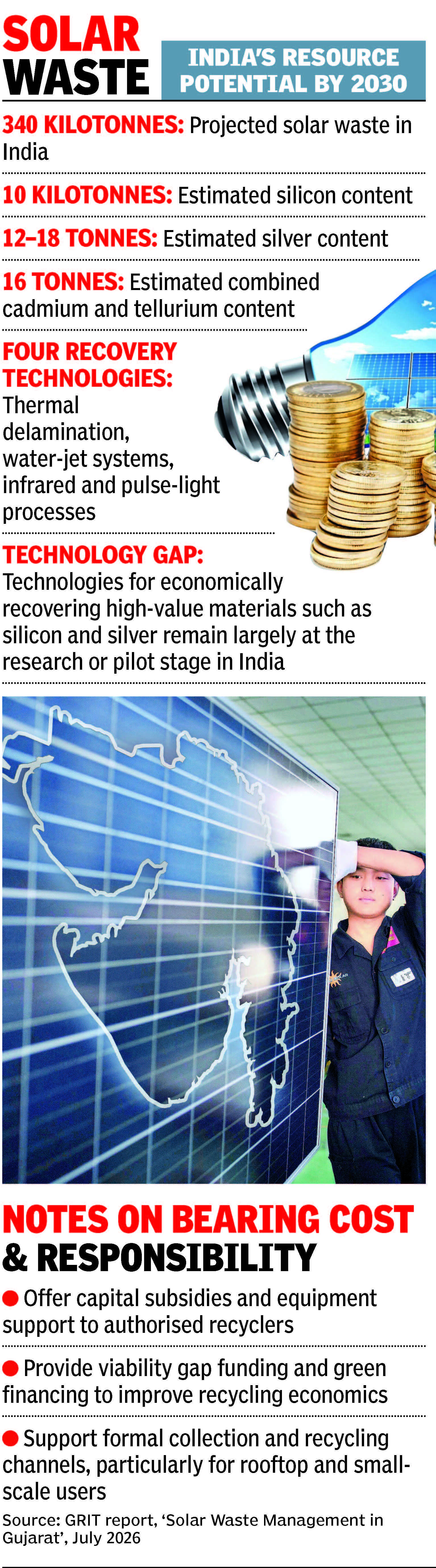
Waste generation projections
Reuse begins, recycling investments take shapeSolar companies in South Gujarat are beginning to find ways to extend the life of older panels, even as the industry explores commercial recycling options. Engineering, procurement and construction (EPC) companies are shifting used panels from sites with high power requirements to locations where demand is lower and land is available.Panels installed a decade ago can produce significantly less electricity than newer modules, making replacement viable for industries seeking higher output from limited space. “In such cases, we are installing the old panels at sites of clients who have low power demand but more space to use. Damaged panels generated currently are taken back by manufacturers for recycling at their plants,” said Rakesh Trivedi, director of Solar Smart Power Pvt Ltd.The focus is also shifting towards dedicated recycling facilities. Surat Municipal Corporation (SMC) has offered incentives, including land on lease, for waste recycling projects. Some leading players are in discussions to set up facilities, while recycling machinery is already available in the market.“There are no clear guidelines or policies to handle solar power plant waste at present. SMC has announced incentives for waste recycling, including solar waste. Currently, there is one recycling plant in Chennai,” said Tejas Patel, former president of the South Gujarat Solar Association.
–
Building an industrial ecosystemGujarat has been among India’s earliest adopters of solar power, and several large installations in the state are now approaching two decades of operation. As new-generation panels offer better output and improved performance in the same footprint, developers and operators are increasingly opting to repower existing projects by replacing older modules with newer ones. This replacement cycle is expected to generate a steady stream of end-of-life solar panels requiring scientific dismantling and recovery of usable materials.Industry participants also point to weather-related disruptions as an emerging factor in accelerating panel waste. Natural calamities such as storms, flooding and high-wind events can damage modules and mounting structures, forcing operators to replace broken or degraded panels. With solar capacity expanding across districts and more plants exposed to extreme weather events, the volume of damaged panels needing disposal and recycling is expected to rise.Against this backdrop, companies are preparing to build dedicated recycling infrastructure within the state.Kalpesh Kalathia, chairman of Kosol Energie, said the company is moving ahead with plans for a solar panel recycling facility in Kutch in collaboration with a European partner.“Solar panel recycling is expected to gather momentum soon. We have partnered with a European company and plan to set up a solar panel recycling unit in Kachchh. We will invest about Rs 40 crore to build a facility with a recycling capacity of around 6,000 panels per day,” Kalathia said.The report also identifies the proposed Mega Eco-Industrial Park at Botad under the North Gujarat Economic Master Plan as a potential opportunity to integrate solar PV recycling, resource recovery and circular manufacturing.

Industry is keeping itself ready
With inputs from Niyati Parikh