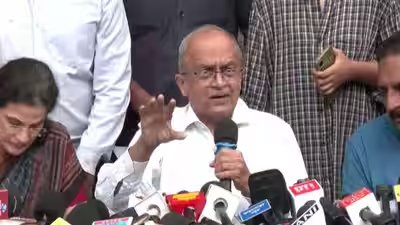









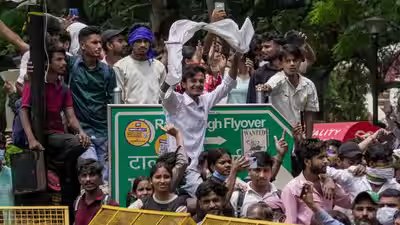
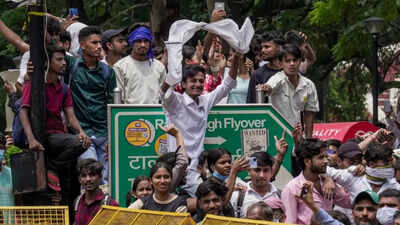
NEW DELHI: The crackdown on protesters in Delhi has triggered a sharp divide among members of the Harvard University community, with two groups issuing contrasting statements, one condemning alleged police excesses and the other cautioning against what it described as a campaign to undermine India’s constitutional institutions.Disapproving the use of terms such as “siege” to describe the police deployment in Delhi and “thieves” or “compromised” to characterise constitutional authorities, a section of Harvard affiliates said such language raised concerns about attempts to undermine public trust in democratic institutions.“Troubling are reports of the use of Harvard University’s name to lend credibility to a political campaign without appropriate authorisation. The language used to describe India as being under ‘siege’ and to characterise constitutional authorities as ‘thieves’ or ‘compromised’ raises serious concerns about the intent to undermine public trust in democratic institutions,” the wider cross-section of the Harvard community, including lawyers, policymakers, civil servants, scientists and academicians, said in a statement.
‘Constitution, not convenience’
The latest statement signed by 44 individuals raised concerns over what it described as a “concerted campaign” against the country’s constitutional institutions, including the Election Commission, the Supreme Court, the office of the Chief Justice of India (CJI) and Parliament.“We are deeply concerned by the negative public discourse and concerted campaign against India’s constitutional institutions, including the Election Commission of India, the Supreme Court, the office of the Hon’ble Chief Justice of India, and Parliament,” the statement released on Wednesday said.It also addressed the role of law enforcement agencies in maintaining public order, saying their actions should be subject to fair scrutiny but that allegations must be grounded in evidence and due process.“The actions of law enforcement agencies to uphold public order deserve fair scrutiny, but sweeping accusations and abusive rhetoric cannot substitute for evidence, due process or institutional accountability,” the signatories said.They also stressed the need to respect public officials and the offices they hold, adding that constitutional principles and civil liberties must not be applied selectively.“The Constitution, rule of law, and civil liberties must be respected at all times, not just when it suits our interests,” the statement said.Summing up their appeal, the signatories said: “Our commitment must remain to the Constitution, not convenience; to justice, not selective outrage; and to democratic institutions, not the politics of accusation.”
October 12 statement condemns police action
In a statement dated October 12, around 100 Harvard alumni, students, faculty and staff condemned what they described as the “unprecedented siege of Delhi by police and paramilitary forces” and alleged arbitrary, illegal and unconstitutional action against peaceful protesters across the country on October 10.“We, as alumni, students, faculty, and staff of Harvard University, are deeply concerned by the unprecedented siege of Delhi by police and paramilitary forces and arbitrary, illegal, and unconstitutional police actions against peaceful protestors across the country on 10th October 2026. We strongly condemn police brutality, unlawful detention, and violations of constitutional rights of all peaceful protestors,” the letter shared by Live Law read.
Share your thoughts in the comments
Be respectful · TOI community guidelines
The signatories condemned alleged police brutality, unlawful detention and violations of protesters’ constitutional rights, while expressing solidarity with fellow Harvard affiliates Shadan Farasat, a senior advocate in the Supreme Court and Harvard Law School alumnus from 2009, and Mehr Pasricha, a Harvard Kennedy School graduate from 2025.The signatories called on the government and law enforcement authorities to end alleged violations of constitutional rights, respect the right to peaceful protest and access to legal assistance, and ensure that those responsible for abuses are held accountable under the rule of law.