






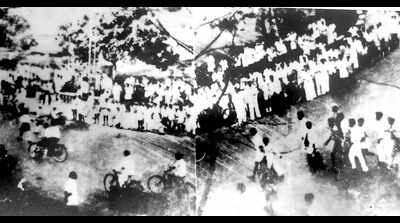
On June 18, 1946, nearly a year before India’s Independence, Ram Manohar Lohia’s clarion call galvanised Goans, igniting Goa’s freedom movement that culminated 15 years later on Dec 19, 1961. As Goa marks 80 years of Revolution Day, TOI traces the trigger behind the spark that led to Liberation

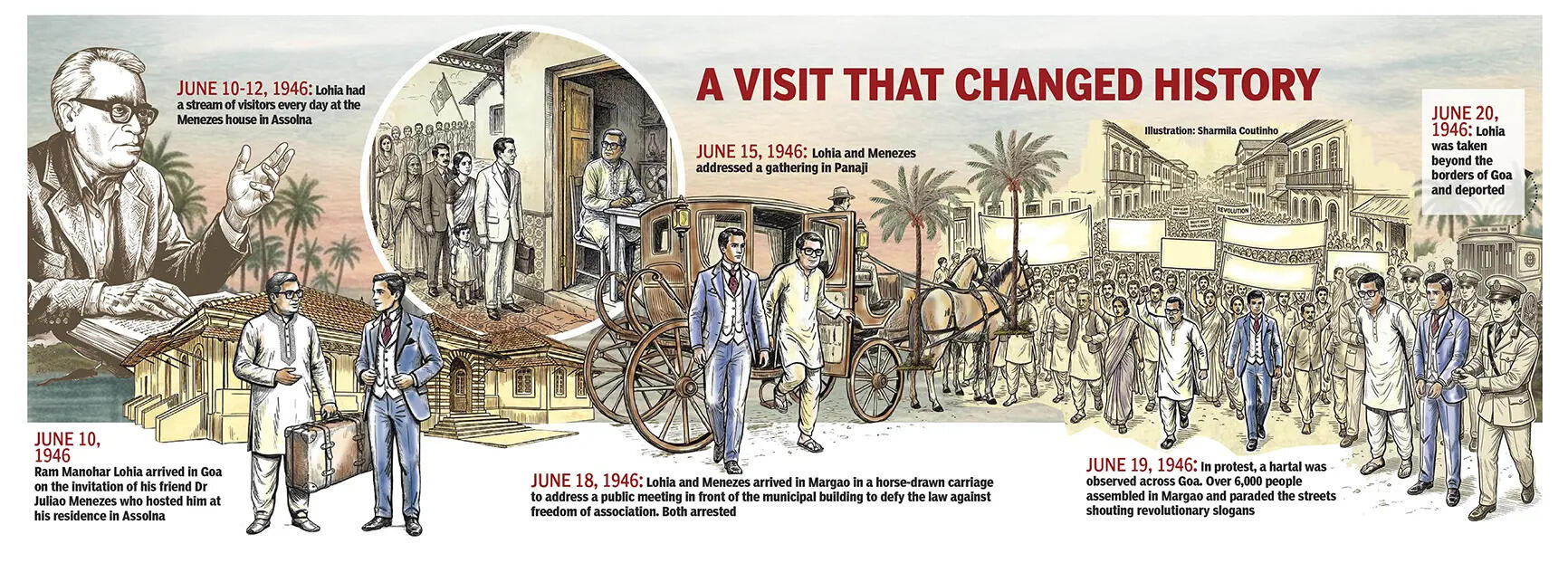
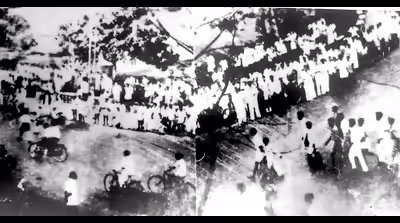
The evening of June 10, 1946, was like any other in the quiet village of Assolna in Salcete. The Portuguese colonial administration went about its business as usual, its laws against public assembly and free speech enforced with colonial impunity. Then, a man stepped off a vehicle at the home of Dr Juliao Menezes, and nothing in Goa would ever quite be the same again.Ram Manohar Lohia, the socialist leader, had arrived—fresh from incarceration in a Lahore prison, where he had been held after his arrest in Mumbai in 1944. The fatigue of imprisonment had done nothing to blunt either his instincts or his intent.In the days that followed, the Menezes residence in Assolna transformed into something far more than a private home. Social and political activists, operating at personal risk under Portuguese rule, made their way to Assolna in a steady stream. Until June 12, the visitors did not stop—each conversation deepening Lohia’s conviction that the moment had arrived for direct action against the repressive colonial laws throttling civil liberties in Goa.By June 13, the decision had been made. Direct action alone, Lohia believed, could dispel hesitancy. A public meeting would be held in Margao on June 18. He would address it openly, in deliberate defiance of the law against freedom of association.On June 15, Lohia and Menezes tested the waters with a public gathering in Panaji. The Portuguese police present chose not to intervene—a telling sign of the administration’s uncertainty. The real reckoning, however, was three days away.On June 18, 1946, Lohia and Menezes arrived in the open space in front of the municipal building in Margao in a horse-drawn carriage. As it drew up, captain (retd) Fortunato Miranda, mamlatdar and administrator of Salcete, stepped forward with a request—do not alight. Lohia declined and stepped down, walking towards the assembled crowd.As people moved forward to garland Lohia, Miranda stopped them, and warned Lohia against speaking without permission. Signalling people to be quiet, Lohia began addressing the crowd. Miranda drew his revolver and trained it on him. The crowd stilled. Lohia did not. He reached out, took firm hold of the captain’s hand, brushed him aside, and continued to deliver his address.Police commandant Juliao Figueredo then mounted the stage and arrested Lohia before he could complete his address. Menezes was apprehended too.
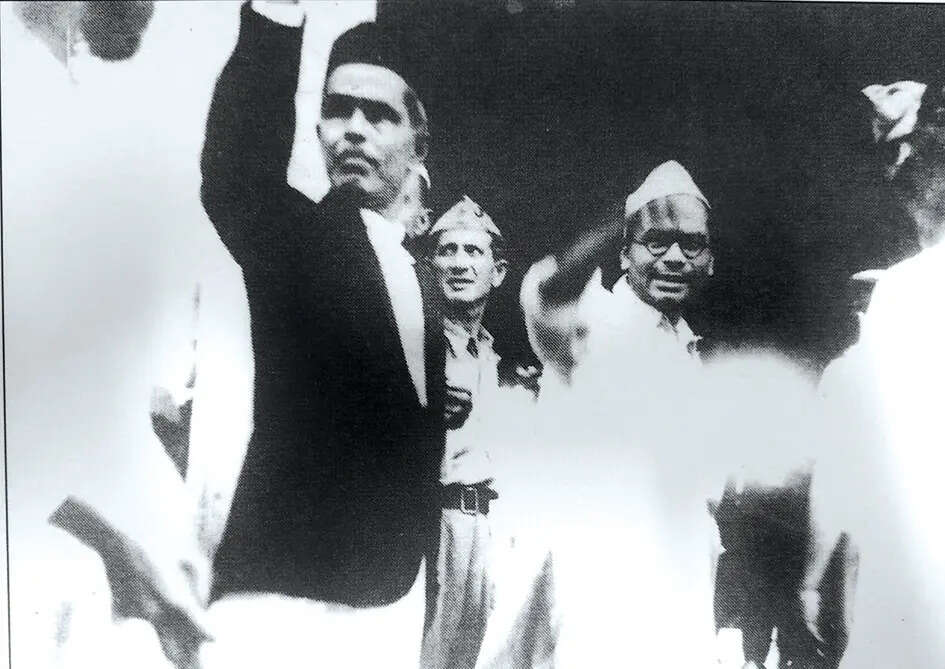
TURNING TIDES: Ram Manohar Lohia gets himself arrested in Margao
The administration believed the situation was now contained. It was not. Others immediately stepped forward to court arrest. Among them was a young girl, Vatsala Pandurang Kirtani—her name now inseparable from this chapter of Goa’s history. Her arrest prompted over 40 women to march to the police station demanding her release, a spontaneous act of defiance the administration had not anticipated.Alarmed, the authorities moved Lohia to Panaji under the cover of midnight. On June 19, a hartal was observed across Goa. In Margao alone, over 6,000 people took to the streets. On June 20, Lohia was released and deported.
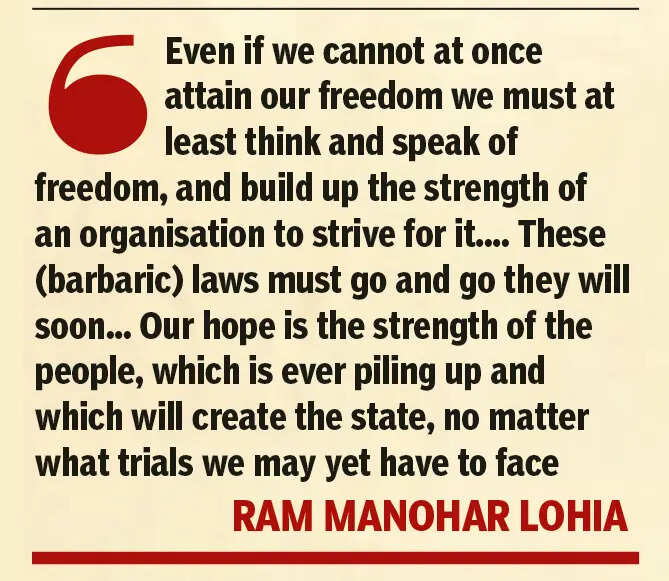
A regular campaign for civil liberties followed across the state. The Portuguese responded by arresting leaders and trying them before special military tribunals. Three months after his deportation, Lohia returned to Goa with the declared intention of reactivating the campaign. He reached Collem on the Portuguese border before being arrested and sent to Aguada Fort. Released on Oct 19, 1946, he was banned from entering Goa for five years.By mid-1947, the movement had outgrown its original frame. With India itself on the threshold of independence, all political parties raised the stakes entirely—calling upon Portuguese govt to quit Goa. The demand had shifted from civil liberties to freedom itself.The satyagrahas and acts of civil disobedience that Lohia had envisioned across ten days in Assolna and Margao multiplied across Goa through the years that followed.On Dec 19, 1961, fifteen years after a man in a horse-drawn carriage stepped onto the streets of Margao and refused to be stopped by a drawn gun, the Indian Army marched into Goa and ended 451 years of Portuguese rule.