









Scientists found shock scars inside South Africa’s oldest giant crater, and the hidden rock clues reveal a violent ancient collision. Image credit – UNESCO
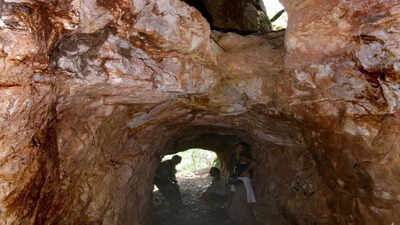
The popular mental image of an enormous impact crater is an obvious circular depression seen from space. However, the Vredefort crater in South Africa dispels this conception entirely. This location is commonly acknowledged to be the biggest proven meteorite impact crater on Earth. Still, it does not have any resemblance to a typical crater from the ground.As stated by UNESCO, the Vredefort impact crater was formed nearly 2.023 billion years ago and measured 250 to 280 kilometres in diameter initially. In some cases, it may have even been as big as 300 kilometres. It exceeds the dimensions of many metropolitan areas in the United States. Geological activity throughout eons (or aeons) of time eroded the crater’s outer layers and revealed its damaged core instead.Significance of Vredefort impact craterAfter researchers examined the central upturned rocks and broken surface lying underneath the initial crater floor, UNESCO stated that the Vredefort crater is the oldest, biggest, and most significantly weathered meteorite impact crater identified as a World Heritage Site. While erosion seemed to be a bad thing for scientists at first, it proved to be a blessing, turning Vredefort into an incredibly valuable geological site.Thanks to the disappearing upper crater, it became possible to study the inner layers of the structure, which are otherwise buried by new layers of rock. As mentioned by UNESCO, Vredefort is the only large astrobleme with a full geological profile below its crater floor. As Dr Wolf Uwe Reimold, the geologist studying impact structures, said in his research article provided by Elsevier, the structure is invaluable due to allowing scientists to study the crustal response to the giant impact. In other words, erosion made it possible to gain valuable scientific information about Earth’s crust due to exposing the hidden layers.The evidence of an impact is embedded in rocksFor many years, experts have argued about whether Vredefort was formed by an asteroid impact or some other phenomenon. The structure was so eroded that it was hard to determine the reason for its existence by its shape.The most compelling evidence is provided by the phenomenon of shock metamorphism. According to various studies, the existence of shatter cones and shocked minerals was detected within the rocks. Such phenomena occur at great pressures related to a meteorite strike or a nuclear explosion. The discovery of shatter cones is crucial since it suggests that this structure lies at the heart of the ancient impact crater. Shatter cones are often compared with fingerprints left by asteroids.According to UNESCO, such shock structures are strong proof of powerful processes occurring during collisions. Even if the crater boundary was lost billions of years ago, the rocks preserve information about it.
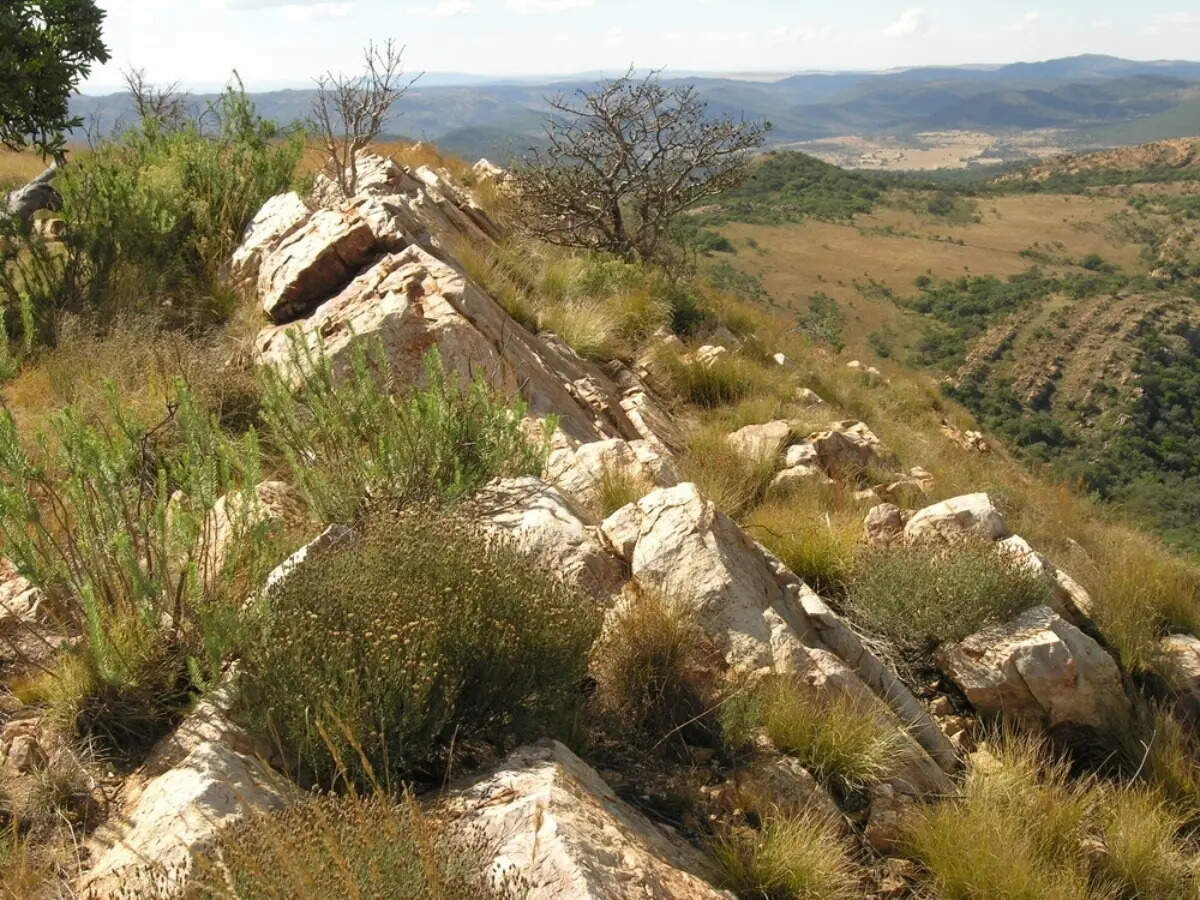
Earth’s largest impact crater no longer looks like a crater at all. Image credit – UNESCO
Vredefort relevance nowadaysThe significance of the Vredefort impact is much higher than local. As described by UNESCO, it marks the area where the “world’s greatest known single energy release event” occurred. Experts believe that the asteroid might be 20-25 kilometres in width. Such a large scale is important because the impacts of such a size could reshape continents and Earth’s atmosphere. Modern studies of Vredefort are focused on understanding the consequences of giant impacts, which are relevant for other planets like Mars or the Moon. Recent studies published in the Geophysical Journal International also reveal that scientists are still trying to determine the initial dimensions of the structure. Two billion years later, this location still provides a clear insight into violent planetary activity.The secret in the broken rocks of South AfricaThe intrigue with Vredefort lies in the disparity between what we see and what we know. The world’s largest impact structure is not visually impressive when viewed from above. Rather, the significance of this location lies deep within the fragmented rocks, uplifted crust, and tiny impact structures. The crater was mostly obliterated by natural processes. However, proof of the event survives underground.The preserved geological evidence explains the popularity of this unique location among international scholars. It demonstrates that the greatest occurrences on Earth do not necessarily leave visible damage. Instead, sometimes the most valuable information is hidden within the rock formations that survive even when the surface is no longer recognisable.