







A year after the Yamuna inundated large parts of Delhi, the river is again flowing above the danger mark. The immediate threat may be lower this time, but heavy rain in the upper catchment could quickly change the picture, exposing how vulnerable the city’s floodplain still remains.That vulnerability is built into Delhi’s geography. Every monsoon, as September sets in, the city watches the Yamuna closely because even a sharp rise in the river or a sudden surge in upstream discharge can quickly put thousands living and working along the floodplains at risk.The danger mark at the Old Iron Railway Bridge is 205.33 metres, while evacuation of vulnerable residents begins when the river reaches around 206 metres. On September 6, the Yamuna was flowing at 205.59 metres, already slightly above the danger mark.And it is not just the people living along the river who feel the impact. When the Yamuna rises sharply, critical roads and infrastructure can also be affected. The Loha Pul, a vital link between Central Delhi (including Kashmere Gate and Old Delhi Railway Station) and East Delhi, is among the key crossings vulnerable to rising waters during severe floods.
2025: When the Yamuna broke its banks
Last year, the warning turned into a full-blown crisis.The Yamuna crossed the danger mark and rose above 207 metres, inundating several low-lying parts of the Capital and forcing more than 10,000 people to evacuate vulnerable areas.
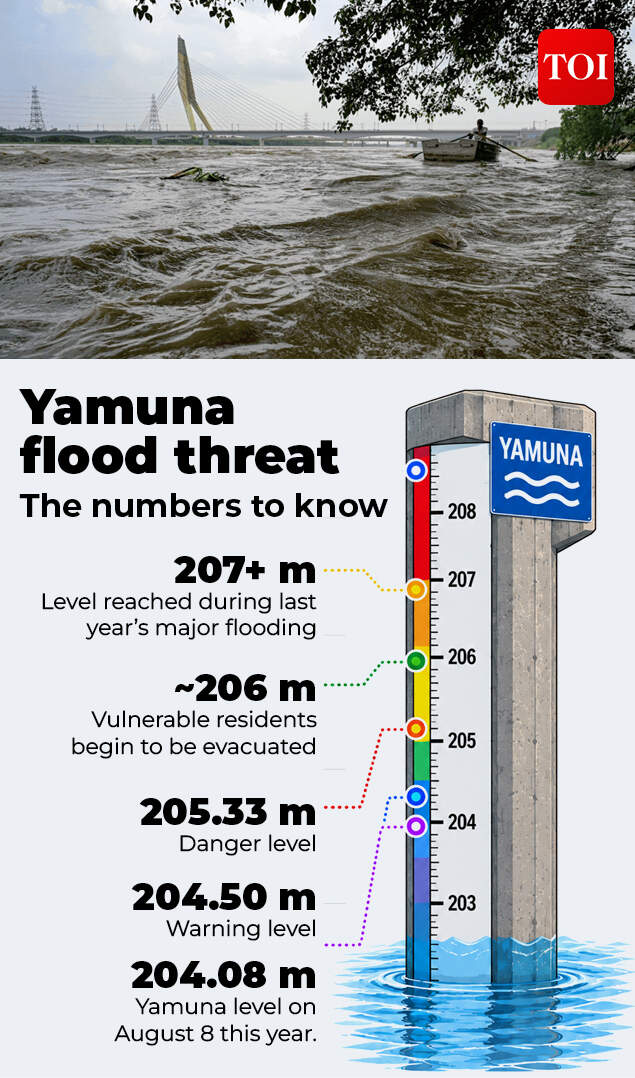
The warning numbers you should know
The impact extended well beyond flooded homes. Roads and public infrastructure were affected, electricity supplies were disrupted and houses were left covered in mud and silt after the water receded. Thousands whose livelihoods depended on the floodplain also took a hit.Floodwaters reached the Ring Road and Outer Ring Road, disrupting traffic between Majnu ka Tilla and the Salimgarh bypass. The Municipal Corporation of Delhi stopped cremations at Nigambodh Ghat and the Geeta Colony ground because of flooding. Water-treatment infrastructure was also affected.A major factor was the enormous volume of water released from the Hathnikund Barrage in Haryana after intense rainfall in the upper Yamuna catchment.
2026: Is Delhi facing another repeat?
A year later, attention is once again turning to the Yamuna.The monsoon remains active, with heavy rain reported in parts of Delhi and northern India. The immediate concern is not simply the river’s current level, but how much water is being released upstream and whether intense rainfall in the catchment pushes those levels sharply higher.The Yamuna has remained comparatively stable this year, despite crossing the danger mark.
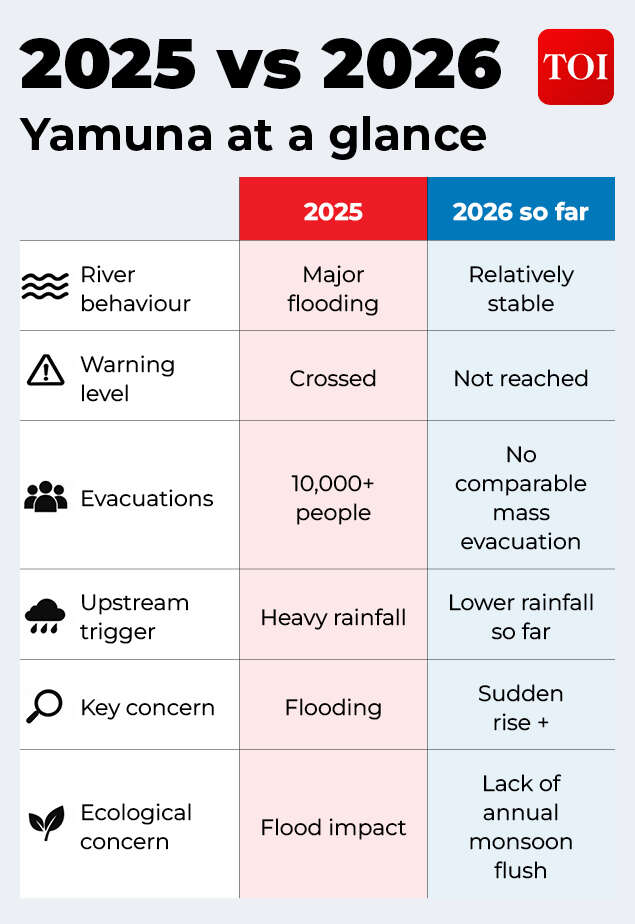
2025 vs 2026 of Yamuna flood threat
Dr Shiv Singh Rawat, water expert and convener of the WalkForYamuna Campaign, said the difference becomes clearer when the upstream discharge is examined. “This year’s situation needs to be understood in its proper hydrological context. The maximum discharge released from Hathnikund Barrage during this year was around 64,000 cusecs, which is significantly below an extreme flood situation. That helps explain why Delhi experienced a much less severe river-flood situation than in 2025.”But that relative stability offers no guarantee.The India Meteorological Department has warned of isolated heavy rainfall over Haryana, Chandigarh and Delhi from September 10-12.Fairly widespread rain, accompanied by thunderstorms and lightning, is also likely over Uttarakhand from September 6-12, while rainfall disturbances are expected over Himachal Pradesh.For Delhi, what happens upstream can matter as much as what happens within the Capital itself.A spell of intense rainfall in the upper catchment can send a surge downstream, leaving communities along the floodplain with limited time to respond.
The flood threat does not end with the water level
The relatively stable Yamuna this year may have given Delhi a temporary reprieve, but the underlying vulnerability remains.The floodplain is not simply vacant land beside the river.It acts as a natural buffer during floods, helps recharge groundwater and performs an important ecological function.
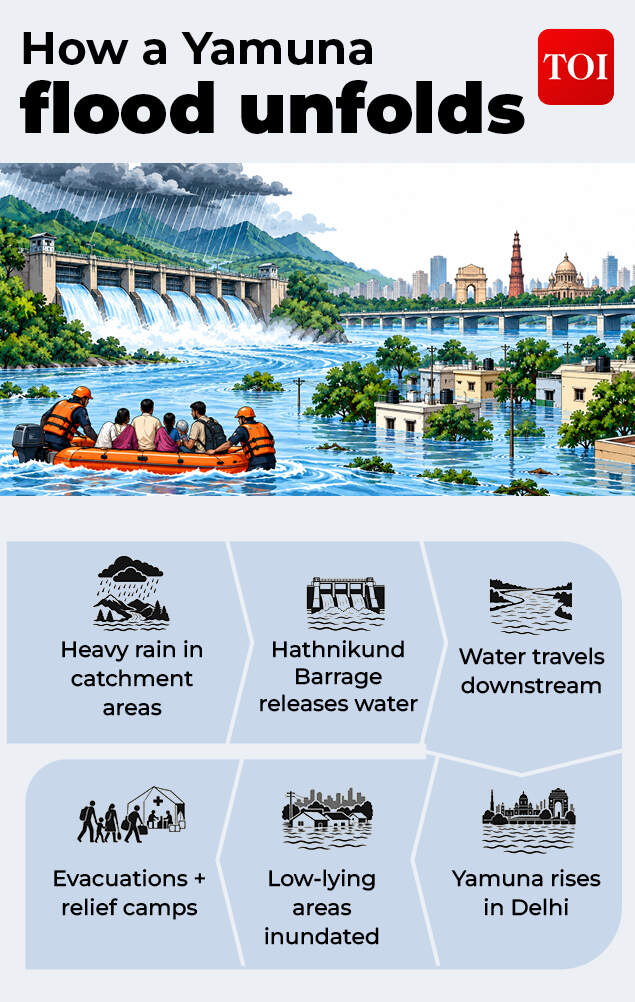
Know how a Yamuna flood unfolds in Delhi
“The 2-km-stretch on both sides of Yamuna acts as a buffer for floods, restores groundwater balance and acts as an organic filter. However, excess rain will create flooding in Delhi, and sanitation is not adequate to handle floods in the Capital,” says environmentalist Kavita Ashok.Rawat warns that the greater danger could emerge gradually through construction and development. “The concern is that areas outside the most restrictive floodplain zones could gradually become corridors for permanent construction, infrastructure and commercial riverfront activity,” he says. “That would undermine the very floodplain functions that protect the city.”The question, therefore, is not only whether the Yamuna will rise this September. It is whether Delhi is becoming more or less vulnerable when it does.
Living with the Yamuna
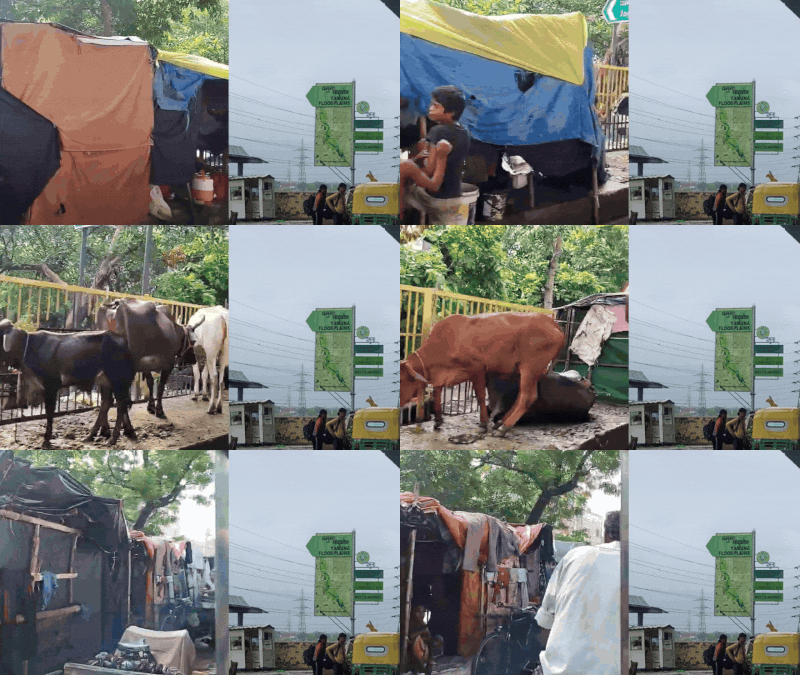
For families living along Delhi’s floodplain, the monsoon is not simply a season of heavy rain. It is a recurring threat of displacement.When the river rises, families may have to move their belongings, livestock and essentials to higher ground with little warning.
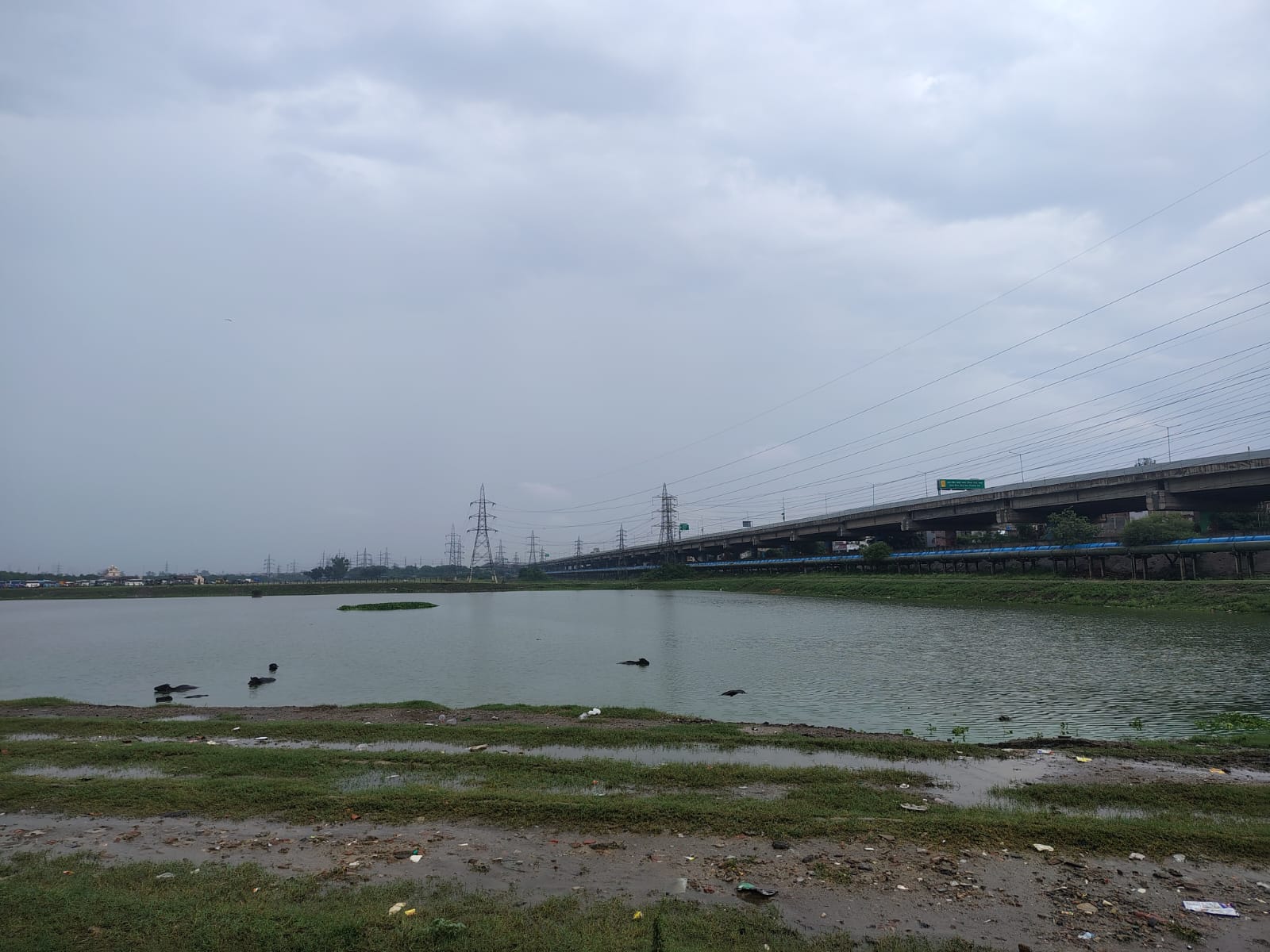
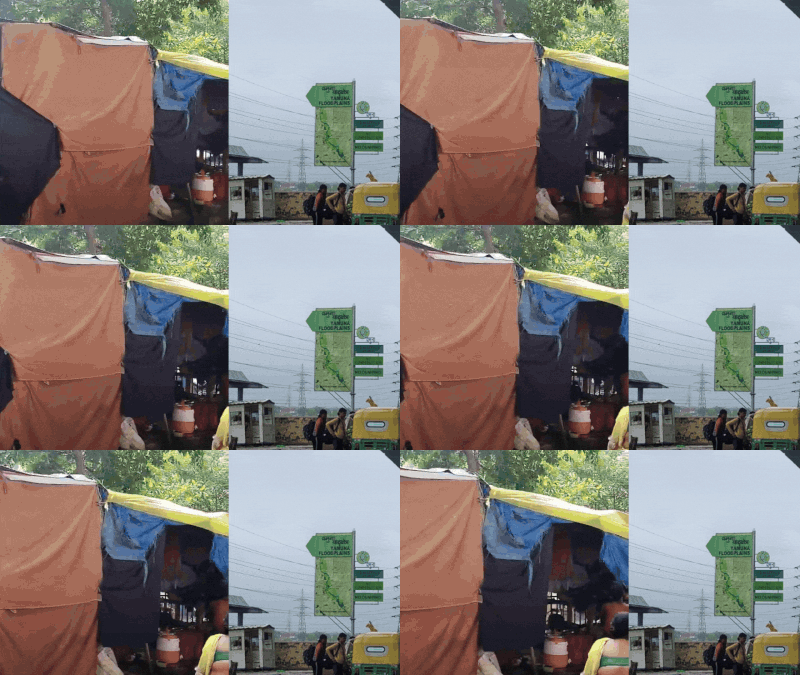
Delhi Yamuna Floodplain (Pic credit: Priyanka Jaiswal)
The granddaughter of Ramu Sahni, who lives with his family near the Yamuna floodplain, told TOI that residents don’t receive any advance warning.“We receive no warning on time. We see the rise in the water level of Yamuna and ourselves decide to shift to the roads with all our belongings. The authorities then notice the crowd on the roads and help us with tents.”Sahni, who came to Delhi from Bihar in search of employment many years ago, says the relief arrangements have also changed. “Earlier, they used to provide us with some ration and water in tents but now the situation has changed,” he says. “I don’t live here for free, I pay rent.”
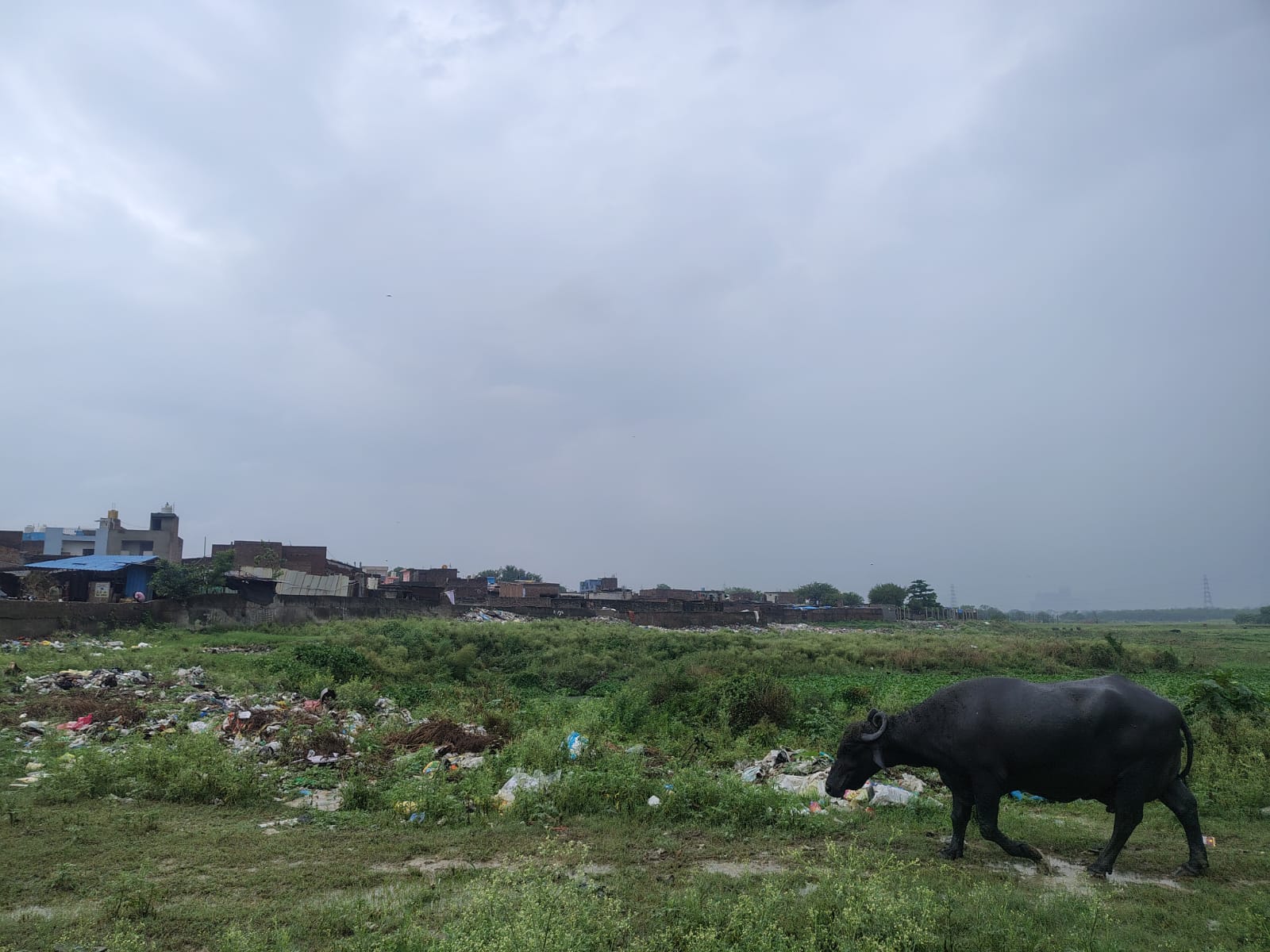
Houses built around Delhi Yamuna Floodplain (Pic credit: Priyanka Jaiswal)
For many residents, simply relocating permanently is not an easy option.Their lives are tied to the floodplain through work, transport, markets and social networks. When the water recedes, they return.“We return back here when the water recedes after 2 months. This is all we have. I run a rickshaw, we are mostly ragpickers. Where will we go?”That cycle of evacuation, waiting, returning and rebuilding has become part of life for many families.
Animals: The overlooked victims
For families with livestock, evacuation is even more complicated.Leaving home is one thing. Moving buffaloes, cattle, calves and other animals to safety is another. Stray animals are even more vulnerable, particularly when rising water cuts off their escape routes.
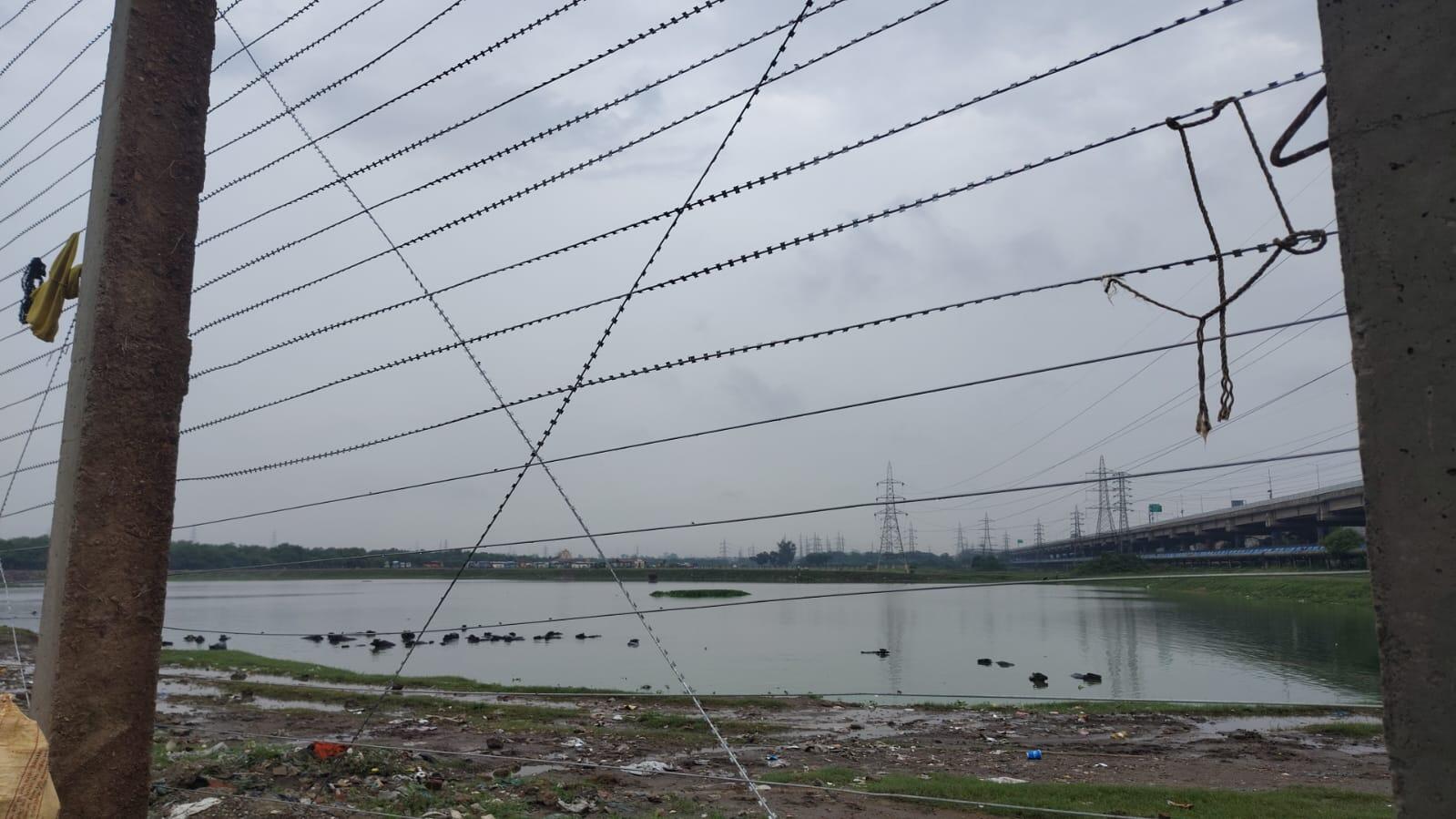
Buffaloes in the river | Fencing installed (Pic credit: Priyanka Jaiswal)
Sahni says livestock is not simply property for floodplain families, it is their livelihood. “People usually take their buffaloes with them on the roads. How will they earn? Now they have installed fencing around a small Yamuna pond here. How will buffaloes go there? They need to be there for survival. If a flood comes right now, there is no way we can rescue them immediately as there is only a small route to travel.”When asked who rescues stray animals during floods, he had no clear answer.PETA India told TOI that animals stranded during floods can face exhaustion, dehydration, hunger, injury and drowning, making rapid rescue and access to food, clean water and veterinary care critical.“The biggest challenge when trying to reach animals in emergency situations is getting to them in the first place. Access may be cut off by rising water, for instance,” said Sachin Bangera of PETA India.During last year’s floods, PETA India’s Rapid Response Team arranged a boat to rescue dogs stranded in flooded areas and at risk of drowning.“Animals who are left chained are the most vulnerable because they cannot escape, or they become exhausted and drown,” Bangera said.
Aditi Bakshi, Animal Welfare Advocate and Specialist – Government and Public Policy at Mercy For Animals, says the problem goes deeper than rescue.“Many people are forced into an impossible choice by a system that gives them no option. Rescue boats and relief camps do not take animals. When the administration tells a family to evacuate and will not let them bring their cow, their pigs, or their two goats, the family has to choose between their children’s safety and the animal’s life.”She argues that flood preparedness must explicitly include animals.According to Bakshi, Delhi lacks a comprehensive operational framework covering animal evacuation, including a nodal officer, mapped animal shelters, pre-monsoon fodder stocks, evacuation protocols for large animals and regular drills. “A plan that has never been drilled is not a plan; it is a document,” she says.
Delhi’s real test: Preparing before the next flood
For Delhi’s floodplain residents, the Yamuna may rise for only a few days. The disruption can last months.That makes flood preparedness about far more than issuing warnings once the river begins to rise.“Relief must be immediate, but rehabilitation must be humane and sustainable. People should not have to repeatedly rebuild their lives every monsoon,” says Dr Heera Lal Patel, IAS.During a flood emergency, he says, authorities need to provide clear information, accessible evacuation routes, transport and safe shelters. Vulnerable families cannot be expected to organise an evacuation on their own.Rawat argues that Delhi needs scientifically determined, risk-based floodplain zoning.“The real measures of success are: how many people are taken out of high-risk locations, flood-storage capacity restored and new encroachment prevented.”
Share your thoughts in the comments
Be respectful · TOI community guidelines
For companion-animal guardians, PETA India recommends identifying safe locations where pets will be accepted, keeping an emergency kit ready, and ensuring animals are microchipped or wear collars with updated contact details.But the larger challenge is institutional.The Yamuna’s rise is predictable. The exact scale and timing of a flood may not be.For communities living beside the river, that distinction can mean the difference between having time to evacuate and scrambling for safety as the water arrives.And every September, Delhi faces the same question: when the Yamuna rises again, will the city be better prepared, or will thousands once again be forced to leave their lives behind?