








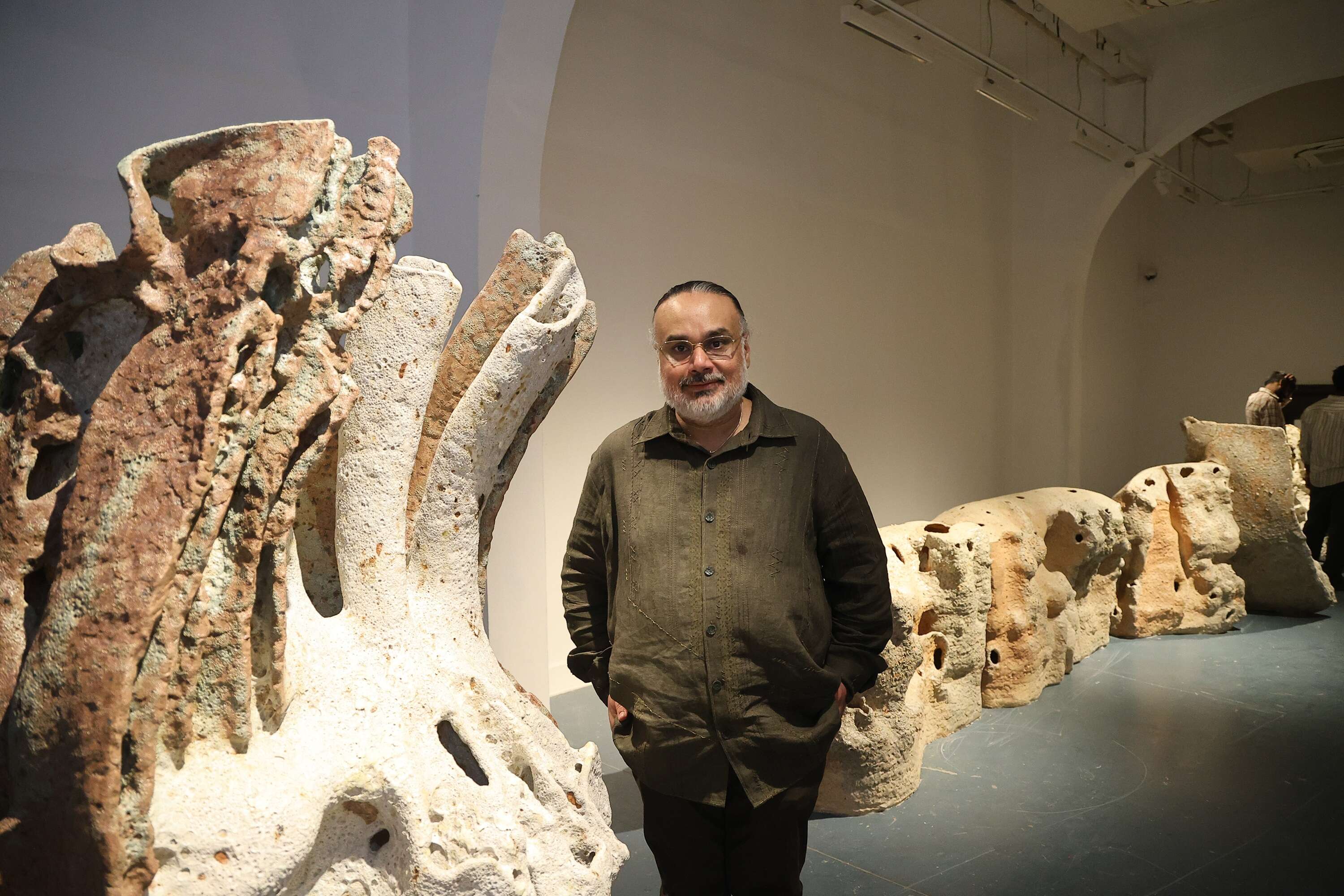
In a studio in Bhainslana, a village in Rajasthan known for its black marble quarries, artist Vipul Kumar works surrounded by clay, stone, and finished sculptures. Classical music fills the long hours as he returns, day after day, to the same material—shaping, building, and waiting for the kiln to complete what his hands have begun.This is the world behind Tap and Tapish, a new exhibition of ceramic works at Bikaner House, presented by Reshma Chordia’s Art Explore and curated by Anita Dube. The title itself speaks to Kumar’s artistic philosophy: Tap, sustained practice and discipline; Tapish, the transformative heat of the kiln.From Stone to ClayKumar’s journey to ceramics was unconventional. He began as a stone carver, learning the language of weight, resistance, and physical labour. That training never left him—it shaped how he approaches clay. What started as an unexpected turn gradually became a lifelong commitment.
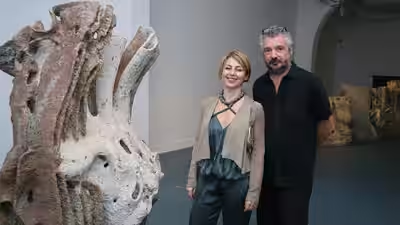
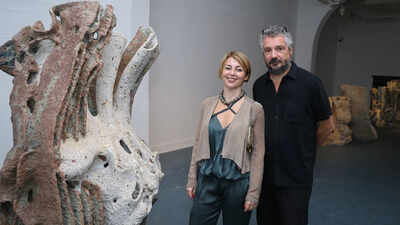
Artish Vipul Kumar with Reshma Chordia, Founder Art Explore and curator Anita Dube
Tap and Tapish brings together two forces that have shaped Kumar’s life: the sustained discipline of practice and the transformative heat that fixes form. The recent works speak to both—sculpture born from repetition, material knowledge, and the permanent mark of fire. Clay offered a different kind of material possibility. It could be built, shaped and changed before entering the kiln, where heat would complete a transformation that the artist had begun by hand: his practice statement reads.Years of working with this material have produced sculpture that moves between abstraction and recognisable form, drawing from mythology, cultural memory, and landscape.
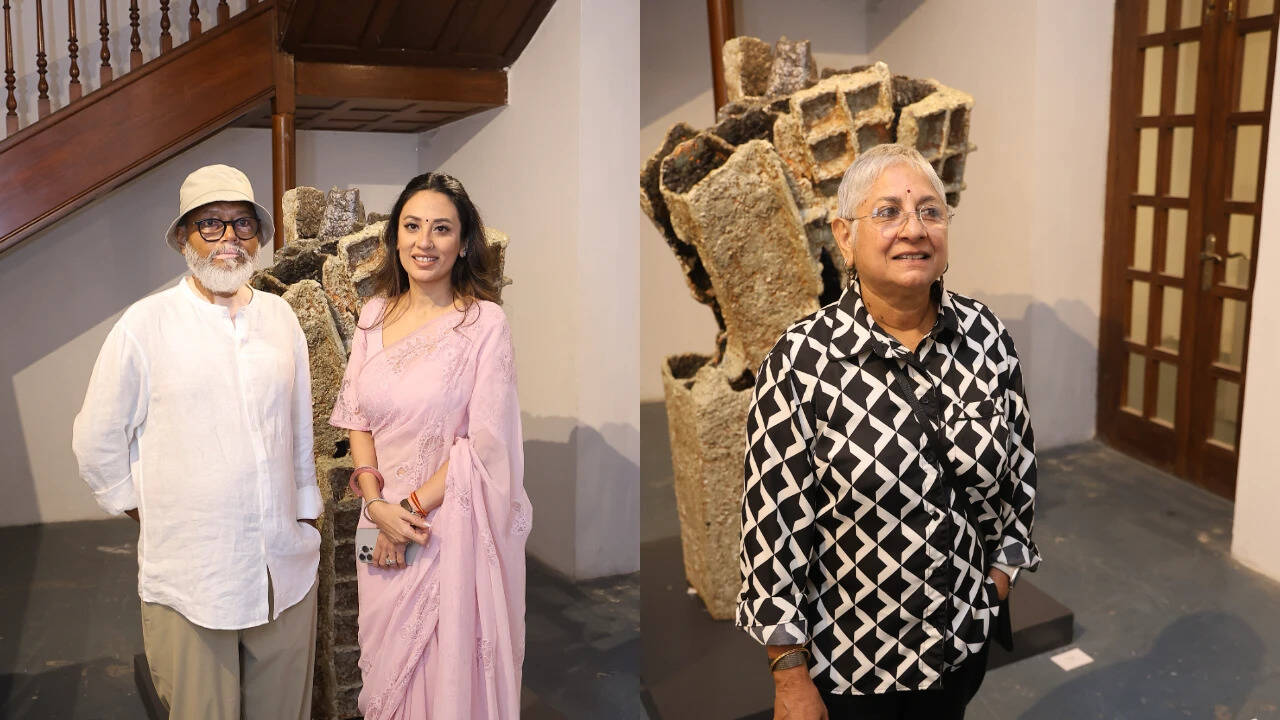
Artist & Fashion Designer Harpreet Narula
Curator Anita Dube describes the works as transforming “the fragility and tenderness of wet clay into a fired strength of bone.” It’s a phrase that captures the physical heart of the exhibition. Wet clay is vulnerable and responsive. Fire changes its nature permanently. What emerges carries the history of the hand, the material, the time invested, and the heat that finally fixes it.For Kumar, this relationship extends beyond the studio. “The environment is what I am interested in,” he has said. His understanding begins with the materials themselves: clay is earth; water makes it workable; air prepares it; fire transforms it. The sculpture becomes part of a much older, elemental process.
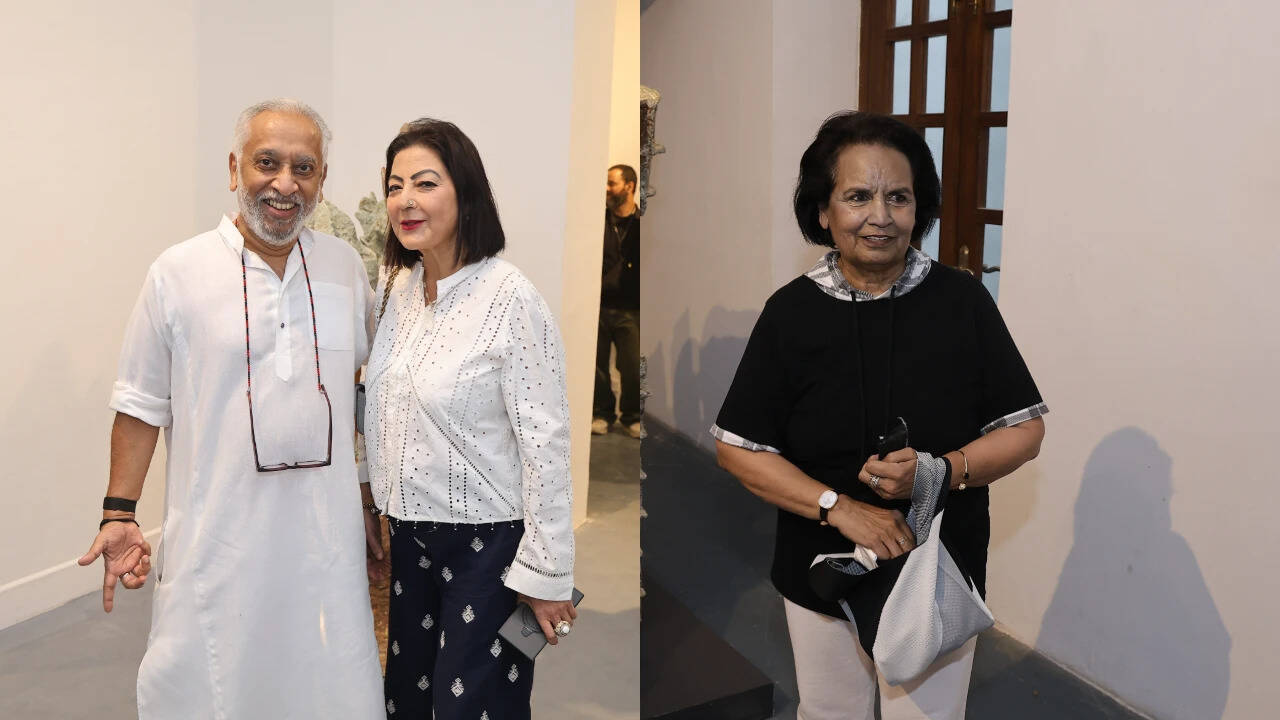
Dilip Cherian with Neelam Pratap Rudy and art collector Lekha Poddar
Reshma Chordia, Director of Art Explore, speaks to the rare quality of Kumar’s work: “Vipul builds from where he comes from, and it shows in every surface. The heat of the making is still in it, the weight of hands that know their material. The work carries a rare sensitivity, and it stands with real strength. He works at a scale you seldom see. Expect sculpture that holds its ground and asks you to slow down and stay with it.“This particular rhythm—the distance from metropolitan art centres, the studio at its core—has been essential to his practice. Mentors like Balbir Singh Katt and Himmat Shah shaped his early formation. Encounters with Kabir, Gandhi, and Buddhist thought, alongside experiences in Varanasi and Sarnath, informed his intellectual landscape. Yet Kumar has developed a distinctly individual voice: “I have something to say on my own,” he says.The opening saw Delhi’s cultural sphere converge—H.E. Mr. Siniša Pavić, Ambassador of the Republic of Serbia; Aurora Russi, Deputy Head of Mission at the Italian Embassy; art collector Lekha Poddar; architect Edoardo Fontana; and notable figures from design and cultural circles.