








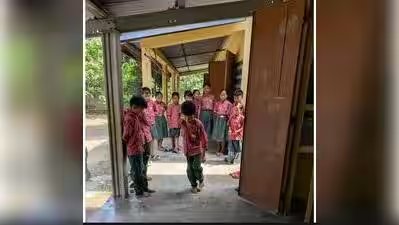
Guwahati: The Tamulpur district administration has launched Gyan Kusum, a targeted intervention to improve foundational reading and arithmetic skills among students in Classes III to VI, address school dropouts and bring out-of-school children back into classrooms.The initiative comes against the backdrop of the ASER 2024 findings, which show that fewer than 40% of rural Assam’s Class V students can read a Class II-level text, while only 16.7% can solve division problems.Led by district commissioner and IAS officer Simi Karan in partnership with the Pratham Education Foundation, Gyan Kusum will identify individual learning gaps and track every child’s progress.Its focus is summed up in the theme: “one child, one learning level and one school at a time”.While the Assam education department’s NIPUN Axom programme covers foundational literacy and numeracy from K-Shreni, or pre-primary, to Class III, Gyan Kusum targets older children who have not acquired essential competencies.“For children who have fallen behind, each successive grade can widen the gap unless they receive timely, targeted support,” Karan said.The programme follows the Teaching at the Right Level (TaRL) approach, which assesses children according to their actual learning levels, groups them accordingly and uses activity-based teaching to help them progress.Pratham resource persons have so far trained all 61 Cluster Resource Centre Coordinators (CRCCs) and 40 teachers from selected schools. The training will be expanded to cover at least one teacher in every school in Tamulpur, Karan said.“The focus shifts from completing the textbook to ensuring that every child masters the skills needed to move forward,” Karan said.CRCCs will monitor the programme, train teachers and track student progress.The administration’s field visits have also pointed to barriers beyond the classroom. At a Residential Special Training Centre (RSTC), Karan found that six of the 12 children were from Manjurgaon village.A subsequent visit to the village revealed school dropouts, irregular attendance and children without basic documents such as birth certificates and Aadhaar cards. Poverty and difficult terrain have compounded the problem, with some children forced to cross the Balti River and travel more than five kilometres to reach school.The district administration is identifying out-of-school children in Manjurgaon and other remote villages, arranging health check-ups and essential documentation, and facilitating enrolment in nearby schools, KGBVs or RSTCs based on individual needs.“We cannot expect a child to catch up if we do not first understand what is holding that child back,” Karan said.The administration said the programme’s success would be assessed not merely by grade progression, but by whether children can read confidently, solve problems independently and engage meaningfully with school.