








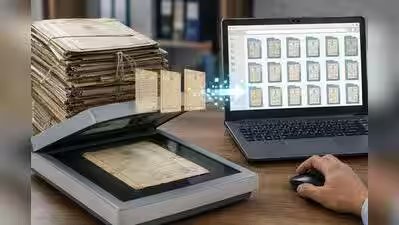
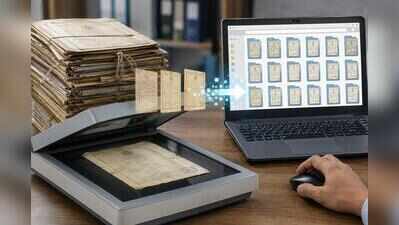
Chennai: Tamil Nadu is set to digitise a vast archive of historical records, including property documents dating back to 1865 and birth and death registers up to 2018, in a move that could make crores of records easier for citizens to access.Registration Department plans to scan 11.14 crore pages of unscanned records and convert 7.06 crore old Encumbrance Certificate/Index-2 records dating from 1865 to 1974 into searchable data. It will also digitise about 5.68 crore birth and death records up to 2018.“In 2019, we carried out a massive exercise and digitised 10 crore records between 1865 and 2009. But due to Covid and other factors, we could not carry out the process further. Now we will cover all the missed documents. From 2009, it has become a regular exercise in sub-registrar offices,” an sub-registrar said.Encumbrance certificates from 1975 till date have already been digitised, the official said. “We will now carry out the remaining between 1865 and 1974. The birth and death records were also done partially earlier,” he added.The department has invited tenders for scanning, digitisation, meta-tagging and indexing of the records. It said 2,22,90,271 documents from January 1, 1865 to July 5, 2009, had not been scanned earlier. The current exercise will cover these unscanned or missing records and will not involve re-scanning documents that have already been digitised.The project will also cover Citizen Birth and Death Registers up to 2018, followed by data entry of 5.68 crore birth and death records.Physical scanning of original records will have to be carried out inside the concerned Sub-Registrar Office premises, with documents not allowed to be taken outside for scanning. Scanning will generally be carried out from 8am to 8pm, Monday to Friday, while the top 100 offices by volume will also work on Saturdays.At least 2,000 data-entry operators will have to be appointed across two shifts to digitise four lakh records a day. Progress will be monitored through a dashboard, with shortfalls attracting penalties.A proposed software will use AI-assisted verification, including OCR-based comparison of keyed-in information with scanned images and automated flagging of possible mismatches and anomalies. The final decision will remain with the concerned Sub-Registrar or reviewing official.Security requirements include disabling USB ports on workstations and using biometric authentication for scanning operators, Sub-Registrars, District Registrars and Deputy Inspectors General. This is intended to create a record of who scanned or verified each document.The department has prescribed a 14-month target for completing the final database.