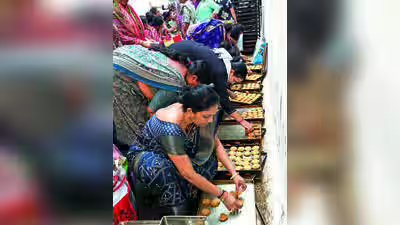








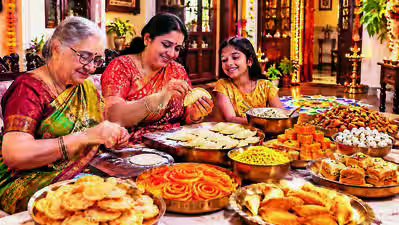
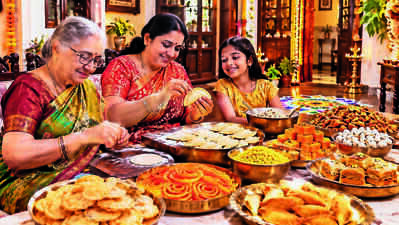
“Aaj Diwali, kaal Diwali, gaam na chhokra khai suvali… (Today is Diwali, tomorrow is Diwali, and the village children are feasting on suvali).” This popular rhyme, heard in parts of Gujarat during Diwali, speaks of a delicacy that may no longer be a common sight on festive platters but is still prepared in many households. Suvali, the sweeter cousin of the more popular farsi puri, is among the traditional delicacies that have stood the test of time, holding its place in the Diwali spread served to guests.The family recipeJalpa Rajgor, a resident of Khadia in Ahmedabad, learned to prepare traditional Diwali delicacies from her mother-in-law. Among these is ghughra, a half-moon-shaped sweet that is a fixture on Diwali platters. “Ghughra is a staple in our household. While it is relatively simple to make, the real skill lies in creating its trademark pleated or twisted edges, which seal its half-moon shape. These days, some people use the mould, in which they simply place the puri and the filling to get the shape right. But that takes away the fun of making it,” she says.For many Gujaratis, Diwali memories are closely tied to the elaborate spread of homemade sweets and savouries. Along with farsi puri, mathiya and ghughra, kitchens would be busy preparing chakri, sakkarpara, chevda, ganthiya, sev, magas and cholafali. Preparations begin a week before Diwali, with ghughra and magas usually made last and often with help from women in the neighbourhood.Prof Ramji Savaliya, former director of BJ Institute of Learning and Research, said Diwali has long been one of the region’s most important festivals, with references found in centuries-old records. “In Gujarat, Diwali has traditionally been celebrated as a post-harvest festival. The practice of offering annakuta to the deity on New Year’s Day is closely linked to the local produce, particularly milk and grains. In many parts of the state, wheat sev was once a staple, as it was made from the freshly harvested crop. We also find historical references to kheer and dudhpak being offered to the deity,” he said.The dishes may vary from one region to another, but the tradition of making Diwali treats at home continues in many families. These delicacies are served to friends and relatives who drop by to exchange greetings on the Gujarati New Year, a day after Diwali.Back to basicsFor some, concerns over food adulteration are now another reason to turn to homemade treats. Dipti Bhatt, a homemaker from Satellite who runs a Gujarati meals and snacks business, said she prepares traditional Diwali delicacies every year.
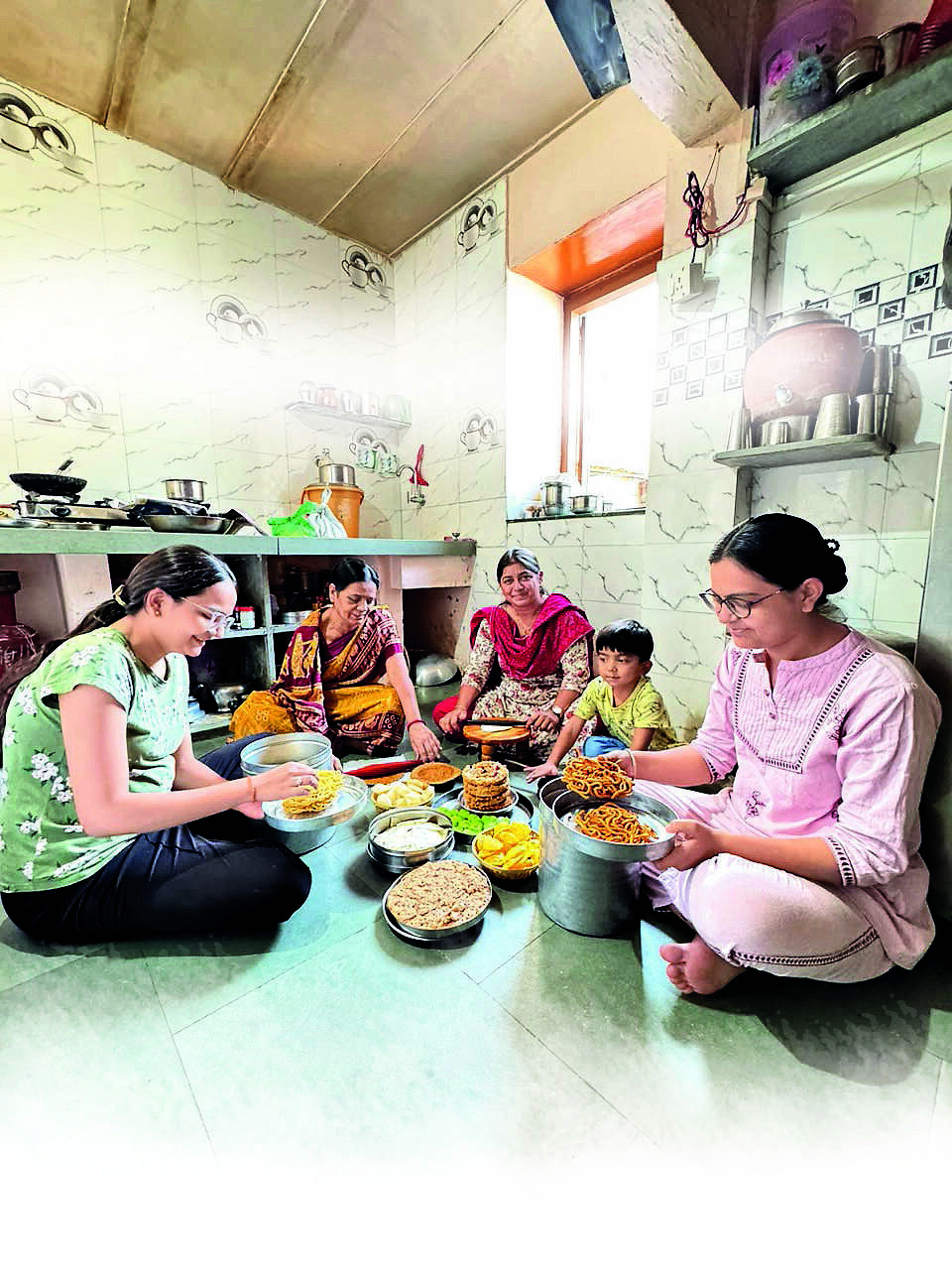
Members of the Padh family at Haja Patel ni Pol in Ahmedabad have prepared traditional delicacies at home
“Mathiya, farsi puri and suvali have always been Diwali staples. But with all the news about food adulteration, people are becoming more cautious about buying milk- and paneer-based products. Many now prefer traditional Gujarati sweets prepared at home because they know what goes into them,” she said. Not everyone is sticking to old favourites. Mohanthal is making way for baklava, while ghughra and chakri are increasingly being replaced by options such as makhana.Old favouritesJyotika Patel, a 72-year-old resident of Ghatlodia, says changing lifestyles, health concerns and fewer visitors have altered how families prepare for Diwali. “Nowadays, people buy almost everything ready-made because there’s hardly any time to prepare the delicacies at home. For health reasons, sweets are often kept only for the Diwali puja. But I still make chakri and ghughra for my grandchildren. I always tell them that the secret ingredient that makes Diwali treats special is the love and festive spirit that go into making them,” says Patel.And perhaps that is why these old recipes continue to find a place in home kitchens. Even as festive menus change and ready-made treats become the easier choice, many families still prepare their traditional favourites, holding on to the flavours, memories and little rituals that make Diwali special.