








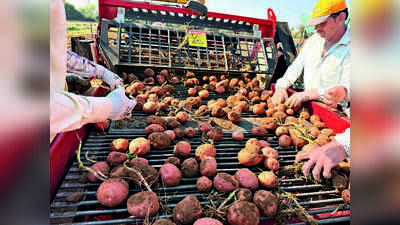
Ahmedabad: Gujarat’s farmers have gone global, not to sell their produce, but to shop for technology. With farm labour becoming harder to find, many are turning to machines and digital tools. Some have imported equipment from Germany, others from China. Many have also travelled to Israel and South Korea over the years to study new farm technologies and bring them home.Meanwhile, local entrepreneurs are renting out machines and offering mechanised services so that even small and marginal farmers can use technology without buying expensive equipment.• One machine, a fraction of the labour •Fed up with a persistent labour shortage, Olpad farmer Divyesh Ahir recently invested Rs 16.7 lakh in a paddy transplanter imported from China.
CJP Jantar Mantar Protest Updates
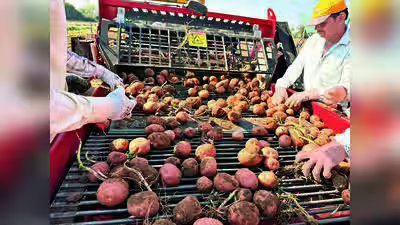
After three months of successful trials, this is his first full season with the machine, which he has used to transplant paddy across 130 bighas.“Earlier, transplanting paddy on just seven bighas took 25 labourers a full day. This machine does the job on 10 bighas with only six workers. Planting, which earlier stretched over 25 days now takes 13. Labourers charge around Rs 3,000 per bigha; the machine has brought that cost down to Rs 1,000. With faster planting, machine precision and better quality, I expect 30 to 40 per cent more crop,” says Ahir.The machine uses trays to raise seedlings before transferring them to the field in a fraction of the time taken by traditional transplanting. Ahir has also mechanised harvesting and now owns three paddy harvesters. “They have improved our yields by reducing grain losses during harvesting,” he says.• From Israel’s drip irrigation to German planters, a family’s tech quest •Harsh Patel, a potato and groundnut farmer from Dolpur Kampa village in Arvalli district, earned a master’s degree in agriculture with a clear plan to modernise his family’s farming practices.“When drought hit our region, my father travelled to Israel in 2003 and returned with drip irrigation technology. People laughed at him then. No one believed potatoes could be grown with so little water,” he says.After Covid worsened the labour shortage, he also imported an automatic potato harvester in 2021. “We also persuaded the German manufacturer to redesign it for India’s smaller farms. The company has since set up operations here.”
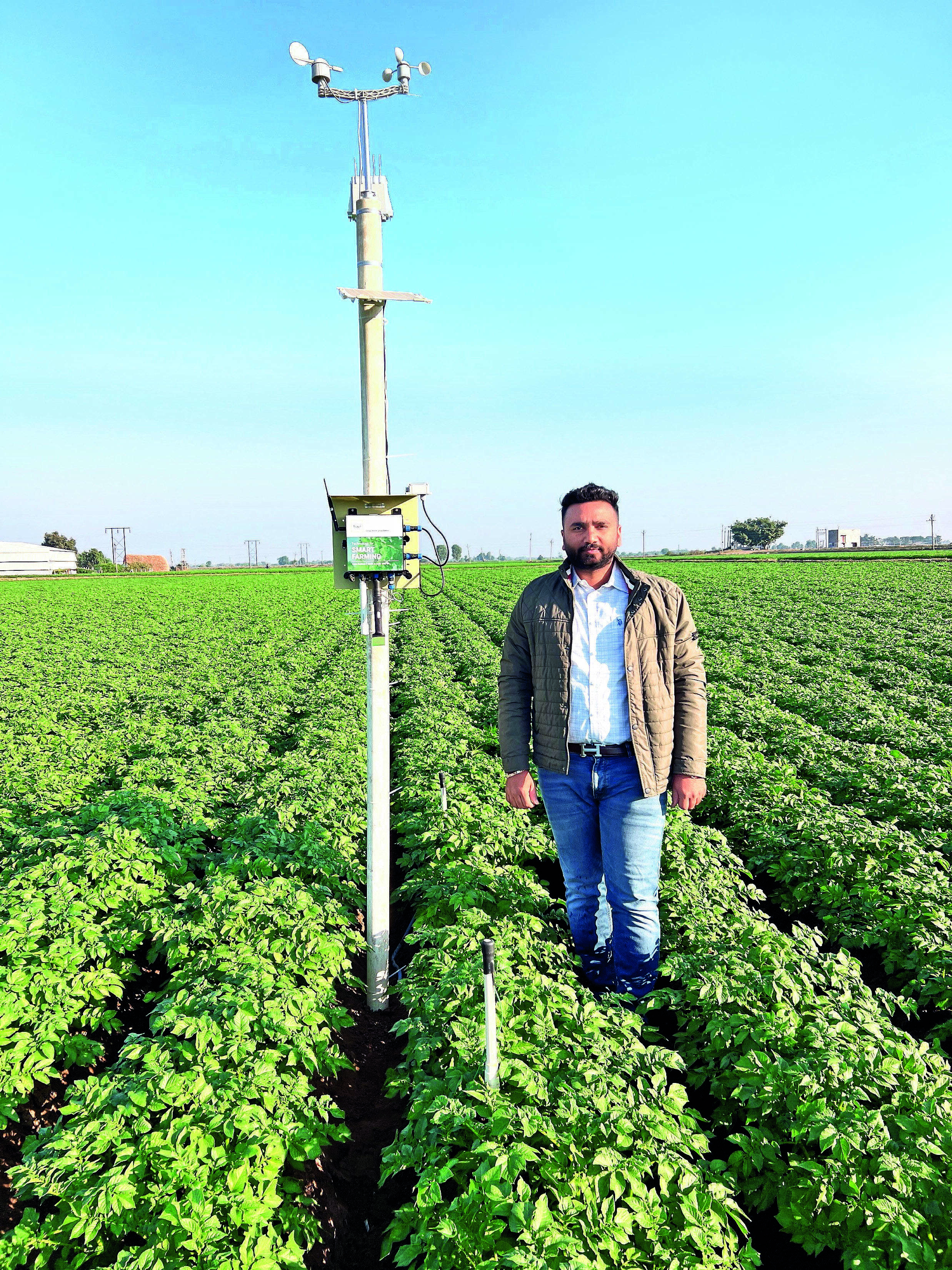
FORECAST FARMING: Data from an on-farm weather station helps Harsh Patel schedule irrigation, cut water use, and receive early alerts on crop stress
For Patel, technology is the best hedge against erratic weather and rising labour costs. “In 2011, my father and four friends jointly imported the automatic potato planter for Rs 50 lakh. Today, all five own their own planters because their incomes have grown,” he says. Patel has also turned to satellite data, IoT sensors and a weather station on his farm.“The system tells me exactly when to irrigate and how much water to use, cutting consumption by 70 per cent,” he says. “It monitors soil moisture and crop health, sending alerts to my phone a week before stress is visible, giving us time to act and save the crop.”• 35 acres a day, by drone •Vadodara farmer Bhumit Gajjar, a mechanical engineer and aviation enthusiast, invested Rs 11 lakh in an agricultural drone to spray nutrients, fertilisers and pesticides on his 10-bigha farm in Chikhodra village.
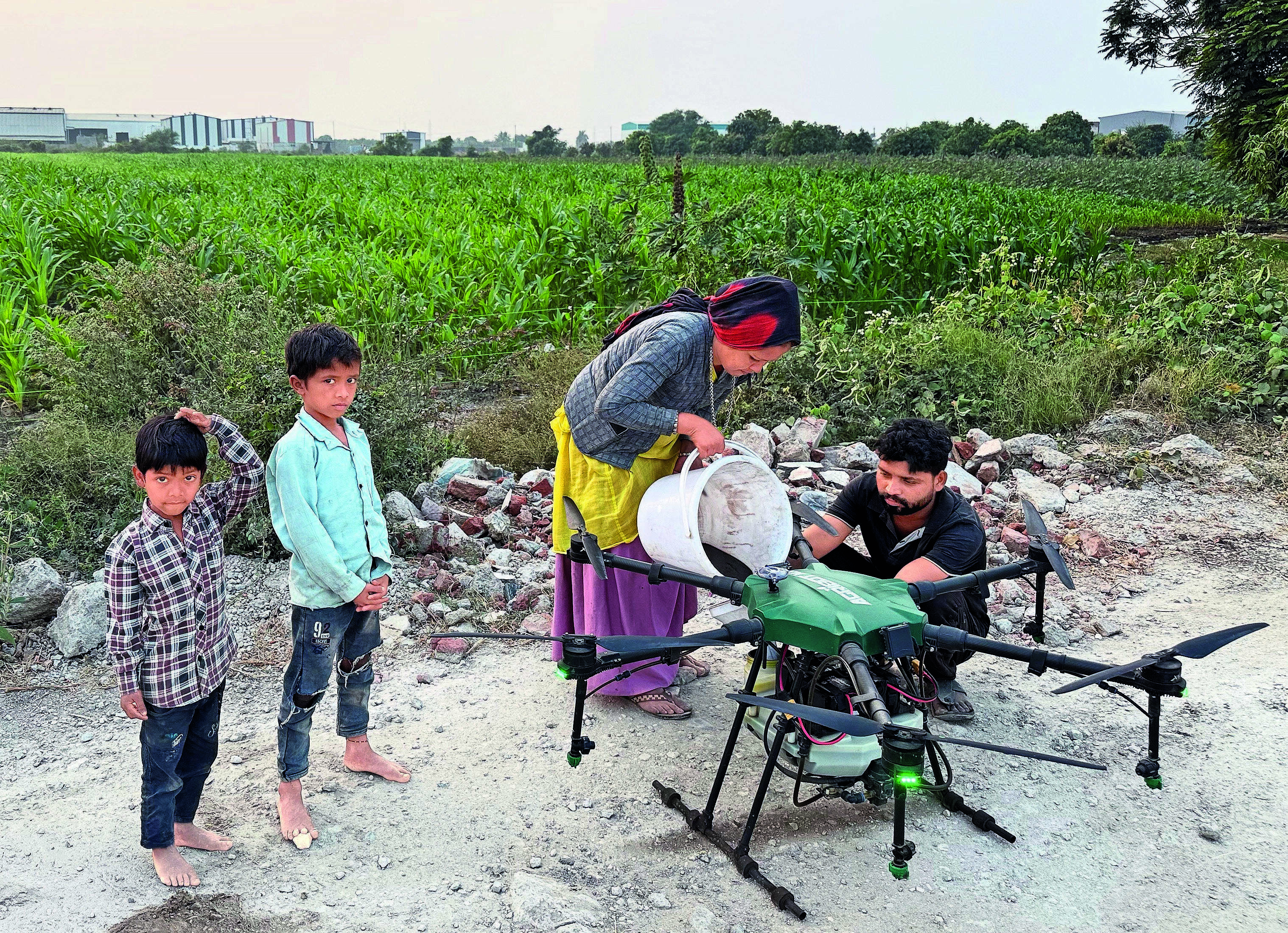
EYES ON THE SKY: Bhumit Gajjar (not pictured) invested Rs 11 lakh in a drone to spray nutrients, fertilisers and pesticides on his 10-bigha farm in Chikhodra village of Vadodara
“Timely spraying is critical, but labour is often unavailable or the work is not done well,” Gajjar says. “The drone sprays with precision, saves water and avoids crop damage caused by labourers walking through fields. While three labourers take half a day to cover two acres, I can spray 30-35 acres in a day.”Gajjar bought the drone before govt introduced subsidies, but farmers can now avail themselves of a 50 per cent subsidy. To recover his investment, he also rents out drone services and has used it across multiple crops.• Users become entrepreneurs •Some early adopters have turned farm technology into businesses. Nilesh Patel imported a paddy transplanter from South Korea in 2010 and spent years refining its use. He later added paddy harvesters to his operations and began selling them to other farmers. Patel has since sold 270 harvesters, each costing Rs 25 lakh.
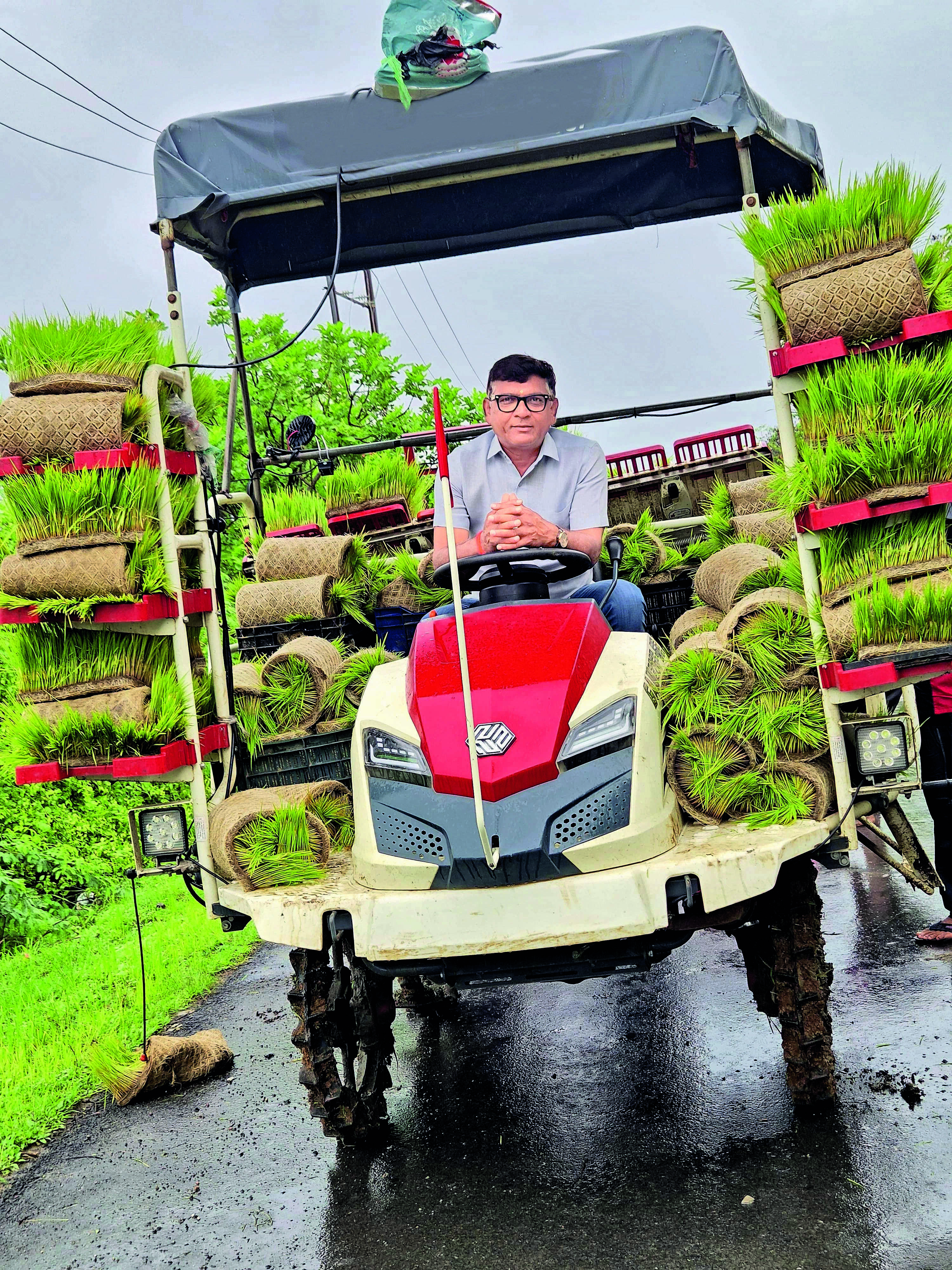
EARLY ADOPTER: Nilesh Patel on his Korean transplanter
Agri-entrepreneur Mihir Shah has launched a startup that uses IoT, AI and mechanisation to help farmers access technology. “Small farmers want mechanisation for better yields but cannot afford expensive machines. We bring these solutions to them through our app, offering drone spraying, soil testing and farm advisory services. We have trained 60 rural entrepreneurs who visit farms and deliver these services,” Shah says.• Why workers are leaving farms •Experts say the labour crisis has deeper social roots. The younger generation prefers white-collar jobs and is migrating to cities rather than working on farms, says N C Patel, vice-chancellor of Anand Agricultural University. “Social factors play a big role. Entire families are moving to urban areas in search of better opportunities. Even marriage plays a part. Girls looking for a match prefer boys settled in cities, so village youth shift to urban areas to improve their prospects, further shrinking the pool of workers available for farm work.”• The push from subsidies, loans •State govt is backing the shift in a big way, offering subsidies for farm mechanisation — and uptake has been climbing steadily. “Farm mechanisation was long visible in states like Punjab, but in Gujarat, demand has surged dramatically over the past four years because of the labour shortage,” says Satish Gamit, district agriculture officer, Surat.Agriculture minister Jitu Vaghani announced a budgetary provision of Rs 800 crore for tractor subsidies in 2026-27 — the highest allocation under the state’s mechanisation programme. Over the past five years, 2,01,605 farmers in the state received Rs 1,191.94 crore in direct financial aid for tractor purchases, Vaghani told the assembly in Feb.Banks, meanwhile, disbursed Rs 75,168 crore as agricultural term loans, agri-infrastructure loans and loans for ancillary activities in Gujarat in FY 2025-26 — nearly 48% of the state’s total farm credit of Rs 1.58 lakh crore, and a 12% jump from Rs 66,690 crore a year earlier, according to the latest State Level Bankers’ Committee (SLBC)-Gujarat report.The loans financed tractors, harvesters, irrigation systems, storage facilities and custom hiring centres. Banking sources attributed the surge to rising mechanisation, driven by labour shortages and farmers’ push for productivity.K S Shukla, assistant professor at the department of agricultural engineering, Navsari Agricultural University, says mechanisation is now extending to even smaller farm activities. “Farmers are using machines even for digging beds for mango plantations. Hole diggers have made the process faster, while sugarcane harvesters help overcome labour shortages in cane fields. We are experimenting with several such tools and technologies to make farming easier.”• When farmers pooled their power •Long before individual farmers began importing machines, Shivpura Kampa village in Gandhinagar taluka took the collective route to farm modernisation. In 2004-05, a group of 19-20 farmers installed what was then described as Gujarat’s biggest drip irrigation system, bringing the technology to around 150 hectares at a cost of Rs 1.25 crore.
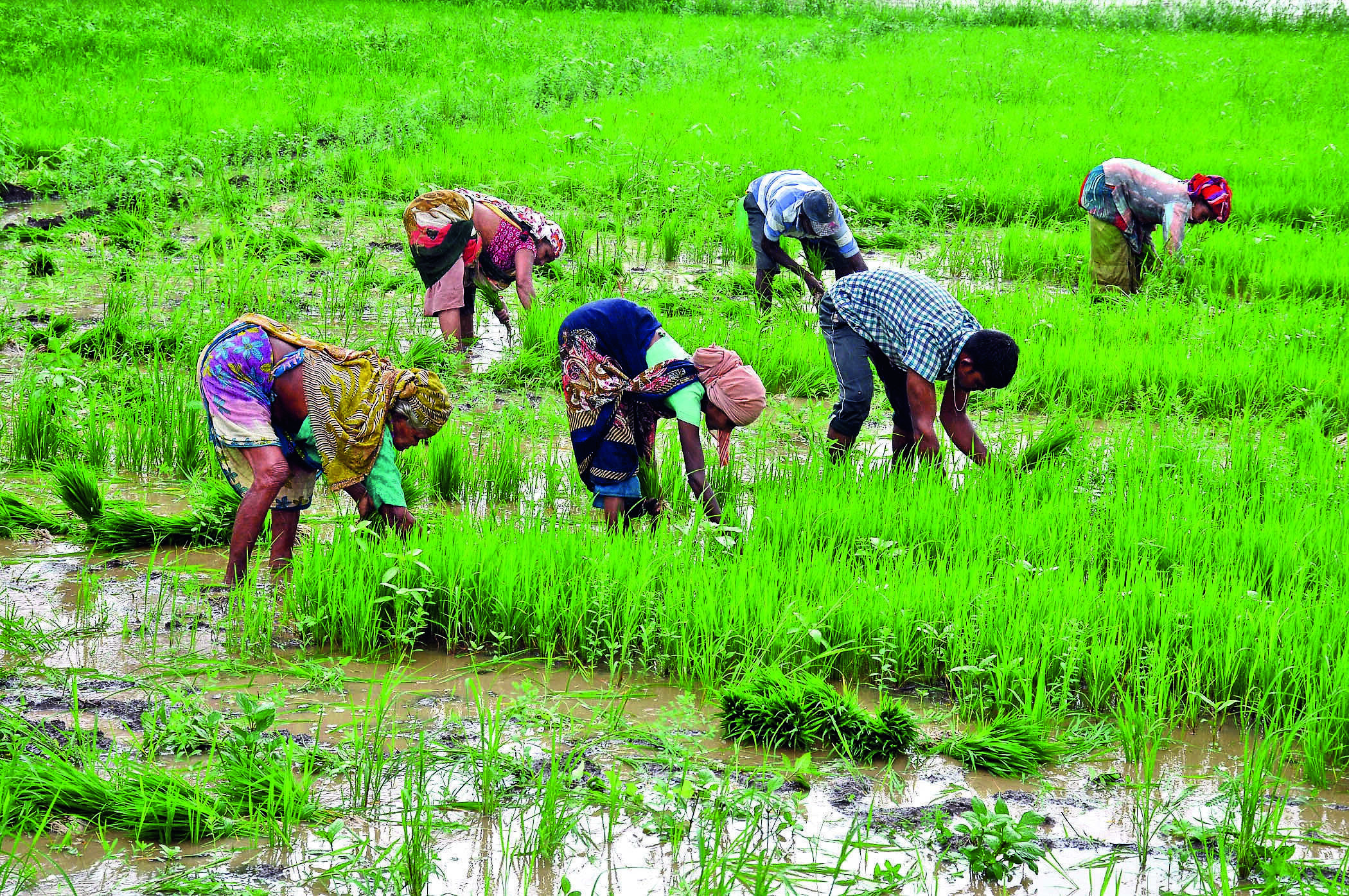
THE OLD WAY: Transplanting paddy by hand is back-breaking work that machines are steadily taking over as farm labour grows scarce and costly in the state
The village later adopted contract farming for potato and groundnut and gradually added mechanisation, including potato planters, diggers and power-steering tractors. Last year, the group bought three new diggers worth Rs 28 lakh. Farmers also developed their own solutions, including a grading machine that reduced labour requirements.“I farm 12 acres, and our group has always focused on adopting technology and equipment,” says Shantilal Patel, a farmer.“Drip irrigation and machines together have increased our output by 20-25 per cent. Potato yields have risen from around 30 tonnes per hectare four years ago to nearly 42 tonnes, while fertiliser and pesticide use has almost halved.”Patel says shared access has become important as machinery costs rise. “Small and marginal farmers cannot always afford expensive equipment individually. Many now rent tractors, rotavators, seed drills, sprayers and harvesters from larger farmers or use custom hiring centres supported by the govt. This reduces investment costs and helps complete farm operations on time.”On Gujarat’s farms, the sound of the season is no longer the chatter of labourers; it is the hum of the machines.GRASSROOTS GENIUSNot all farm tech is imported. Prof Anil Gupta of Honey Bee Network and GIAN says they document more than 50 farm innovations a year, many developed by farmers. These machines are often ‘cheaper and practical’ as they use local resources
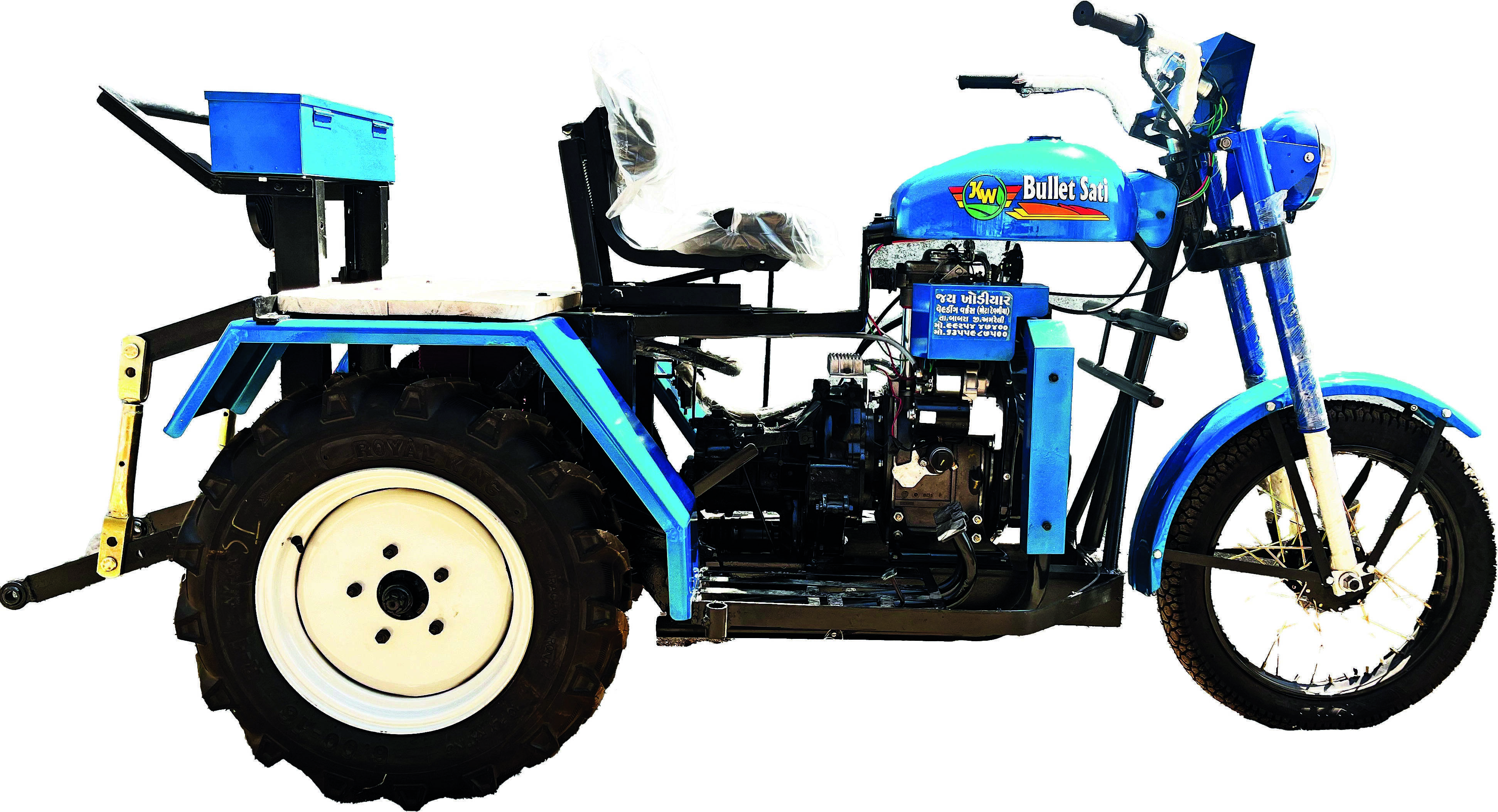
Sanedo Bullet Santi
Sanedo Bullet Santi: Amreli farmer Mansukh Jagani turned a Royal Enfield Bullet into a multipurpose farm machine that ploughs, sows and weeds — offering farmers a low-cost alternative to tractors. Used by over 10,000 farmers, it is patented, but Jagani refuses to enforce it, saying it should benefit everyone.
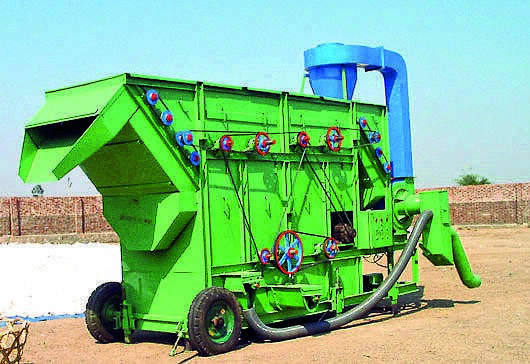
Chetak cotton stripper
Chetak cotton stripper: Ginner Mansukh Patel built a machine that strips lint from cotton shells, a task traditionally done by women and children. It processes 1,600kg of cotton an hour, compared with 25kg by hand, while cutting processing costs to one-twentieth.
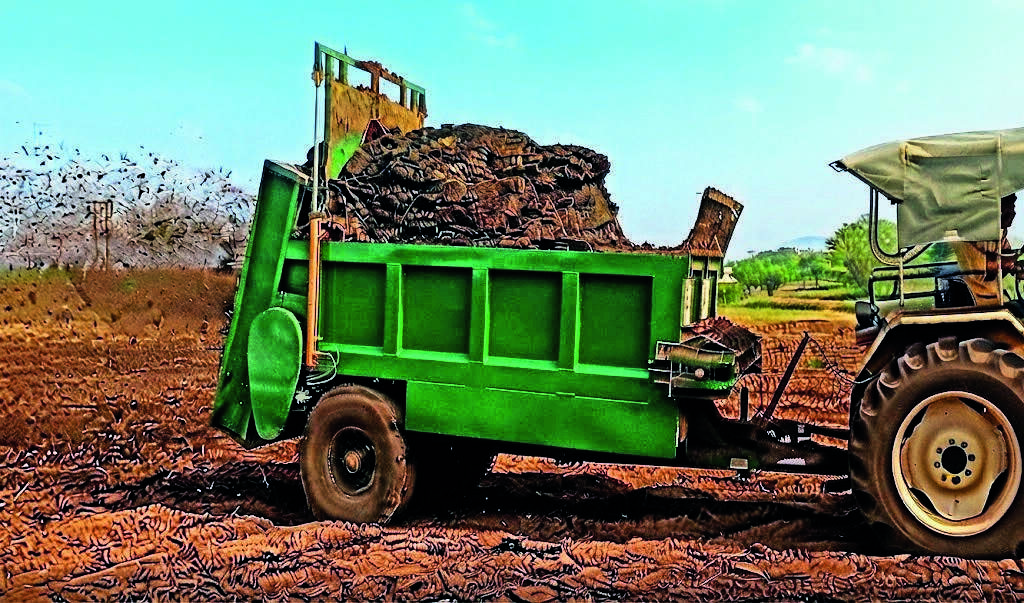
Manure spreader
Manure spreader: Palanpur’s Gani brothers developed a remote-controlled, tractor-powered spreader that helps farmers apply wet and dry manure efficiently, especially for organic farming. More than 800 machines have been sold.— With inputs from Himanshu Kaushik, Parth Shastri, Niyati Parikh and Parag Dave