











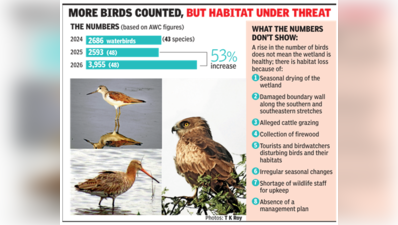

Gurgaon: Sultanpur National Park (SNP) has recorded 3,955 waterbirds belonging to 48 species. However, amid a 53% increase — according to Asian Waterbird Census (AWC) 2026 — from 2,593 birds recorded across the same number of species in 2025, an ecologist has raised concerns over habitat degradation, seasonal drying of the wetland and damage to the park’s boundary wall.The AWC figures show that the number of waterbirds counted increased by 1,362 between 2025 and 2026. The rise in the count does not by itself establish an improvement in the overall condition of the wetland. That’s a bit higher than 2024’s 2,686 individuals and 43 species but way down from 2023 — 9,026 birds and 51 species logged.Separately, TK Roy, an ecologist and ornithologist who conducted seasonal bird surveys at the park, flagged concerns over cattle grazing, firewood collection, disturbance from visitors and inadequate wildlife staff. He said his field observations over the past decade indicated a decline in habitats, bird diversity and bird populations. District wildlife officer RK Jhangra, while responding to this, said the department had sought funds for repairs. “We are aware of habitat issues, such as the damage to the boundary wall. We have already raised the issue and will fix it as soon as we get funds,” he added.Roy also shared data from seasonal field surveys conducted during 2025 and 2026. His compilation recorded 148 bird species across terrestrial and aquatic habitats over the two years, including resident and migratory species. The compilation recorded 54 terrestrial bird species and 50 waterbird species in 2025. In 2026, it recorded 64 terrestrial bird species and 49 waterbird species. These figures are from the seasonal survey compilation and are separate from the annual AWC counts.Roy flagged several concerns affecting the park, including the seasonal drying of the Ramsar wetland, breaches in the concrete boundary wall, particularly along its southern and southeastern stretches, and the alleged entry of domestic cattle for grazing and collection of firewood. He also cited irregular seasonal changes linked to climate change, disturbance from tourists and birdwatchers, and a shortage of wildlife staff.He raised concerns over the absence of a management plan for SNP and called for greater attention to habitat conservation. The park is an important birdwatching destination in Haryana and is a Ramsar site, recognised for the importance of its wetland habitat. Roy’s compilation also included species covered under the Wildlife (Protection) Act, 1972, the IUCN Red List and international conservation frameworks such as the Convention on International Trade in Endangered Species of Wild Fauna and Flora (CITES) and the Convention on Migratory Species (CMS). The park has been equipped with AI-enabled cameras on all watch towers. The park draws over 250 bird species, including more than 100 migratory ones, making it a hotspot in the winter months.