







A forgotten Cold War military base buried beneath Greenland’s ice is giving scientists an unusual glimpse into a much warmer Earth. Researchers examined sediment recovered from Camp Century in northwestern Greenland, a site built by the US Army Corps of Engineers in 1959 and abandoned in 1967. The sediment contained biological markers that allowed scientists to reconstruct summer temperatures and moisture conditions about 416,000 years ago, during Marine Isotope Stage 11. They found that summers were about 4.7°C warmer than modern conditions, while the site was ice-free despite now sitting beneath 1,387 metres of ice. The findings offer new clues about Greenland’s sensitivity to prolonged warmth.
Camp Century was built during the Cold War beneath Greenland’s ice
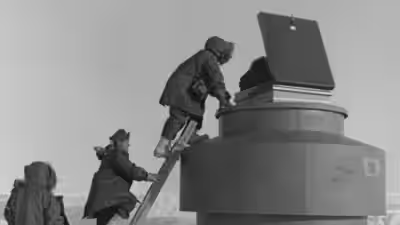
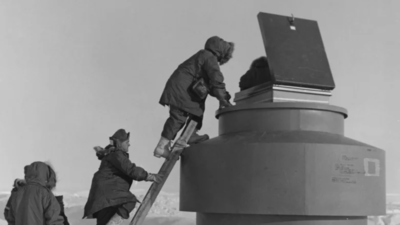
Camp Century was constructed by the US Army Corps of Engineers in 1959 beneath the surface of the Greenland Ice Sheet. The facility was part military experiment and part research station, with the US Army investigating whether infrastructure and ballistic missiles could operate beneath the ice. A portable nuclear generator powered the base, which housed between 85 and 200 soldiers. The larger Project Iceworm plan was ultimately rejected, and year-round operations ended in 1964. Seasonal operations continued until the facility was abandoned in 1967, leaving the base buried beneath accumulating snow and ice.
Sediment beneath the ice preserved evidence of a warmer Greenland
The new study, ‘Holocene-like summer climate during Marine Isotope Stage 11 in northwestern Greenland’, published in Climate of the Past, focuses on a 3.44-metre sediment core recovered from beneath the Greenland Ice Sheet at Camp Century. The upper sediment units were dated to about 416,000 ± 38,000 years ago and linked to Marine Isotope Stage 11, an interglacial period when global climate was warmer than during the preceding glacial conditions. Researchers analysed lipid biomarkers, including plant waxes and bacterial compounds known as branched GDGTs. These molecular traces can preserve information about the temperatures and water sources present when the organisms lived, allowing scientists to reconstruct ancient environmental conditions.
Image: Canva
Scientists found summers were 4.7°C warmer than today
The biomarkers indicated that the temperature during the months above freezing in northwestern Greenland was 4.7 ± 3.2°C higher than the modern reference period. The researchers said these conditions were similar to or slightly warmer than peak Holocene warmth recorded elsewhere in Greenland. Yet the Camp Century site is now covered by about 1,387 metres of ice. The presence of plant and aquatic biomarkers in the sediments means the landscape around the site must have been ice-free when they were produced. The results therefore provide evidence of a dramatically different landscape beneath an area that is currently buried deep within the ice sheet.
Ancient water vapour reveals a greener landscape around the site
The study also found that summer atmospheric water vapour was about 22 ± 18 per mille enriched in deuterium compared with modern conditions. Researchers interpret this enrichment as evidence that a greater share of the moisture reaching northwestern Greenland came from nearby sources. More ice-free land and vegetation would have increased evapotranspiration, sending locally sourced moisture into the atmosphere. The sediments also contain evidence of aquatic and terrestrial plant life, consistent with an ice-free landscape containing lakes, streams and tundra. The findings suggest that warmer conditions changed not only temperature but also the way moisture moved through the region.
The climate was similar to the Holocene but lasted much longer
Marine Isotope Stage 11 is particularly useful for understanding Greenland because its temperatures were broadly similar to the Holocene in the North Atlantic region, but the warm interval lasted considerably longer. The researchers found that northwestern Greenland’s summer conditions during MIS 11 were broadly comparable to peak Holocene warmth. Despite those similar temperatures, evidence from the study and other records indicates that the Greenland Ice Sheet was more reduced during MIS 11 than during the Holocene. This suggests that the duration of warmth can be crucial to ice-sheet loss, even when temperatures are not exceptionally high.
What Greenland’s 416,000-year-old climate record means for the ice sheet
The researchers say the findings have implications beyond reconstructing a distant climate. Greenland’s ice sheet contains enough ice to represent about 7.4 metres of potential sea-level rise, making its response to sustained warming an important climate question. The Camp Century evidence suggests that prolonged moderate warmth can contribute to substantial ice-sheet retreat. The authors therefore argue that limiting both the magnitude and duration of summer warming in coming centuries will be important for reducing future ice-sheet loss. A site once created as a Cold War military experiment has consequently become an archive for understanding how Greenland responds when temperatures remain elevated for long periods.