








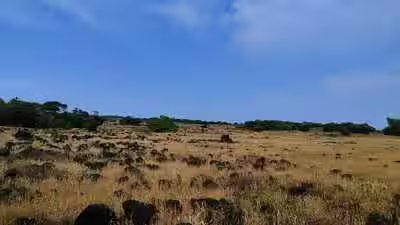
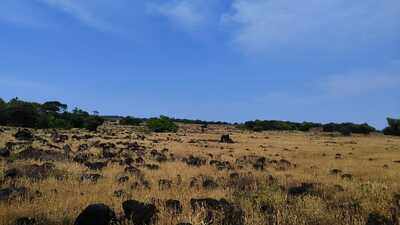
Keri: A group of wildlife enthusiasts who recently visited Sonsogar, also known as Darsingad, found that the 1,026-metre-high summit supports terrestrial and arboreal herbivores throughout the year. Seasonal grasslands, wild fruits, nuts and berries, leaves, roots and shoots, along with perennial water sources, provide an abundant supply of food and water for the animals.Subodh Naik, a wildlife enthusiast from Kasarpal, told TOI, “Besides a few pockets of evergreen tree species, the area comprises moist deciduous forests, stunted montane forests and grassy plateaus, which help wild herbivores thrive. The stony surface atop Darsingad transforms into grasslands during the monsoon. Streams originating on the Karnataka side of Darsingad join the Pandhari nadi at Dudhgali, which eventually flows into the Kali river. Meanwhile, streams originating on the Goa side flow into the Mhadei near Caranzol.”Suryakant Gaonkar from Bhuipal said, “As the forests of Sonsogar fall within Goa’s Mhadei Wildlife Sanctuary, Karnataka’s Bhimgad Wildlife Sanctuary and its reserve forests, the grasslands offer excellent protection to gaur, Malabar giant squirrels, black-naped hares, bonnet macaques, Hanuman langurs and other herbivorous species.”Sunil Kerkar from Keri said, “The healthy population of wild herbivores that thrives here throughout the year makes Sonsogar a natural habitat for tigers, leopards and other carnivores.”Following the notification of the forested areas of the Mhadei region as the Mhadei Wildlife Sanctuary in 1999, Sonsogar, Goa’s highest summit, continues to provide year-round forage for a wide range of wild herbivores.