









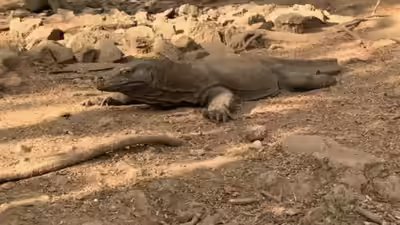
Komodo Dragon, representative image only (Photo credit: AFP)
SURABAYA: Indonesian authorities said Wednesday they have arrested six people allegedly involved in smuggling endangered Komodo dragons native to the archipelago and destined for Thailand.Two suspects were arrested in February in the port city of Surabaya on the east coast of Java island as they got off a ship with three live Komodo dragons — the world’s largest living lizard.Further investigation led to four more arrests in the weeks that followed.Police said the animals had been obtained from “suppliers or hunters” in Indonesia’s East Nusa Tenggara province, where they are native to a handful of small islands.The suspects are accused of buying the dragons for 5.5 million rupiah (about $320) apiece and selling them for six times the price, apparently to be shipped to clients in Thailand.According to East Java police, the suspects have smuggled and traded at least 20 Komodo dragons since January last year, and pocketed some $33,000.They face up to five years in prison and a fine.The International Union for Conservation of Nature lists the Komodo dragon as endangered, with a global population of about 3,400, including juveniles.The fearsome reptiles, which can grow to three metres (10 feet) in length and weigh up to 90 kilogrammes (200 pounds), are threatened by human activity and by climate change destroying their habitat.Poachers collect them to be sold as pets or display animals.Komodo dragons in the wild are found only in Indonesia’s World Heritage-listed Komodo National Park and on neighbouring Flores island.Police said Wednesday they had also arrested two suspects for smuggling 140 kilogrammes of pangolin scales from the northwestern province of Riau to Surabaya.Pangolins are among the world’s most endangered species, and their scales are prized in countries like China and Vietnam, where they are used in traditional remedies even though they provide no scientifically proven medicinal benefit.