









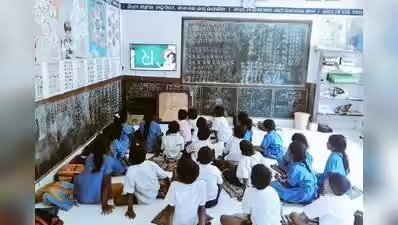
Gurgaon: Believe it or not, the number of single-teacher schools in the state has been rising steeply, putting a question over the learning outcome. This trend is contrary to what is happening in the rest of the country.The latest report of Unified District Information System for Education Plus 2025-26 on school education in India shows that the number of such schools in the state has increased by 20% to 1,278 in 2025-26 from 1,066 a year earlier. It has also highlighted a persistent gap in digital infrastructure across schools.Such schools where a single person teaches multiple classes are common in rural areas. It affects the quality of teaching and leads to dropouts. A govt school teacher who did not wish to be named said, “When a school has only one teacher, classroom teaching becomes almost impossible to manage. The teacher has to handle multiple grades simultaneously, maintain records, supervise mid-day meals, attend official meetings and complete administrative work, leaving very little uninterrupted teaching time.”The number of single-teacher schools has increased by nearly 47%, from 867 in 2023-24. Teachers said this reflects delays in filling vacant posts and uneven deployment rather than a shortage of qualified candidates. They said sanctioned positions often remain vacant for months, while existing staff are frequently assigned election duties, surveys, census work and other administrative responsibilities.Student enrolment in these schools has also increased by 6.2%, rising from 43,400 to 46,096. In the previous year, 40,828 students had enrolled in single-teacher schools.The report also exposes major shortcomings in digital readiness. Of the state’s 23,479 schools, only 9,751 (42%) have functional mobile phones for teachers, leaving more than 13,700 schools without this basic digital resource. Govt schools perform slightly better, with 6,670 of 14,338 schools (46.8%) having functional mobile phones, while only 166 of 546 govt-aided schools (30.4%) have the facility.Among 8,567 private unaided schools, only 4,661 (35.2%) reported having functional mobile phones, while 273 of 574 schools (47.6%) in the ‘Others’ category have access.Smart classroom facilities remain unavailable in a significant number of institutions. Only 14,824 schools (63.1%) have functional digital boards, smart boards, virtual classrooms or smart TVs, leaving 8,655 schools without such infrastructure. Govt-aided schools recorded the highest coverage at 75.6% (412 of 546 schools), followed by 64.5% (9,253 of 14,338) govt schools and 66.4% (5,685 of 8,567) private schools, while the ‘Others’ category reported 46.2% coverage.Although computer availability is nearly universal, with 22,922 schools (97.6%) equipped with computers, only 20,284 schools (86.4%) have functional systems available for teaching. Functional computer access stands at 79.4% in govt schools compared to 94.4% in private unaided institutions.Advanced teaching infrastructure remains limited, with only 3,241 schools (13.8%) having integrated teaching-learning devices such as interactive panels, including just 749 govt schools (5.2%) against 2,404 private unaided schools (28.1%). Functional projectors are available in only 9,531 schools (40.6%), including 3,941 govt schools (27.5%) and 5,487 private unaided schools (64.1%).