








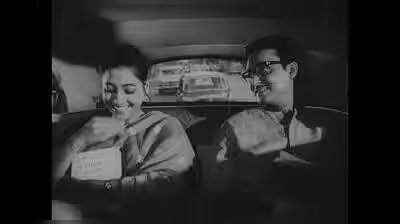
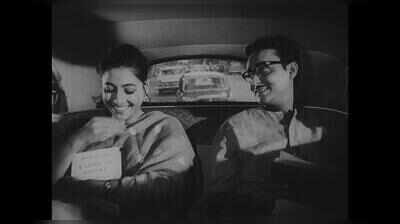
Kolkata: More than six decades after Suchitra Sen won India’s first international acting honour in Moscow, Ajoy Kar’s newly restored classic ‘Saat Pake Bandha’ is returning home for its Indian premiere at the 32nd Kolkata International Film Festival (KIFF), following a triumphant showcase at the 48th Moscow International Film Festival earlier this year.Backed by producer R D Bansal, the restored film’s Out-of-Competition screening at the 48th Moscow International Film Festival brought it full circle to the very stage where Suchitra Sen claimed the Best Actress silver prize in 1963 — becoming the first Indian actress to win an international acting award. Beyond Moscow, the box-office hit earned a Certificate of Merit for Second Best Feature Film at the 11th National Film Awards (trailing only “Uttar Falguni”, which took the President’s silver medal for Best Bengali Feature), before its story travelled across Indian languages through four remakes: Telugu’s ‘Vivaha Bandham’ (1963), Hindi’s ‘Kora Kagaz’ (1974), Tamil’s ‘Lalitha’ (1976), and Malayalam’s ‘Archana Teacher’ (1981).Kar’s film has been restored from a 35mm release print in collaboration with the National Film Archive of India (NFAI). “Baba (RD Bansal) produced over 40 films, aside from the six films directed by Satyajit Ray. He was most proud of supporting the making of ‘Saat Pake Bandha’, as the story was very close to his heart,” said Varsha Bansal, who presented the film at Moscow International Film Festival earlier this year. “Though the restoration was complete by this Feb, I saved up the Indian premiere for KIFF as I wanted the film to return to the audience of Kolkata who had made it a huge success way back in 1963. Needless to say, KIFF is one of the most prestigious festivals in India and is known for showcasing pathbreaking cinema,” she added.Many agree that Kar’s examination of marital discord carries striking contemporary relevance — a theme that remains a staple of today’s OTT series and films. Soumitra Chatterjee’s daughter, Poulami Bose, noted that while it remains a significant film in her father’s career alongside Suchitra Sen’s silver prize-winning turn, the film’s craft and literary roots are equally vital for modern viewers to discover. “The subject is so contemporary and relevant, and the film was so well-made. Today’s generation must watch it to understand what kind of cinema — based on literature — was produced some 60 years ago in Bengal,” Bose said, adding, “Nobody was a villain, but everyone had a point of view.”Bansal echoed that nuance, pointing out that the narrative resisted easy moral binaries. “It didn’t paint one side as purely innocent. The ego clash from both sides of the marriage led to the break-up. Archana is shown as an independent and educated woman asserting herself even in a traditional social setting. This may have been an eye-opener for many in the ‘60s,” she said.