










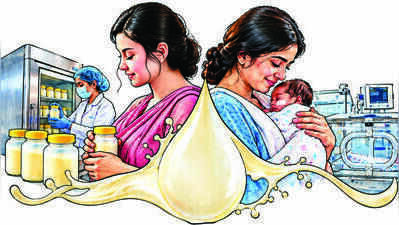
Chandigarh: In a significant move towards precision neonatal nutrition, PGI is set to procure a Rs 60 lakh human milk analyser for its human milk bank. Available at only a handful of centres across India — and not yet at AIIMS — the advanced equipment will enable doctors to measure the exact macronutrient profile of pooled donor milk before feeding it to premature and critically ill newborns.Human milk banks pool breast milk donated by multiple lactating mothers—typically batches from five to 10 screened donors—before pasteurising it for babies in neonatal intensive care units (NICUs) whose mothers are unable to produce enough milk. However, because the nutritional composition varies naturally from mother to mother, the final pooled batch may not have uniform levels of protein, carbohydrates and fat.“When milk from multiple mothers is pooled together, some have higher nutrient concentrations while others have lower levels,” said Prof Kanya Mukhopadhya, in charge of the human milk bank in PGI’s neonatology unit.“Once we know the exact nutritional value of a pooled batch, we can add targeted fortification. If a batch has only 1 gram of protein per 100 ml, we can fortify it to reach 3 grams per 100 ml, which sick and very-low-birth-weight babies require for healthy growth,” she explained.Besides the planned procurement of the analyser, the milk bank has significantly expanded its physical footprint in line with government guidelines. What was earlier a small, single-room storeroom has been converted into a dedicated and spacious facility at the Advanced Mother and Child Centre.The department is also conducting research on the safety, efficacy and quality of donor milk. Researchers have completed a study evaluating how pasteurisation alters essential nutrients in pooled milk and are launching a follow-up investigation into its effect on vital anti-infective factors, including cell counts in fresh, pooled and pasteurised samples. Another study, which is nearing completion, compares the sociodemographic backgrounds, awareness and attitudes of donor and non-donor mothers.The unit is also exploring the integration of artificial intelligence into milk-bank workflows to streamline operations and support clinical decision-making.Speaking on the sidelines of the 12th annual conference of the Human Milk Banking Association of India, hosted at PGI on Saturday, doctors highlighted the strict safety protocols governing donor milk, including mandatory screening for infections such as HIV and hepatitis C.They also sought to counter the widespread misconception among lactating mothers that donating milk reduces the supply available to their own newborns. Doctors said regular expression of milk actually stimulates greater milk production.