









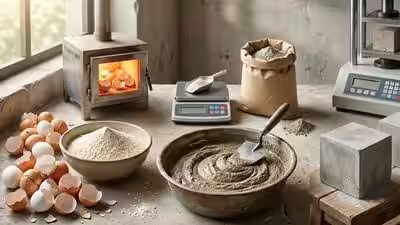
Researchers have found that waste eggshells can be processed into a fine powder and used to replace part of the cement in mortar without reducing its compressive strength. A study tested calcined eggshell powder at replacement levels ranging from 2.5% to 12.5%. The strongest result came at 10%, where the mortar reached a compressive strength of 54.7 N/mm² after 28 days, compared with 52.4 N/mm² for the conventional mixture. According to the study published in Discover Concrete and Cement titled ‘Transforming cement mortar performance: impact of eggshell powder as an eco-friendly cement substitute ’, researchers examined water absorption, bulk density, and the material’s microstructure. The findings note that a controlled amount of eggshell powder can reduce cement use while maintaining mechanical performance.
How did 10% eggshell powder produce stronger mortar after 28 days
The 10% replacement produced the highest compressive strength in the study. After seven days of curing, the mortar reached 41.80 N/mm², while its 28-day strength rose to 54.70 N/mm². The control mortar without eggshell powder recorded 52.40 N/mm² at 28 days. This means the 10% mixture exceeded the control sample under the study’s testing conditions. However, the strength began to decline as the amount of eggshell powder increased beyond 10%. At 12.5%, compressive strength dropped to 45.30 N/mm² after 28 days. The researchers linked the decline to greater porosity and weaker bonding within the mortar matrix as the replacement level increased beyond the optimum.
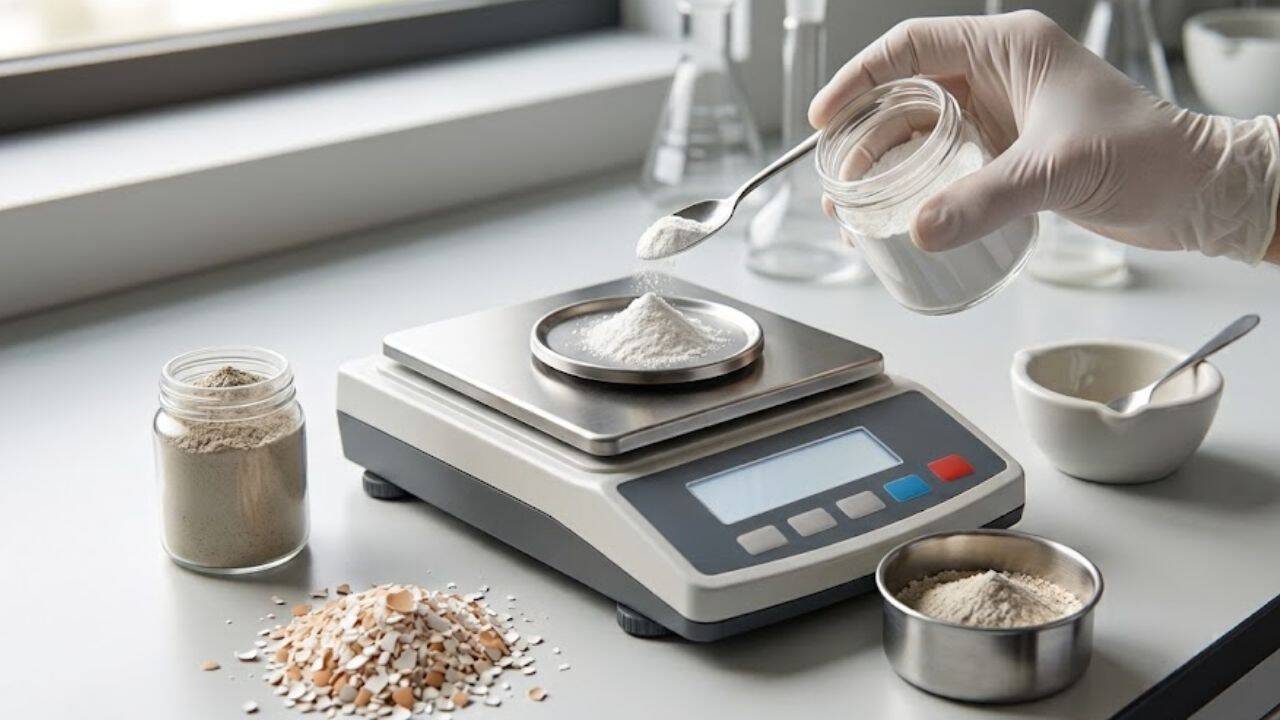
PC: AI Generated
How did researchers turn waste eggshells into a cement substitute
The study tested calcined eggshell powder as a replacement for cement in mortar. Waste eggshells were collected from a canteen and restaurants in Dar es Salaam, Tanzania, then washed and dried at 90°C for five hours. The shells were heated at 800°C for 1.5 hours before being finely ground and passed through a 100-micrometre sieve. Researchers replaced cement with the powder at 0%, 2.5%, 5%, 7.5%, 10%, and 12.5% by weight. After mixing, the samples were cured in water for seven or 28 days. Tests measured compressive strength, water absorption, and bulk density to compare the mixtures under controlled conditions.
How did higher levels of eggshell powder affect the mortar
The eggshell powder changed several physical properties of the mortar as its proportion increased. After 28 days, water absorption rose from 6.7% in the control sample to 8.6% with 12.5% calcined eggshell powder. Bulk density also fell as more powder was added, declining from 2.1 g/cm³ for the control to 1.38 g/cm³ at 12.5%. These changes pointed to increased porosity at higher replacement levels. The study therefore found that adding more eggshell powder was not automatically better. The strongest mechanical performance occurred at 10%, while higher amounts altered the mortar’s physical structure in ways that reduced its overall performance.
What did the chemical and microscopic tests reveal
The researchers also examined what happened inside the mortar at the microscopic and chemical levels. The calcined eggshell powder contained about 80.22% calcium oxide, while its loss on ignition was 18.55%. X-ray diffraction, infrared spectroscopy, and scanning electron microscopy were used to study the material and the hardened mortar. The microscopic analysis identified hydration products including calcium silicate hydrate, portlandite, ettringite, monosulfoaluminate, and calcite. These compounds are involved in strength development within cement-based materials. The findings helped explain why processed eggshell powder could function as a reactive cement substitute when used at a controlled proportion in the tested mortar mixture.
What did the study find about replacing cement with eggshell powder
The study identified 10% calcined eggshell powder as the replacement level that best balanced strength and reduced cement use. The researchers concluded that using up to 10% could maintain structural performance while incorporating an agricultural waste material into mortar. However, they did not present the result as proof that eggshell powder can replace cement at any proportion. Strength declined beyond 10%, while water absorption increased and bulk density decreased. The researchers also recommended further work on long-term durability and field-scale performance.