







Scientists at the North Carolina Museum of Natural Sciences in Raleigh are getting ready to open a 5,000-pound block of sandstone holding a rare, ostrich-like dinosaur from Utah. The skeleton is 75 million years old, and it could represent a new species if researchers confirm its identity. The work will take place in the museum’s public Dino Lab, so visitors can watch. Crews delivered the block on Wednesday, and Raleigh could now be at the forefront of the discovery of a new dinosaur.
What arrived at the museum on Wednesday?
Crews delivered the skeleton of a 75-million-year-old dinosaur to the museum on Wednesday, and the staff was happy with how it went. “We’re thrilled, we’re thrilled, and everything went really well,” said Lindsay Zanno, the museum’s head of palaeontology.Zanno called it a “really exciting moment” for the museum. “We brought in the coiled-up skeleton of probably a new species of dinosaur,” she said. She said “probably”, so the dinosaur is not officially a new species yet. That depends on what the researchers find once they start studying it.
What did the dinosaur look like?
Zanno says the dinosaur would have looked like a large ostrich with a long tail. The skeleton that arrived in Raleigh is coiled up, and she says it is probably complete, with the head wrapped all the way around through the tail.She also spoke highly of the find itself. “This is the most beautiful skeleton of this type of dinosaur that we’ve ever found in that area,” Zanno said.
How did it get out of Utah?
A scientist who collaborates with the museum discovered the skeleton in southern Utah. Moving it to Raleigh took real effort. Crews had to use a helicopter to lift it out of the desert before the long journey east could start.The size of the block explains why. “It was quite an ordeal,” Zanno said. “This ended up being about a 5,000-pound block of sandstone, and that’s because the skeleton is probably complete with a head all the way wrapped around through the tail.” The skeleton travelled inside the sandstone, and the whole block weighed about 5,000 pounds.
Could it really be a new species?
That is what the researchers have to find out. Zanno says the skeleton is probably a new species, and the museum’s palaeontologists will research it to confirm.If they do confirm it, Raleigh could be at the forefront of the discovery. For now, it is a strong possibility and nothing more. The report does not say how long the research will take or how the scientists will go about it. It only says the work will happen at the museum, where the skeleton now sits.
Where will the fossil be opened?
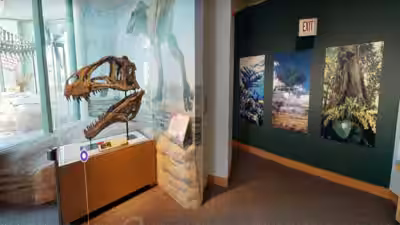
Palaeontologists will research the skeleton inside the museum’s State Employees’ Credit Union (SECU) Dino Lab. The lab opened a few years ago so scientists could study the duelling dinosaurs, which Zanno says everyone knows and loves.She described the new skeleton as the next step in that work. “It’s just following along with what we built here at the North Carolina museum a few years ago when we opened the new dino lab,” she said. “We did that to study the duelling dinosaurs, which everyone knows and loves, but this is sort of the next phase of what’s going to take place at the museum.”
Can the public watch?
Yes. The Dino Lab is part of the museum’s free admission, so visitors can see researchers work on the new dinosaur. They can also see the researchers work on other dinosaurs in the lab.That means people in Raleigh will not have to wait for a published paper to learn what is inside the sandstone. They can walk into the lab and watch the scientists doing the work.
What next?
The block is in Raleigh now, and the next move belongs to the scientists. They will study a rare, ostrich-like dinosaur that spent 75 million years in the rock before a helicopter lifted it out of the Utah desert.If they confirm that it is a new species, the discovery will be tied to the Dino Lab and the museum that housed it. If they do not, the skeleton is still, in Zanno’s words, the most beautiful of its type found in that area.