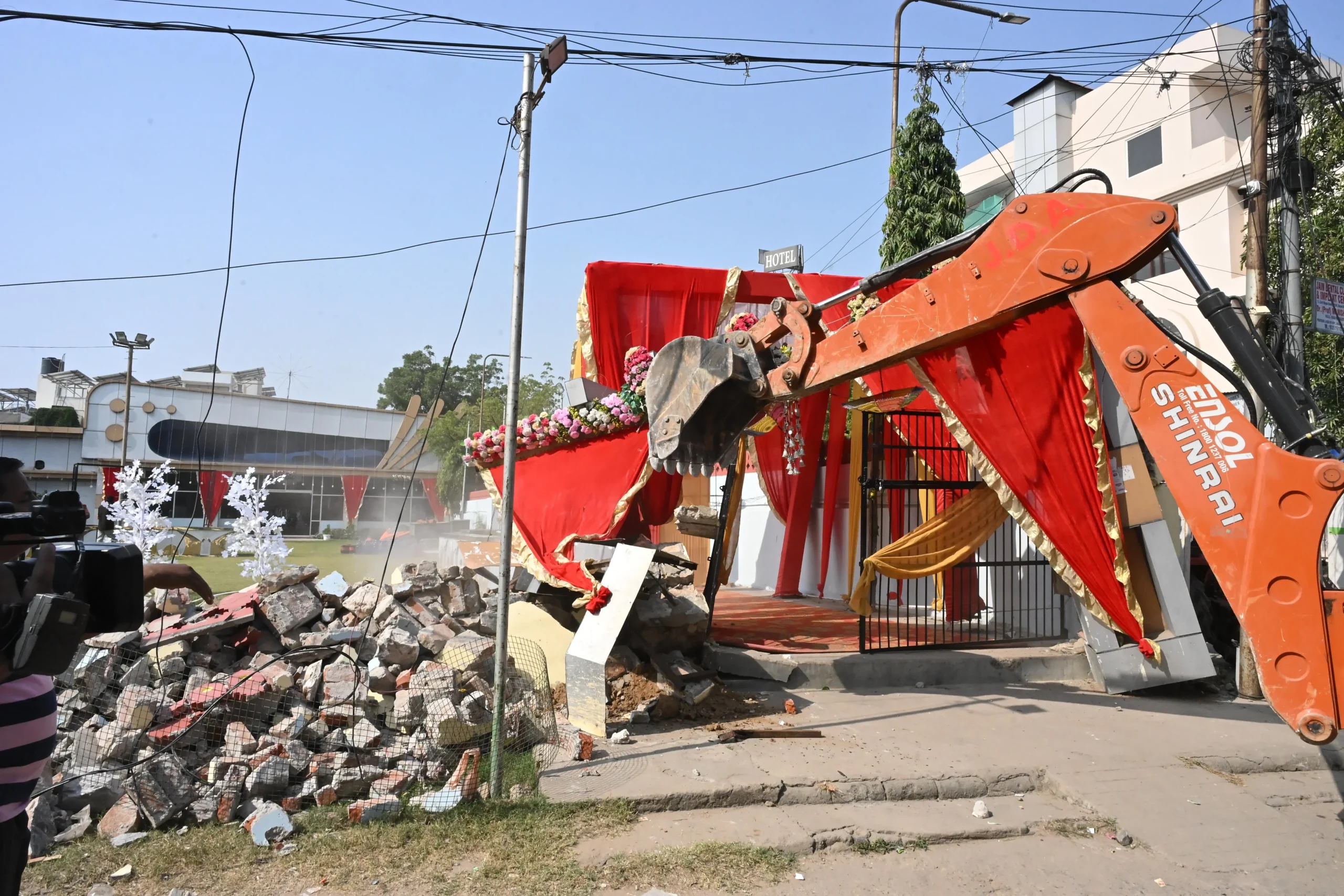











Jaipur: Rajasthan High Court has affirmed the erstwhile Jaipur royal family’s ownership of Rajmahal Palace, dismissing appeals to the contrary filed by the state govt and Jaipur Development Authority (JDA). The palace, built in 1729, currently operates as a hotel in the heart of the city.The decision, delivered by a single bench of Justice Ashok Kumar Jain on Nov 6, upheld a previous lower court decree of 2011 that declared the erstwhile royal family as rightful owners of the disputed property.The court’s decision relates to over 54 bigha of land, part of a larger 120-bigha parcel in Hathroi village, which is now part of the city.Historical records indicate that the land was granted to Maharaja Sawai Man Singh II as private property under a 1949 merger agreement. He later transferred it to his son, Brigadier Bhawani Singh, via a registered gift deed in 1957.While the state govt and JDA cited revenue records to contend that the land was govt property, the high court emphasised that such records only serve fiscal purposes and do not confer ownership rights.The court also criticised JDA’s failure to provide substantive evidence to contest the validity of the gift deed and other documents reaffirming the erstwhile royal family’s ownership of the property.A key aspect of the case centred on whether Rajmahal Palace is part of what is known as Princess House, a property recognised as the former Jaipur ruler’s private estate. The court ruled against govt’s assertion that Princess House referred to an entirely different bungalow, interpreting it instead as encompassing the palace, gardens and related structures of Rajmahal Palace.The state’s argument that Article 363 of the Constitution barred the court from adjudicating the case due to its relation to the merger covenant was also rejected.Additionally, the court dismissed govt’s claim that members of the erstwhile Jaipur royal family – including deputy CM Diya Kumari – were merely occupying the property as licensees, noting the lack of any supporting evidence to that effect.The judgment also noted that several arguments presented by the state were beyond the scope of its original claims.The high court’s upholding of the 2011 trial court decree on the matter also mandates the removal of an unauthorised boundary wall around Rajmahal Palace constructed by the JDA.