







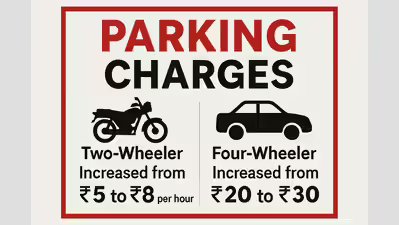
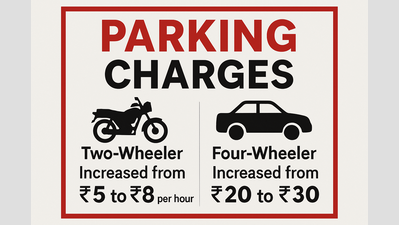
Pune: The Pune Cantonment Board’s (PCB) decision to revise parking charges for two- and four-wheelers has drawn sharp criticism from residents, visitors and traders, with many calling the move unjustified.Under the new rates, two-wheeler parking has increased from Rs 5 to Rs 8 per hour, while four-wheeler charges have gone up from Rs 20 to Rs 30 for the same duration. Many citizens, however, argued that the cantonment should follow the PMC model, where roadside parking remained free and charges were levied only at designated facilities.“The cantonment area is already overcrowded, and finding parking is a daily struggle. Instead of improving infrastructure, the board has simply raised the fees. This only adds to the burden on the citizens,” Sachin Kale, a frequent visitor to Camp, said.PCB chief executive officer Vidyadhar Pawar defended the move, saying the revision was part of efforts to improve revenue generation. “Earlier, we earned around Rs 1 crore annually from parking contracts. With the revised rates, this is expected to go up to nearly Rs 1.5 crore. A private agency has been awarded the contract,” he said.Anita Mehra, another resident, questioned the steep increase, saying, “A family coming here for shopping or dining will now have to spend more just on parking. It doesn’t make sense when basic parking management is still lacking.”Shopowners in the bustling Camp and MG Road areas fear the hike could hurt business. “Customers already hesitate to visit due to traffic and congestion. Higher parking charges will only make matters worse,” a trader said.Several citizens also pointed out that parking in the cantonment area was now costlier compared to other parts of Pune. “PMC does not charge for regular roadside parking. Why should the cantonment impose higher fees for the same?” college student Rohan Jadhav asked.Cantonment officials said the previous rates had remained unchanged for years, even as maintenance and operational costs increased. They also argued that higher charges could help regulate vehicle congestion in busy commercial zones.The residents, however, insisted that unless the parking infrastructure and traffic management were improved, the revised charges would continue to face public opposition.