








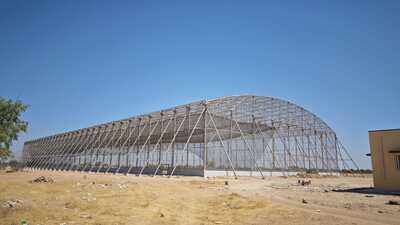
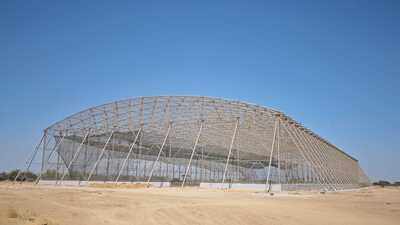
Jaisalmer: In a first, three chicks of the Great Indian Bustard (GIB) have been released into a specially designed rewilding tunnel at the Godawan Conservation Centre in Ramdevra in Jaisalmer district Saturday. The move is part of Project Great Indian Bustard (Project GIB), India’s flagship conservation initiative for the critically endangered bird.The state-of-the-art facility has been built by the Rajasthan State Road Development and Construction Corporation (RSRDC) at a cost of Rs 9.25 crore. It aims to prepare captive-bred birds for survival in their natural habitat by gradually exposing them to desert conditions while minimising human interaction.
CJP Jantar Mantar Protest Updates
Acting Deputy Conservator of Forests, Desert National Park, Ashok Singh, said the combined population of Great Indian Bustards at the conservation breeding centres in Ramdevra and Sam has now reached 98 birds. With breeding yielding encouraging results, the focus has now shifted to preparing the birds for life in the wild.Three chicks—R9, R10 and R11—two males and one female, all about a month old, were shifted from the Ramdevra breeding centre to the tunnel. They will remain in the facility for around four months before being released into their natural habitat.Unlike conventional captive breeding, the rewilding tunnel is designed to eliminate direct human contact. Food will be provided without exposing the birds to people, while their health and behaviour will be monitored round the clock through CCTV surveillance.During the acclimatisation period, the chicks will adapt to native vegetation, desert weather, insects and other ecological conditions, helping them develop natural behaviour and survival skills.Officials said the objective is to ensure the birds can survive independently with minimal human support after being released into the Desert National Park.Wildlife experts said the initiative could become a model for the recovery of one of the world’s rarest birds and marks a new phase in India’s efforts to restore sustainable wild populations of the Great Indian Bustard.